
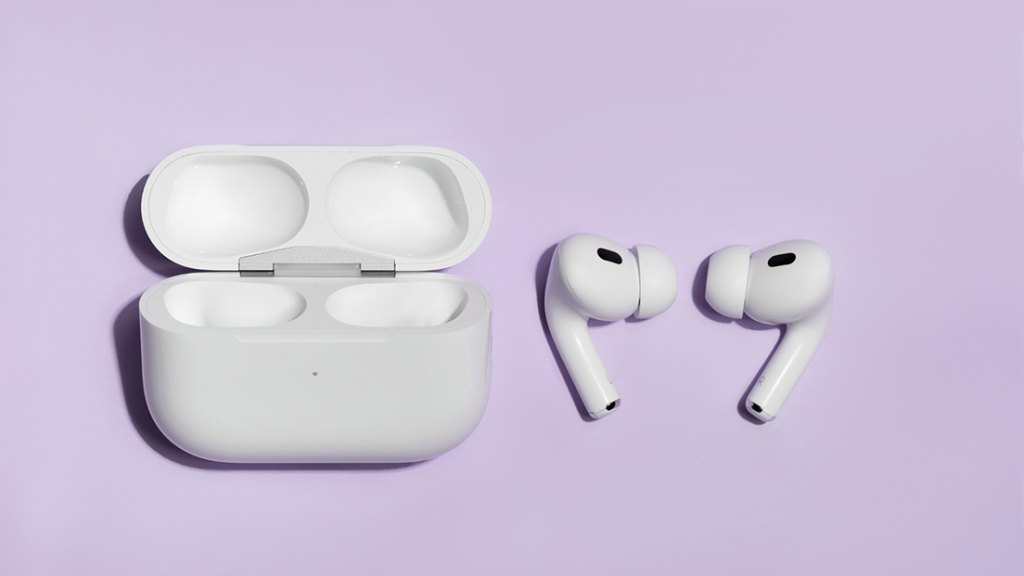
Can I Use Wireless Earbuds as Hearing Aids?
Dr. Ronna Fisher | Ask the Audiologist
Since 2022, the over-the-counter hearing aid market has grown substantially with both Apple and Samsung adding hearing aid software to their popular wireless earbud product lines.
But do they work?
That’s the answer we wanted to find out, and the truth is that, like most over-the-counter hearing aids, wireless earbuds aren’t always the best option for people with hearing loss.
Before you decide to use wireless earbuds as hearing aids, you should know a few things including one main reason why you should still choose prescription hearing aids.
Are AirPods Hearing Aids?
The short answer is not technically. However, technology upgrades since their original introduction mean that some wireless earbuds like AirPods Pro and others have the ability to help enhance your ability to hear certain things.
In 2024, the FDA authorized Apple’s “Hearing Aid Feature” software, allowing compatible AirPods Pro models to function as over-the-counter hearing aids for adults with perceived mild-to-moderate hearing loss.
AirPods Pro were designed as consumer wireless earbuds, but Apple now also markets the Hearing Aid feature as a regulated hearing-health function. While they can function as OTC hearing aids, that doesn’t mean they provide the same capabilities or amplification range as a professionally fitted prescription hearing aid.
It’s a nice-to-have, but for people truly struggling with hearing loss, there are too many downsides with the Apple AirPods Pro and other wireless earbuds for them to be anyone’s full-time hearing aid.
Where Wireless Earbuds Fall Short Compared To Prescription Hearing Aids
Remember, wireless earbuds like AirPods are music headphones first, everything else second. Apple’s product page lists the Hearing Aid Feature alongside other features, suggesting it’s an add-on rather than a dedicated hearing aid.
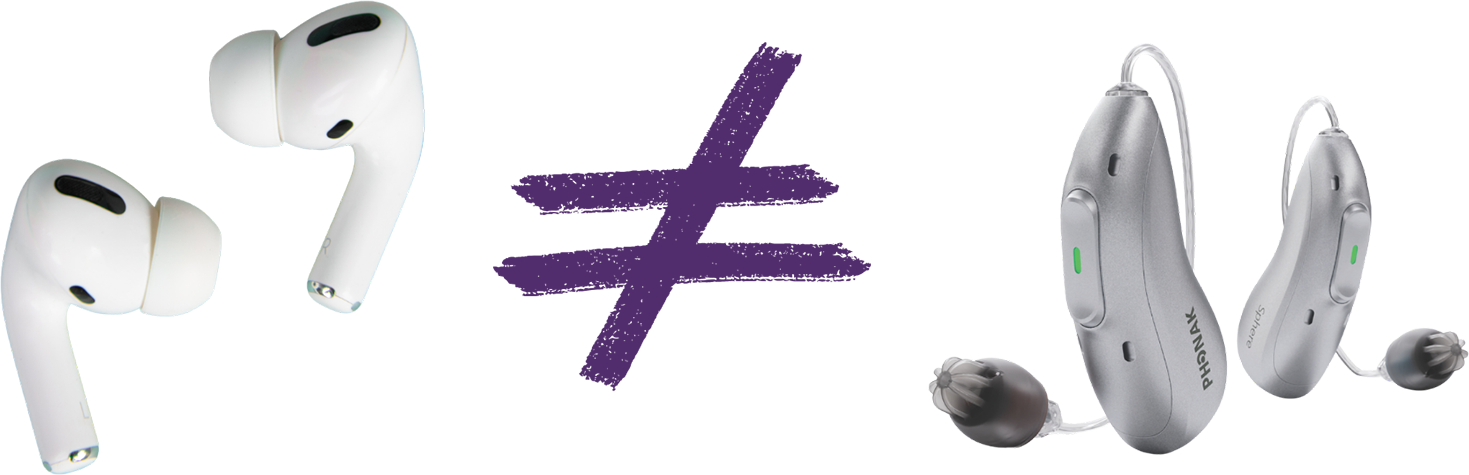
An April 2026 study tested how closely the outputs of AirPods Pro compare to those of traditional hearing aids, and the results were unsurprising. The Apple devices demonstrated “reduced output relative to the hearing aids, particularly in the low-frequency region for moderate hearing loss configurations.”
The report continued, “AirPods Pro may provide some acoustic gain for individuals with mild hearing loss or those with moderate hearing loss limited to the high-frequency region; they do not offer output that matches prescriptively fitted hearing aids.”
This is the same problem we’ve seen time and time again regarding over-the-counter hearing aids: fit and adjustment matter for them to work properly.
But performance isn’t the only problem with using wireless earbuds as hearing aids.
In hearing aid mode, AirPods only lasted at most around 10 hours with volume and amplification set to 50% and no audio streaming. Compare that to prescription hearing aids, where battery life can last much longer, and you’d have to plan charging breaks in order to actually use wireless earbuds as hearing aids.
The last thing you’d want is for your wireless earbuds to run out of battery while out with your friends and family.
A potential issue is that your AirPods require an iPhone or iPad running iOS 18 or later in order to work. If you or your family use Android devices (71%-73% of people worldwide), you’d be out of luck.
There are more than enough technical drawbacks to using wireless earbuds as hearing aids, but the most important factor that they lack is the necessary professional care that comes with prescription hearing aids.
The Importance of Professional Care
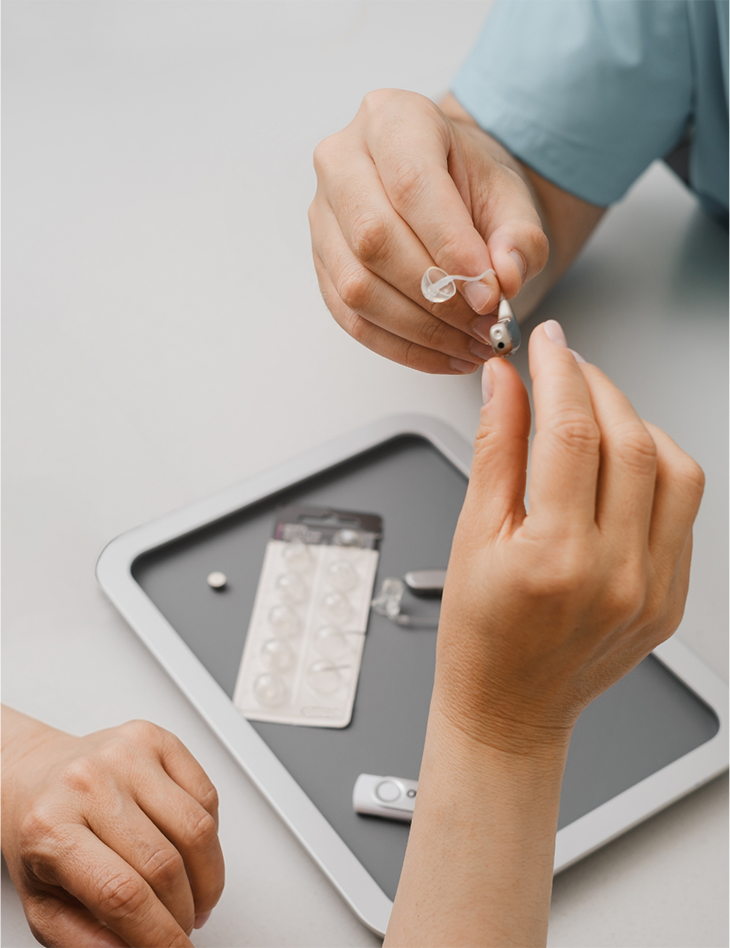
The professional care that comes with a hearing aid prescription is one of the most important factors in improving your hearing and quality of life.
Hearing aids work best when amplification is appropriate for your individual hearing needs. Professional fitting helps confirm the device is delivering the intended amount of amplification, and we are able to make adjustments based on your needs.
Over-the-counter hearing aids rely more heavily on users to assess their hearing needs, complete the fitting process, and adjust their settings. For most people, professional guidance makes that process easier.
And, when it comes to wireless earbuds, there is no customization to your specific needs.
At Hearing Health Center, we provide:
- Customized and personalized prescriptions and fittings
- Every manufacturer and model available
- Customized programming
- Aural rehabilitation
- Service and repairs on all models and manufacturers
- Hearing aid loaner service
- Emergency
- Curbside pickup and delivery
If you’re ready to start hearing clearly and enjoying life again, schedule an appointment with our audiologists at one of our 5 convenient Hearing Health Center locations today.
Signs You Might Need Hearing Aids
The National Institute on Deafness and Other Communication Disorders offers this at-home screener to help identify whether you should get a hearing test. According to NIDCD, answering yes to two or more of these questions could indicate hearing loss and is a reason to consider having your hearing checked.
NIDCD Screener Questions:
- Difficulty following the TV or radio
- Difficulty at parties
- Frustration when talking with family members
- Feeling left out in a group
- Difficulty when visiting friends, relatives, or neighbors
- Discomfort when talking with friends
- Avoiding groups of people
- Visiting people less often than you’d like
- Limits on your personal or social life
Hearing loss is often gradual, which means you might have lost some of your hearing without even realizing it.
Schedule Your Hearing Exam at Hearing Health Center
Struggling to hear your friends out in public? Avoiding family functions because you can’t keep up with conversations? You don’t have to isolate yourself anymore.
Schedule a hearing exam with Hearing Health Center today and get back to living the life you deserve.

About the Author: Dr. Ronna Fisher, AuD, CCC-A, FAAA is the founder and president of Hearing Health Center, which she established in 1984 in memory of her father, who suffered from untreated hearing loss and died at 53. That personal loss has shaped her entire career. Under her leadership, Hearing Health Center has been voted the best hearing practice in Illinois three years in a row by Hearing Review. In 2005, she expanded her mission by founding the Fisher Foundation for Hearing Health Care, a nonprofit dedicated to making auditory care more accessible. Dr. Fisher earned her doctorate in audiology from the Pennsylvania College of Optometry and holds a Certificate of Clinical Competence in Audiology (CCC-A) from the American Speech-Language-Hearing Association. She is a Fellow of the American Academy of Audiology and a member of the Academy of Dispensing Audiologists.
Recent Posts
- Everything You Need to Know About Earwax
- Why You Should Wear Earplugs To Your Next Music Festival
- Why Do My Ears Feel Clogged?
- What Your Ears Might Be Warning You About Your Heart
- The Risks of Over-The-Counter Hearing Aids
- How to Bring Up Hearing Aids Without Starting a Fight
- Itchy, Itchy Ears: Common Causes and Solutions
-
Downtown Chicago
Magnificent Mile
142 E. Ontario St, Ste 1100
 (312) 263-7171
Learn More
(312) 263-7171
Learn More
-
Naperville
Fox Run Square
1212 S. Naper Blvd, Ste 103
(630) 369-8878
Learn More
-
Oak Brook
Oakbrook Prof. Bldg.
120 Oakbrook Ctr, Ste 709
(630) 571-7111
Learn More
-
Highland Park
Crossroads Shopping Cntr.
185 Skokie Valley Rd.
(847) 681-7000
Learn More
-
Park Ridge
Presence Resurrection
7447 W. Talcott Ave, Ste 360
(773) 466-8878
Learn More