
Since 2022, the over-the-counter hearing aid market has grown substantially with both Apple and Samsung adding hearing aid software to their popular wireless earbud product lines.
But do they work?
That’s the answer we wanted to find out, and the truth is that, like most over-the-counter hearing aids, wireless earbuds aren’t always the best option for people with hearing loss.
Before you decide to use wireless earbuds as hearing aids, you should know a few things, including one main reason to still choose prescription hearing aids.
Are AirPods Hearing Aids?
The short answer is no, not technically. However, technology upgrades since their introduction mean that some wireless earbuds, like AirPods Pro and others, can help enhance your ability to hear certain sounds.
In 2024, the FDA authorized Apple’s “Hearing Aid Feature” software, allowing compatible AirPods Pro models to function as over-the-counter hearing aids for adults with perceived mild-to-moderate hearing loss.
AirPods Pro were designed as consumer wireless earbuds, but Apple now also markets the Hearing Aid feature as a regulated hearing-health function. While they can function as OTC hearing aids, that doesn’t mean they provide the same capabilities or amplification range as a professionally fitted prescription hearing aid.
It’s a nice-to-have, but for people truly struggling with hearing loss, the Apple AirPods Pro and other wireless earbuds have too many downsides to be anyone’s full-time hearing aid.
Where Wireless Earbuds Fall Short Compared To Prescription Hearing Aids
Remember, wireless earbuds like AirPods are music headphones first, everything else second. Apple’s product page lists the Hearing Aid Feature alongside other features, suggesting it’s an add-on rather than a dedicated hearing aid.
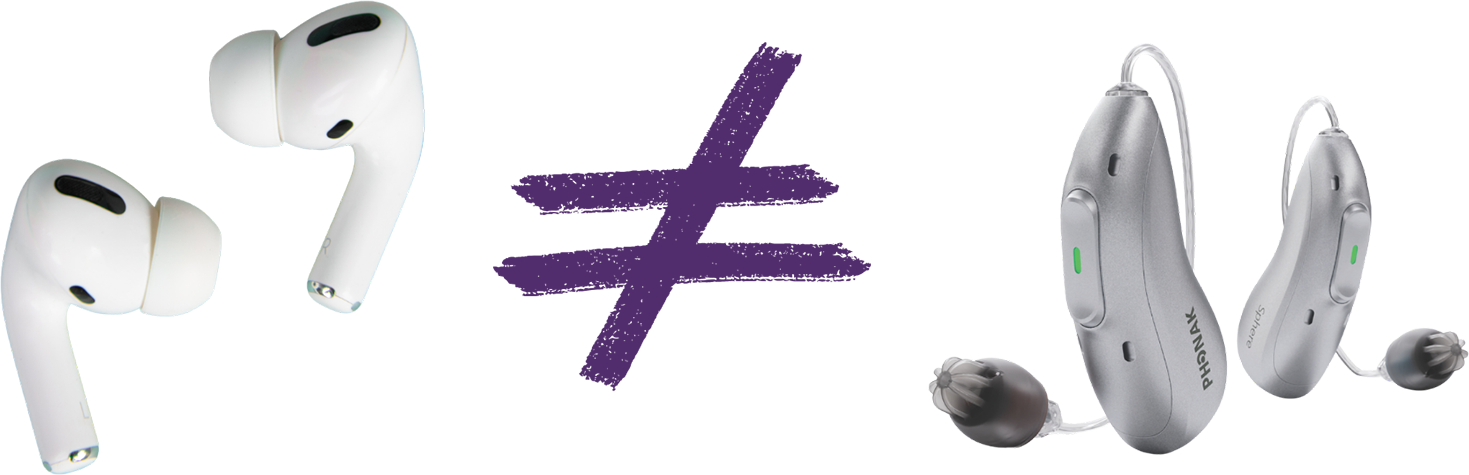
An April 2026 study tested how closely AirPods Pro outputs compare to traditional hearing aids, and the results were unsurprising. The Apple devices demonstrated “reduced output relative to the hearing aids, particularly in the low-frequency region for moderate hearing loss configurations.”
The report continued, “AirPods Pro may provide some acoustic gain for individuals with mild hearing loss or those with moderate hearing loss limited to the high-frequency region; they do not offer output that matches prescriptively fitted hearing aids.”
This is the same problem we’ve seen time and time again regarding over-the-counter hearing aids: fit and adjustment matter for them to work properly.
But performance isn’t the only problem with using wireless earbuds as hearing aids.
In hearing aid mode, AirPods only lasted at most around 10 hours with volume and amplification set to 50% and no audio streaming. Compare that to prescription hearing aids, where battery life can last much longer, and you’d have to plan charging breaks to use wireless earbuds as hearing aids.
The last thing you’d want is for your wireless earbuds to run out of battery while out with your friends and family.
A potential issue is that your AirPods require an iPhone or iPad running iOS 18 or later in order to work. If you or your family use Android devices (71%-73% of people worldwide), you’d be out of luck.
Wireless earbuds have plenty of technical drawbacks as hearing aids, but the biggest one is the professional care they lack.
The Importance of Professional Care
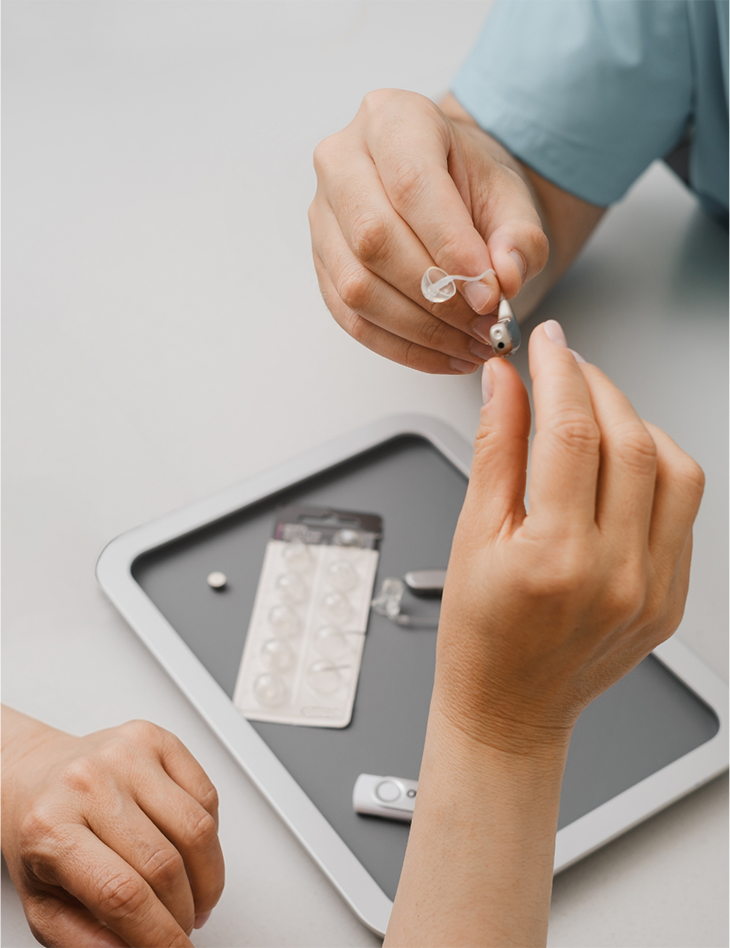
Professional care with a hearing aid prescription is one of the most important factors in improving your hearing and quality of life.
Hearing aids work best when the amplification matches your individual hearing needs. A professional fitting helps confirm the device delivers the intended amplification, and we can adjust it based on your needs.
Over-the-counter hearing aids rely more heavily on users to assess their hearing needs, complete the fitting process, and adjust their settings. For most people, professional guidance makes that process easier.
And with wireless earbuds, there is no customization to your specific needs.
At Hearing Health Center, we provide:
- Customized and personalized prescriptions and fittings
- Every manufacturer and model available
- Customized programming
- Aural rehabilitation
- Service and repairs on all models and manufacturers
- Hearing aid loaner service
- Emergency
- Curbside pickup and delivery
If you’re ready to hear clearly and enjoy life again, schedule an appointment with our audiologists at one of our 5 convenient Hearing Health Center locations today.
Signs You Might Need Hearing Aids
The National Institute on Deafness and Other Communication Disorders offers this at-home screener to help you decide whether to get a hearing test. According to NIDCD, answering yes to two or more of these questions could indicate hearing loss and is a reason to consider having your hearing checked.
NIDCD Screener Questions:
- Difficulty following the TV or radio
- Difficulty at parties
- Frustration when talking with family members
- Feeling left out in a group
- Difficulty when visiting friends, relatives, or neighbors
- Discomfort when talking with friends
- Avoiding groups of people
- Visiting people less often than you’d like
- Limits on your personal or social life
Hearing loss is often gradual, so you might have lost some hearing without realizing it.
Schedule Your Hearing Exam at Hearing Health Center
Struggling to hear your friends out in public? Avoiding family functions because you can’t keep up with conversations? You don’t have to isolate yourself anymore.
Schedule a hearing exam with Hearing Health Center today and get back to living the life you deserve.
For most people, earwax is a temporary nuisance that oftentimes isn’t even thought about. For others, earwax is a painful, debilitating problem that affects their daily life.
But the truth is, everyone has earwax, and depending on their health, they may need to take additional precautions to prevent serious hearing issues.
Our guide to earwax explains what it is, how to remove it, and, most importantly, when it’s time to see a doctor.
What Is Earwax?
Earwax is your ear canal’s cleaning system. Cerumen is created by the glands inside your ear canal to trap dust, carry antimicrobial properties, repel water, and keep the skin inside your ear from drying out.
While sometimes annoying and maybe a little gross, earwax is meant to protect the long-term health of your ears.
When you chew, talk, and move your jaw, old earwax moves towards the opening of your ear canal, where it usually flakes away,
For more information on earwax, we’ve written about when it crosses the line from normal to something worth addressing.
Impacted Earwax
Earwax impaction is when there’s a blockage in your ear canal and oftentimes requires a trip to the doctor for resolution.
A 2024 study found that 18.6% of people age 12 and older have some degree of cerumen impaction at any given time, and among adults 70 and older, that number jumps to 32.4%.
According to the AARP, about 8 million earwax removal procedures are performed each year in the United States.
Impacted earwax tends to come with the following symptoms:
- Sense of fullness or pressure
- Muffled or reduced hearing
- Tinnitus
- Itching
- Discharge with an odor
If you are experiencing any of these symptoms, it’s time to schedule an appointment with an audiologist for help.
Safe Earwax Removal at Home

At home, there are only a few safe ways to clean out your ears.
Earwax-softening drops such as mineral oil or an over-the-counter cerumenolytic may help loosen earwax. Some people can also safely use ear irrigation. However, this isn’t appropriate for everyone, so check with a healthcare professional if you’re unsure.
On the other end of the spectrum, there are a lot of tools you shouldn’t use to clean your ears.

First, stop using cotton swabs. Cotton swabs push wax deeper into the ear canal rather than pulling it out. Your earwax then gets impacted closer to the eardrum, where it’s more likely to become a real blockage.
Another popular but unhelpful activity is ear candling.
The idea is that a lit, hollow candle placed in your ear creates enough suction to draw out earwax. That isn’t the case, though.
Instead, leftover candle residue is collected, leaving your ears still impacted.
Over-the-counter removal kits are a mixed bag. Some use a syringe; others give you a mini-shovel-like tool. Without a doctor present, it’s hard to know whether or not you’re actually cleaning out wax or just irritating your ear.
We’ve gone into a full myth-by-myth breakdown, including a few we haven’t covered here, in Can I Clean My Own Ears?
What About Hearing Aids and Earwax
Earwax can also be a problem for your hearing aids.
Hearing aids can make earwax more noticeable because wax can collect on the portion of the hearing aid that sits in or near the ear canal. Wax can also build up on the hearing aid’s receiver or wax filter, potentially affecting sound quality or causing feedback.
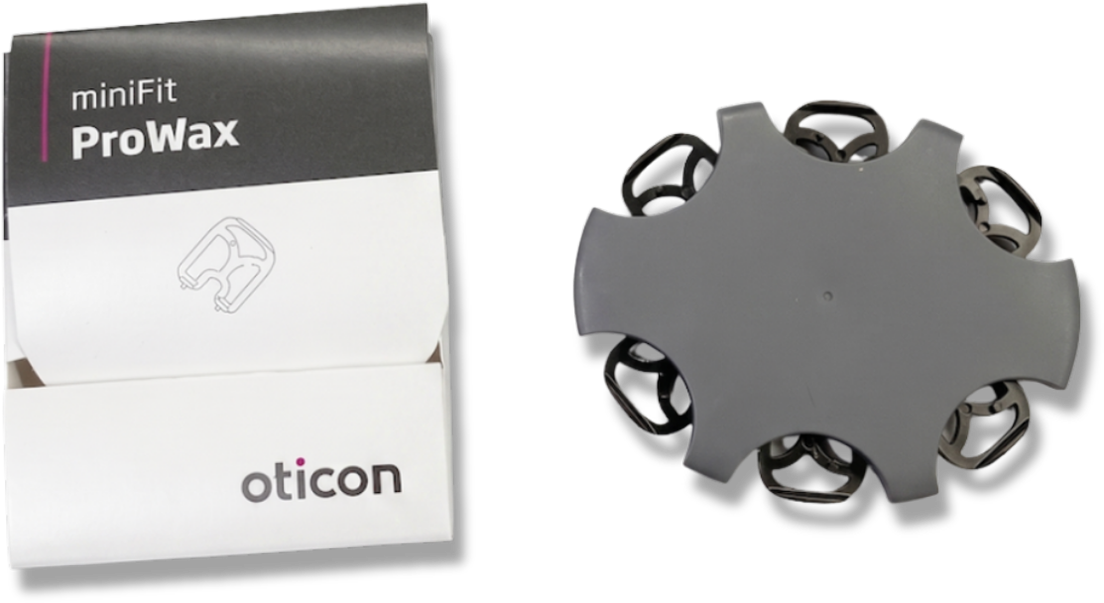
But wax also affects your hearing aids.
Sometimes you’ll experience a sudden squeal or whistle from earwax blocking the receiver, then leaking back out. If you’ve worn earbuds before, you also know that your ear can get trapped in the sound outlets, making everything muffled or off.
Hearing aids can cause earwax buildup, which in turn affects the quality of your hearing.
Wax guards are extremely helpful in preventing these issues, but it is also important to replace your guards more often than you think.
What to Expect During an Ear Cleaning with an Audiologist?
There isn’t a one-size-fits-all solution for earwax removal.
At Hearing Health Center, our audiologists are trained in suction, curettes, flushing, and other methods, depending on the type of earwax you may have. Loose wax needs a different approach than hard, impacted wax.
Older ear canals also tend to be more sensitive and more prone to irritation from the wrong approach, making it all the more important to have the right tools to protect your ears.
Our team has the knowledge and experience to help you hear better if you’re struggling with earwax buildup.
When Is It Time to Call a Doctor About Earwax?
Pain, odor, discharge, or fever all suggest calling your audiologist for a check-up. These symptoms could indicate an infection, requiring more urgent medical attention.
Another symptom that suggests a call is in order is the sudden appearance of one-sided muffled hearing. That can be a sign of sudden sensorineural hearing loss, a distinct condition that requires early treatment for the best chance of recovery.
If you are experiencing any of these symptoms, don’t hesitate to contact Hearing Health Center to schedule an appointment so our audiologists can help you hear better, sooner.
Need a Hearing Checkup? Struggling with Clogged Ears? Schedule an Appointment with Hearing Health Center Today.
Whether you’re dealing with too much earwax, need a hearing test, or are interested in hearing aids, we’ve got you covered at Hearing Health Center.
With five easy locations in the Chicagoland area, our expert audiologists are here when you need us most.
Every summer, Chicago holds hundreds of live concerts and music festivals, drawing thousands of people from all over the country.
But, if you’re one of the many audience members at Grant Park for Lollapalooza, Union Park for ARC Music festival, or the countless other festivals and free shows like the Millennium Park Summer Music Series, you might notice more and more people wearing earplugs.
Keep reading to find out why earplugs are a must-have for any concert-goer this summer.
Why Wear Earplugs?
The link between hearing loss and loud noise exposure is clear. According to one report, “nearly one in four (24.4%) U.S. adults aged 20-69 years show evidence of noise-induced hearing loss.”
Loud music in headphones and live events put nearly 1 billion teenagers and young adults at risk for hearing loss worldwide.
It’s been cited that “noise-induced hearing loss remains the second most common cause of sensorineural hearing loss after age-related loss, affecting approximately 5% of the world’s population.”
For perspective, the safe decibel level is 70 dB. That’s most conversations with your friends or noises around the house.
At 85 dB (city traffic, blenders), around 8 hours of prolonged exposure can cause hearing loss.
At 100 dB (chainsaws, sporting events), safe exposure is around 15 minutes.
Concerts and festivals often reach around 110 dB. At that volume, NIOSH recommends limiting exposure to about 2 minutes per day before the risk of permanent hearing damage increases.
Without hearing protection at a concert, you’re risking permanent hearing loss before the band even finishes its first song.
Who Should Wear Earplugs?
Everyone.
Whether you’re young, old, or in between, you should be wearing earplugs at every concert or festival you go to.
You obviously want to avoid bringing infants to loud environments as much as possible, but if you have to, they should wear earmuffs rather than earplugs to avoid damaging their ear canals.
Older children who can safely insert and remove earplugs on their own may be able to use musician-style earplugs designed for smaller ears. Parents should follow the manufacturer’s age recommendations or ask an audiologist for guidance.
And as you grow up, the need for earplugs continues, as hearing loss isn’t a young or old person’s problem; it’s everyone’s problem.
When Do You Need Earplugs?
Concerts, live music, festivals, and even sporting events all reach sound levels high enough that earplugs are recommended to avoid serious hearing problems.
Concerts and Live Music
Peer-reviewed research found that popular concerts ranged from 85 to 110 dB, and some shows push way past that.
Guinness World Records no longer tracks the loudest band in the world, but in 1994, one band proclaimed 129.5 dB as the loudest show ever recorded.
Nightclubs
Research found that the average continuous noise level in nightclubs hits around 91.2 dB, high enough to cause damage after a single night out.
Sporting Events
Noise levels recorded during a World Series game averaged 97 dB.
The Guinness World Record for stadium crowd noise was set at 142.2 decibels during a 2014 NFL game, breaking a previous record of 137.6 decibels set the year before.
Peer-reviewed sports-safety literature is direct about the consequence: hearing loss from these exposures is cumulative and irreversible, and children who regularly attend games with season-ticket-holding parents can sustain permanent hearing damage over time if not wearing protection.
Festivals
Measured research on outdoor music festivals has recorded sustained main-stage sound levels above 100 dB throughout full sets, and front-of-crowd areas at outdoor festivals commonly exceed 115 dB.
At those sound levels, recommended daily exposure limits can be reached in about 15 minutes, increasing the risk of permanent hearing damage.
How Do You Put In Earplugs?
The Noise Reduction Rating (NRR) printed on earplug packaging is a laboratory number, measured under ideal, expert-fitted conditions.
In the real world, a poorly fitted earplug delivers a fraction of that protection.
That’s exactly why NIOSH recommends derating a foam earplug’s labeled NRR by 25%, and OSHA’s own simplified formula — roughly (NRR − 7) ÷ 2 — cuts the rating by around half to account for real-world use.
An earplug rated for 30 dB of noise reduction might only provide 11–15 dB if it’s not fitted properly.
Earplugs fit differently depending on the type you purchase, so please follow the directions to ensure they’re as effective and protective as possible.
What Type of Earplugs Should I Use For Music Festivals?
There are multiple types of earplugs for purchase, and not all work as effectively.
Foam Earplugs
The cheapest and most widely available option is still effective (as long as they’re inserted correctly).
The problem is that foam earplugs work as a physical barrier and not a filter, which means everything sounds muffled rather than quieter.
Most disposable foam earplugs are designed for single use, making them less economical if you attend concerts frequently.
Noise-Reduction Earplugs
These use an acoustic filter rather than a solid plug.
Noise-reduction earplugs use filters that let in some frequencies but not others, reducing the overall decibel level reaching your ear while preserving the balance of the sound, unlike foam, which blocks all sound.
Custom Molded Earplugs
Usually fitted by an audiologist and molded to your ear, these earplugs offer the most reliable seal of any option.
Many musicians prefer custom-molded plugs over off-the-shelf options for exactly this reason.
Struggling With Your Hearing? Schedule Your Hearing Evaluation Today!
Summer is here, which means that outdoor concert season is in full swing.
If you’ve noticed ringing in your ears after a concert, or just want to protect your ears before your next show, schedule an appointment with Hearing Health Center for a free hearing evaluation.
If you suddenly feel a full, muffled, or underwater sensation in your ear, you might be tempted to use a cotton swab or ear drops to clear things up.
But sometimes you need some professional help to deal with your clogged ears.
Our blog helps you better understand the causes of a clogged ear and whether or not it’s time to reach out to an audiologist.
Why Does My Ear Feel Clogged?
That stuffed, underwater sensation is your ear telling you something is interfering with sound reaching your eardrum.
Unfortunately, the source could be anywhere from your ear canal to the back of your nose.
Here’s the short anatomy lesson: sound travels down the ear canal, hits the eardrum, and gets transmitted inward.
Anything that blocks or pressurizes that pathway creates a sensation of fullness or muffling.
The four most common causes of clogged ears include:
Earwax Build-Up
Earwax is normal and necessary, but it accumulates. A 2024 study published in Laryngoscope Investigative Otolaryngology found that nearly 1 in 5 adults has some degree of earwax impaction, and that number rises to nearly 1 in 3 for adults over 70.
Eustachian Tube Dysfunction
The eustachian tube runs from your middle ear to the back of your throat, and its job is to equalize pressure and drain fluid.
When you’re congested, the tube swells and can’t do its job. For Chicagoland residents, this is a near-seasonal experience as tree pollen, grass pollen, and ragweed give the eustachian tube something to fight from April through October.
Pressure Changes
That familiar ear-pop sensation on a flight is the eustachian tube trying to equalize cabin pressure. When it can’t fully catch up, you land with ears that won’t clear.
Fluid After Illness
After a cold, sinus infection, or ear infection, fluid can collect in the middle ear and linger for weeks after your other symptoms have resolved. The illness is gone. The muffled feeling is not.
Be Careful of At-Home Remedies
It’s important to think twice before using any at-home remedies to clean out your clogged ears, as the risk of further injury is high.
Your ear canals are self-cleaning; the skin lining them actually migrates outward, slowly carrying earwax toward the opening where it naturally falls out.
Jaw movement also helps move things along.
If you’re dealing with earwax buildup, there are safe at-home options to try.
Over-the-counter cerumenolytic drops (mineral oil, baby oil, or dilute hydrogen peroxide) soften wax and can help it move out naturally.
If that doesn’t work, reach out to an audiologist who can perform a quick, in-office procedure that takes just a few minutes to solve your problem.
If pressure or congestion is the culprit, try swallowing or yawning deliberately, or the Valsalva maneuver: pinch your nose closed, close your mouth, and gently blow.
Antihistamines or a nasal steroid spray can help if allergies are driving the eustachian tube swelling.
Could My Clogged Ears Be a Sign of Hearing Loss?
For many people, the first sign of gradual hearing change is when everything sounds slightly muffled.
Harvard Health has noted that hearing loss sometimes manifests as a plugged-up feeling rather than obvious auditory difficulty. The only way to know is a hearing test.
Sudden Hearing Loss is a Problem
If your ear suddenly went muffled without a clear cause (especially if it’s only one ear), it could be sudden sensorineural hearing loss, or SSNHL.
SSNHL comes on within 72 hours and affects roughly 66,000 Americans annually. Failure to treat within 72 hours of onset greatly diminishes the likelihood of permanent damage.
If you have ear pain, dizziness, drainage, or fever alongside the muffled hearing, see someone that day regardless of how it started.
How Hearing Health Center Helps with Clogged Ears
An appointment typically starts with a visual examination of the ear canal.
If earwax is present and causing the blockage, it can be removed during the same visit using professional instruments.
Alongside or following the wax check, an audiologist will often run a hearing test to establish a baseline and rule out any hearing change that might be contributing to the muffling.
If there’s a question about middle ear pressure, a tympanometry test can check whether the eardrum is moving normally and whether fluid might be present behind it.
If what you’re dealing with turns out to need ENT involvement, an audiologist can refer you directly. They’re often the right first stop, not the only stop.
Ears Feeling Clogged? Call Hearing Health Center Today
If your ears have been feeling full or muffled, come in and see us. We’ll take a look, run a hearing test, and tell you what’s actually going on.
Book an appointment online or call the location nearest you.
Have you been turning up the TV volume lately? Are dinner conversations just a little bit harder to understand lately?
Have you also been managing your blood pressure for years? Or your cholesterol? Or both?
What many patients do not realize is that their hearing and cardiovascular health tend to move together. Continue reading to understand why they’re connected, and what you can do to improve your overall well-being.
Your Inner Ear Has One Blood Supply
Unlike most organs, the cochlea receives its entire blood supply through a single artery with no collateral circulation.
Any disruption to that supply hits your hearing with nothing to soften the blow.
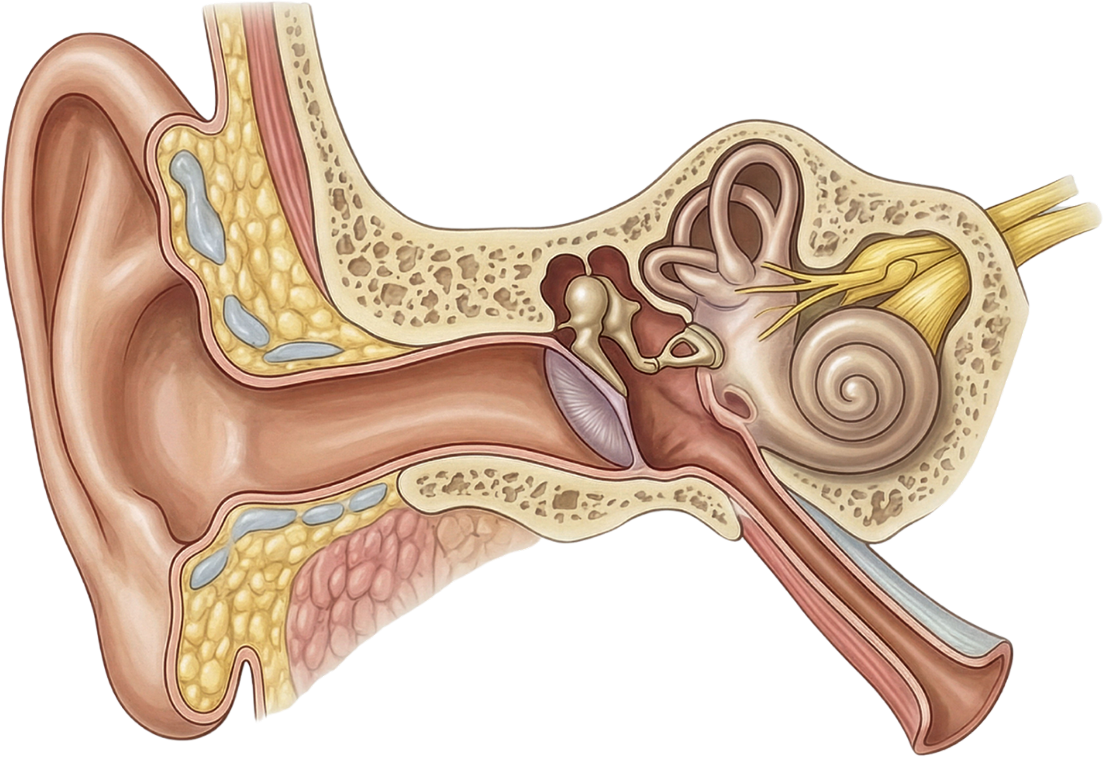
For most parts of your body, you have neighboring blood vessels that can compensate, but not your inner ear.
The cochlea, the spiral-shaped structure in your inner ear that converts sound waves into a signal, is supplied by a single terminal vessel, the labyrinthine artery, an end organ with deficient collateral circulation.
When that supply is restricted, reduced, or interrupted, the cochlea absorbs the full impact.
Inside the cochlea, a tissue called the stria vascularis maintains the precise electrochemical environment that enables hearing.
It depends on a constant flow of oxygen and nutrients.
A large 2025 population study found that hearing loss may serve as an early marker of systemic vascular dysfunction.
Particularly for people managing diabetes, where elevated blood sugar damages the same inner ear microvasculature that cardiovascular disease affects.
Because the cochlea depends on a delicate blood supply, hearing changes may sometimes appear alongside, or even before, other vascular complications.
The Cardiovascular Conditions Most Linked to Hearing Changes

Hypertension, atherosclerosis, elevated cholesterol, and heart disease restrict or injure the blood supply that the cochlea depends on to function.
High blood pressure is both a direct threat and an accelerant.
Sustained elevated pressure damages the linings of blood vessels.
It also accelerates atherosclerosis, the progressive buildup of plaque that narrows the labyrinthine artery over time. A 2024 study found that nearly half of people with hypertension showed measurable hearing impairment: 49.4%, compared to 34.8% of those with normal blood pressure.
That difference appeared across all frequency ranges, not just the high-frequency loss typically associated with aging.
Elevated cholesterol has its own cochlear mechanism.
High LDL and elevated triglyceride levels thicken vessel walls and reduce oxygen flow to inner ear structures.
Research has specifically linked dyslipidemia to sudden sensorineural hearing loss, the abrupt, often one-sided hearing drop that appears without obvious cause or warning.
Heart disease is broadly evident in the prevalence data.
A separate analysis of national health survey data found that individuals managing two or more cardiovascular risk factors carry an estimated 90% increased risk of hearing loss.
These are associations that do not guarantee hearing problems. Having high blood pressure does not mean your hearing will decline, but there is often a clear overlap between the two.
Pulsatile Tinnitus
If the sound in your ears beats in time with your heartbeat, that’s pulsatile tinnitus, and it’s your ear picking up the sound of blood moving through your arteries.
Most tinnitus, the ringing, buzzing, or hissing that many people experience, originates in the hearing system itself.
Pulsatile tinnitus is different. It has a rhythm. It pulses. If you sit quietly and pay attention, you may notice it matches your heartbeat exactly.
It’s the sound of turbulent blood flow in vessels near the ear, and the inner ear is sensitive enough to detect it.
In older adults, the most common underlying cause of pulsatile tinnitus is atherosclerotic carotid disease, plaque buildup in the carotid artery, which changes the way blood sounds as it moves.
Pulsatile tinnitus accounts for about 4% of all tinnitus cases.
The inner ear can sometimes reflect broader vascular health in ways many patients don’t realize
Other symptoms with vascular origins are worth noting: gradual, low-frequency hearing loss; sudden one-sided hearing changes; or a persistent feeling of fullness or pressure in the ear that doesn’t resolve on its own.
A Hearing Test Makes Sense as a Cardiovascular Health Step
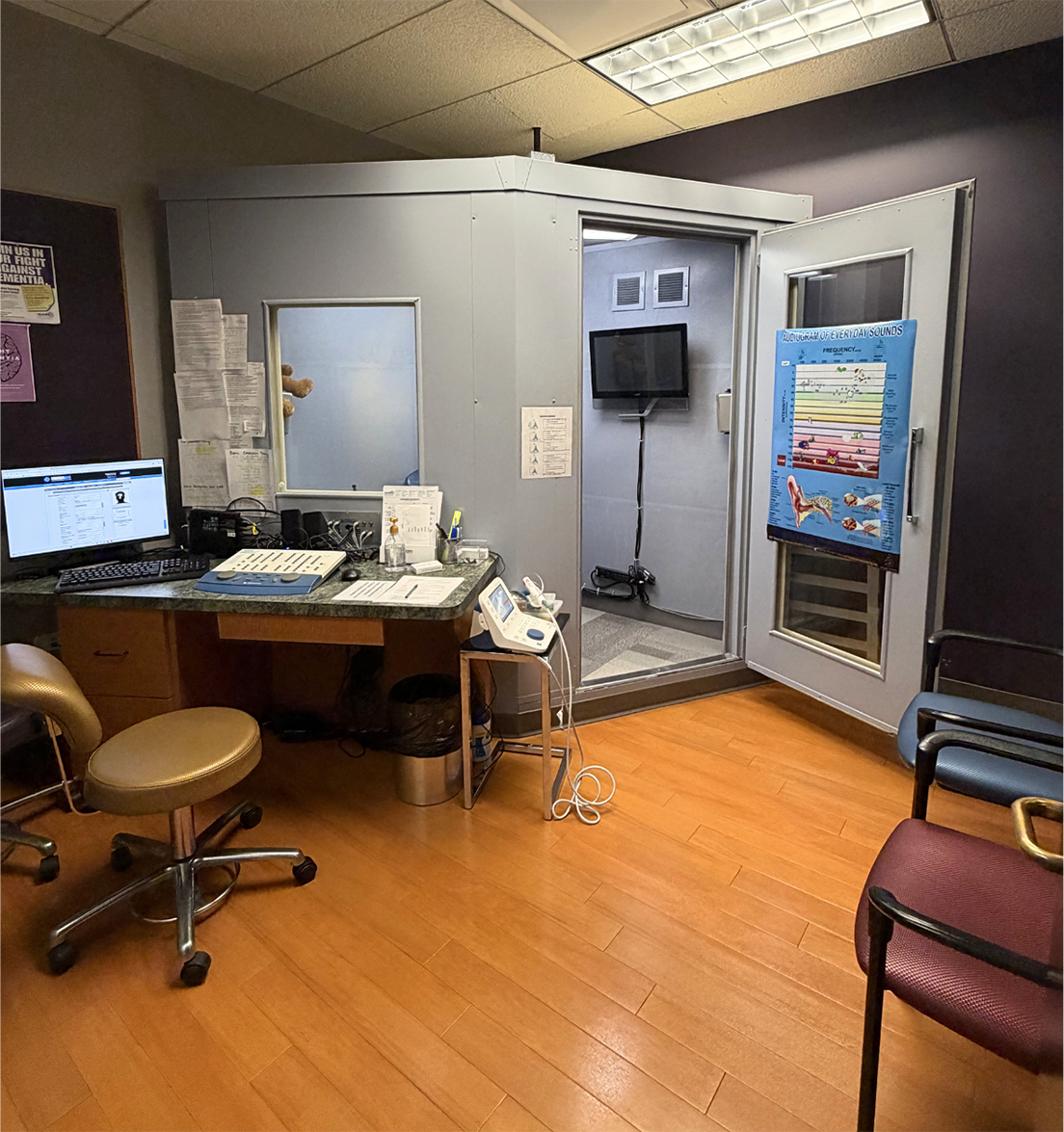
A hearing test can detect changes in cochlear function that reflect how your circulation is performing, and it gives you a documented baseline to track against in the years ahead.
You already monitor your blood pressure. You get your cholesterol checked on a schedule.
Your inner ear is part of the same vascular system, and a hearing evaluation gives you a specific, documented picture of cochlear function at a moment in time.
The pattern of the results (which frequencies are affected, how the loss is distributed, whether it’s symmetrical) can tell an audiologist something about its likely origin.
If you’re managing hypertension, elevated cholesterol, heart disease, or if you’ve experienced any of the symptoms described here, a hearing test is a reasonable addition to the picture you’re already building.
Schedule Your Free Hearing Evaluation Today
Struggling with hearing loss or cardiovascular issues? Schedule a free hearing evaluation with Hearing Health Center to understand your current situation better and find solutions to any of your hearing problems.
As more and more people turn to over-the-counter hearing aids, misinformation about them is increasing.
While not for everyone, if you are looking to purchase OTC hearing aids, there are a few considerations.
Our guide provides you with the critical information you need to make the right decision about your hearing aids.
What To Evaluate Hearing Aids On
When looking for a pair of hearing aids, there’s a lot to consider. How they fit and how they sound are just some of the criteria I use when making suggestions to patients about their next pair.
Before offering any options, here are the 13 factors we consider for your hearing aids:
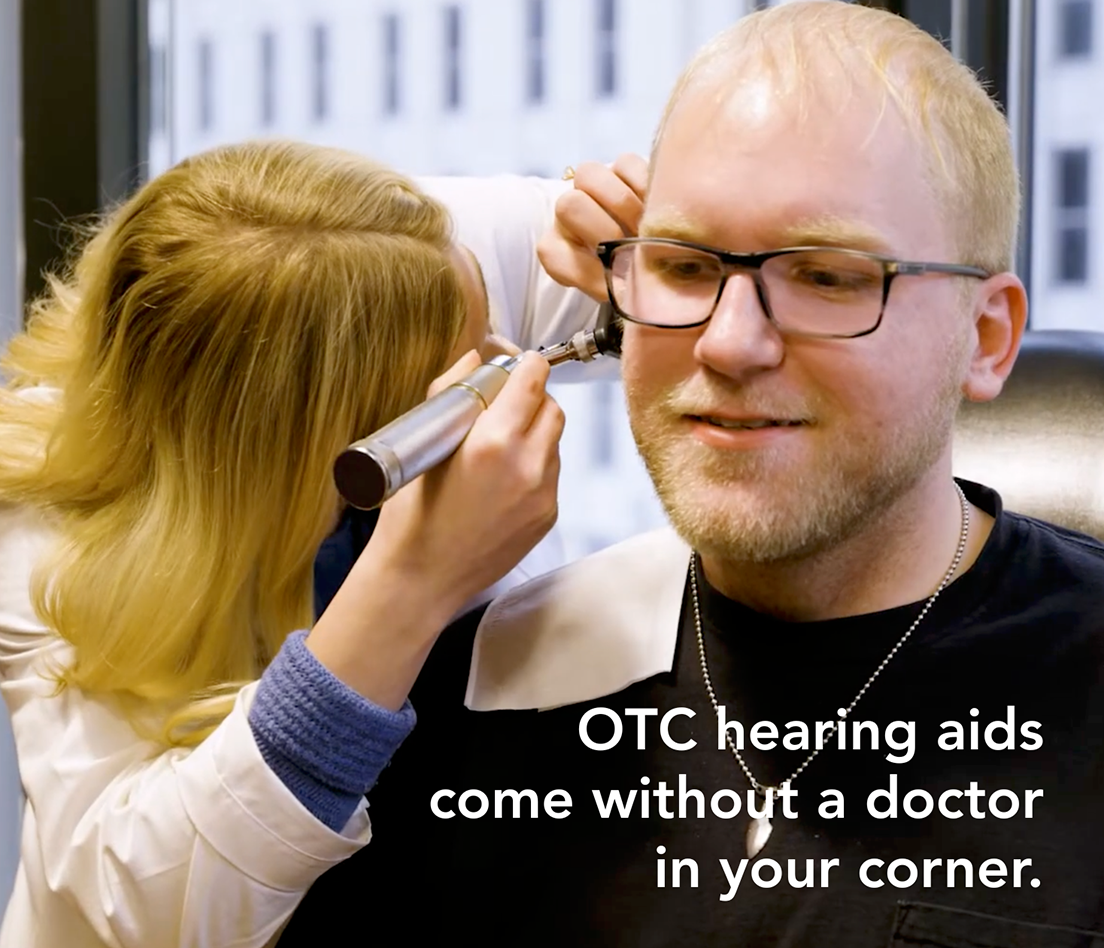
1. Speech understanding (most important). People want to hear people, not just sounds. If you cannot be part of the conversation because of your hearing, then your hearing aids aren’t working as they should.
2. Evaluate speech understanding in various environments (moderate noise, heavy noise from behind, groups). Different locations require different settings for your hearing aids. If they aren’t adaptable, they might not be your best choice.
3. Evaluate clarity, ease of understanding, and listening effort. When wearing hearing aids, it shouldn’t be a struggle to understand what people are saying.
4. Noise management. We need to see how quickly your hearing aids adapt to environmental changes. Does noise overpower the ability to understand? This is an important element to consider before purchasing.
5. Sound quality. Simply, how do they sound listening to music, to TV, to everyday sounds (footsteps, paper)? Is it clear? Fuzzy? If the sound quality isn’t great, then look for other options.
6. Comfort and physical fit. If your hearing aids are not comfortable or do not fit perfectly, the “best” hearing aids will fail. That’s where working with an audiologist is so important. Our team works with you to ensure your comfort levels and fit align to get the most out of your hearing aids.
7. Streaming and connectivity. This is where many products fail. How do your hearing aids sound on the phone? Do they drop calls? How do they handle streaming music and switching devices?
8. Customization and flexible fitting allow us to assess fit, tinnitus features, and adjustments for specific needs. The less flexibility, the fewer options you have to make the hearing aids work for you.
9. Feedback. Do the hearing aids whistle when talking, eating, or wearing a hat? That could make things annoying and difficult to hear.
10. App features matter a lot these days. Depending on the brand, it’s important to consider what adjustments the patient controls – volume, programs, customization, and the learning curve for older or non-techy patients.
11. Battery life, like how long will the battery last in quiet and with streaming? How long do they take to charge?
Purchasing a set of OTC hearing aids doesn’t pair you with a doctor who knows the ins and outs of what makes a set great. That’s why it’s so important to work with an audiologist when making this important decision.
What are the Major Risks of OTC Hearing Aids?
Over-the-counter (OTC) hearing aids can be genuinely helpful for many people, but they are not risk-free. As an audiologist who has worked with patients and hearing aids for decades, I’ve seen firsthand the benefits of custom fitting and adjustments for a better hearing experience.
One of the major risks of purchasing OTC hearing aids is that without a professional diagnostic evaluation, you may overlook serious medical issues and delay proper treatment. Hearing aids might not be the solution to your problems.
Some potential issues include:
- Earwax blockage
- Ear infection
- Fluid in the ear
- Sudden or one-sided hearing loss
- Tinnitus caused by something serious
No audiologist means no fine-tuning for your specific needs and hearing profile.
Another risk factor is the adjustments you make on your own. Some sounds may be over-amplified, which can worsen hearing damage. Other sounds may be under-amplified, making the device useless.
That’s the quickest way for your OTC hearing aids to end up in the trash.
Plus, your hearing won’t always stay the same. If there’s no adjustment to your devices as your hearing changes, then you risk a poor hearing aid experience.
Don’t forget about fit. If devices do not fit properly, it can cause:
- Ear canal irritation
- Soreness or pressure
- Moisture buildup that leads to infections
That’s not to say OTC hearing aids aren’t good products, but they can lead to more serious problems if not addressed early.
What to Expect When Adapting to OTC Hearing Aids?
Over-the-counter hearing aids are not programmed, customized, or fine-tuned to your hearing configuration, lifestyle, or needs.
Therefore, adaptation will take longer.
The first suggestion is to ease in. While this is true for all hearing aids, it’s important still. Your brain has not heard many sounds in a long time; it takes time for your brain to accept and normalize them.
Start in quiet environments and one-on-one conversations. Gradually try small groups, and then noisy places.
Also, be consistent. Your brain adapts through repetition, so if you’re not using your hearing aids, you will never get used to them.
Focus enough time on fit. Hearing aids should fit well and be comfortable.
You should stop and get help if:
- You feel any pain or pressure.
- Your hearing gets worse.
- You get ringing in your ears.
- There is a big difference in the way you hear between your ears.
- There is no improvement in your hearing.
It generally takes 1-2 months to fully adapt to amplification. If you are still struggling after 4-6 weeks, it means the settings are not right, or the aids are not a good match for you.
Want A Better Hearing Aid Experience? Book Online With Hearing Health Center.
The audiologists at Hearing Health Center want to help you have a better experience with your hearing aids. Book an appointment online, or call any one of our five Chicagoland locations for a hearing test, hearing aid fitting, and so much more.
You’ve noticed it for a while now. The TV volume rattles the windows. The “huh?” and “what?” have become their own conversational soundtrack. The way family dinners have quietly reorganized themselves around the one person who can’t quite follow along.
You love this person, and you are losing your mind.
So you bring it up, and somehow, within thirty seconds, you’re in a full argument about something that happened in 2011.
Welcome to the hearing loss conversation. It rarely goes the way you planned.
Here’s what you need to understand before you try again: the person you’re worried about isn’t being difficult. They genuinely don’t know how bad it’s gotten.
Hearing loss is sneaky. It doesn’t show up one morning like a broken arm.
It creeps in over the years, and by the time you’re frustrated enough to say something, they’ve long since convinced themselves that restaurants have gotten noisier, that everyone mumbles now, and that the TV volume is completely reasonable.
Denial isn’t stubbornness. Their brain has been quietly gaslighting them for years, and it’s very good at its job.
Pick Your Moment And Your Words

Timing matters more than you think. Don’t bring this up mid-argument, mid-meal, or mid-anything. Find a quiet moment, one-on-one, when neither of you is already irritated, and lead with love, not logistics.
“I miss talking to you” lands completely differently than “you need to get your hearing checked.” One opens a door. The other reads like a summons.
Don’t say: “You never hear anything I say.”
Do say: “I want to hear your voice, and I want you to hear mine, and lately I feel like we’re losing that.”
Don’t Lead With The Hearing Aids

The minute you say “hearing aids,” a significant portion of the population will mentally check out because what they hear is “you’re old,” “something is wrong with you,” and “everyone is going to notice.”
Which, to be fair, is a lot to absorb before dessert.
So, skip the devices entirely in the first conversation.
Talk about what’s actually being lost: grandkids’ voices at the dinner table, phone calls that have gotten shorter because the connection always seems “bad,” the Sunday night shows they used to watch with you that have quietly stopped.
That’s the real conversation. The appointment with the audiologist is just the next step.
Use Evidence From Their Own Life
Point to the turn signal they didn’t hear.
Mention gently that you said their name three times before they looked up.
Do this without the tone of someone keeping score, which, be honest, is hard when you have been keeping score.
If they push back, skip the debate about whose perception is accurate and suggest a simple baseline hearing screening instead.
Frame it like any other routine health check. You get your eyes checked. You go to the dentist. You let someone look at that mole.
Your ears have been working very hard for a very long time, and they deserve a little attention, too.
Know When To Stop Pushing
You may not win this conversation the first time…or the third time. In my experience, the record is considerably higher than that, and both parties had aged visibly by the end.
Planting the seed matters, though.
Saying something once, calmly, with love, is more powerful than a weekly campaign. They heard you. The irony of that sentence is not lost on me. But they did. Give it time.
Sometimes it takes a grandchild saying, “I want to tell you something, and I really need you to hear me.” Sometimes it takes a doctor mentioning it offhandedly in an appointment. Sometimes it takes one bad moment at a wedding, when they feel completely cut off from everyone they love, for them to come home quieter than usual.
Your job isn’t to force the decision. Your job is to make sure they know you’re asking because you love them, and that when they’re ready, you’ll be right there.
A Note For The Person This Is Actually About
If someone handed you this article, it’s because they love you. They want you at the table, fully present, not nodding along and hoping for the best.
Getting your hearing checked takes about an hour. You’ve spent more time than that looking for your keys.
When asking about ears, every audiologist has heard this: “My ears don’t hurt, but they itch a lot!” Whether or not a person uses hearing aids, itching in the ears is very common.
But why?
A lot of things can cause itching all over the body, and the ear is no different. I’ve briefly listed some common causes and solutions, but saved an in-depth look for conditions related to hearing aid issues.
3 Common Causes of Itchy Ears
Itchy ears, while annoying, are often not a sign of more serious problems. Here are the three most common reasons we see patients with itchy ears.
Dry Skin
Itchy, dry skin in the ear canal can be caused by your environment. This includes cold, dry air in the winter and over-air-conditioned air in the summer.
It can also be caused by over-cleaning (especially with cotton swabs, which can absorb natural oils too quickly) and by natural aging.
Solution: Moisturize
A drop or two of an oil like Miracell® in each ear at night will absorb while you sleep and often provides fast relief, but take care to never place oil in an ear that has a history of holes in the eardrum.
Lotion on a little finger or a cotton swab can also be placed in the ear canal.
Often, a humidifier can help with dry skin.
Medical Conditions
Medical conditions such as allergies, outer ear infections like “swimmer’s ear,” and eczema or psoriasis can cause or worsen itching in the ear canal.
Surprisingly, high levels of stress or anxiety can be felt as itching and discomfort all over, including inside the ears.
Solution: Seek Medical Treatment
Ear, nose, and throat physicians can determine whether allergies or ear infections are the issue; physicians specializing in the ears, nose, and throat (“ENTs” or “otolaryngologists”) can prescribe appropriate treatments.
Dermatologists, skin-specialized doctors, can help with diagnoses such as eczema and psoriasis, for which many treatments are available.
If you think stress might be the problem, talk it out with a licensed counselor, psychologist, or psychiatrist.
You may relieve yourself of more than just an itch.
Hearing Aid Issues
Although hearing devices don’t usually cause allergic reactions, there are other ways they might contribute to itching.
If there is a build-up of earwax, a hearing aid can make it worse, causing itching or irritation until the ear is cleaned.
If a hearing aid sits too loosely inside the ear, it can “tickle” the ear canal and cause itching.
If a hearing aid has a very tight fit in the ear and is worn for a very long time each day, moisture can accumulate behind the hearing aid, causing a damp, itchy feeling (kind of like when you sweat in the summertime).
While the hearing aids themselves are usually hypoallergenic, clients rarely experience allergic reactions to cleaning solutions, whether in our clinic or to over-the-counter versions used at home.
Solution: See Your Hearing Care Provider
The hearing care providers at HHC can work with you to assess the fit of your hearing devices (loose/tight) and recommend next steps and other changes or treatments.
We can also look deeply into your ears, a process called “otoscopy,” to see whether dry skin, earwax, or an allergic reaction is the problem.
When in doubt, contact your audiologist.
How to Scratch Your Itchy Ears
There’s nothing else like scratching an itch, but we have some recommendations for how to go about it to avoid causing more problems.
Here are some techniques:
The Push and Wiggle
Placing a finger on the space in front of the ear and “wiggling” can help ease itching with or without a hearing aid in place. This is using the flat of your finger, not your fingernail!
Re- adjust your hearing device
If possible, remove and re-place your hearing aid, or pull the earbud in and out, to apply some pressure inside the ear and scratch that itch.
“Referred” itching
This one is a bit weird…Often used by people with missing limbs, “referred” itching is when you scratch an itch without actually scratching it.
Instead of trying to reach deep inside your ear canal, gently scratching another part of your body (like the back of your hand) while thinking about your itchy ear (“referring” the itch to the ear) can provide surprising relief.
I’ve used this myself when I get an itch on the bottom of my foot in the car. Sometimes it works.
Could Itchy Ears Be Something Serious?
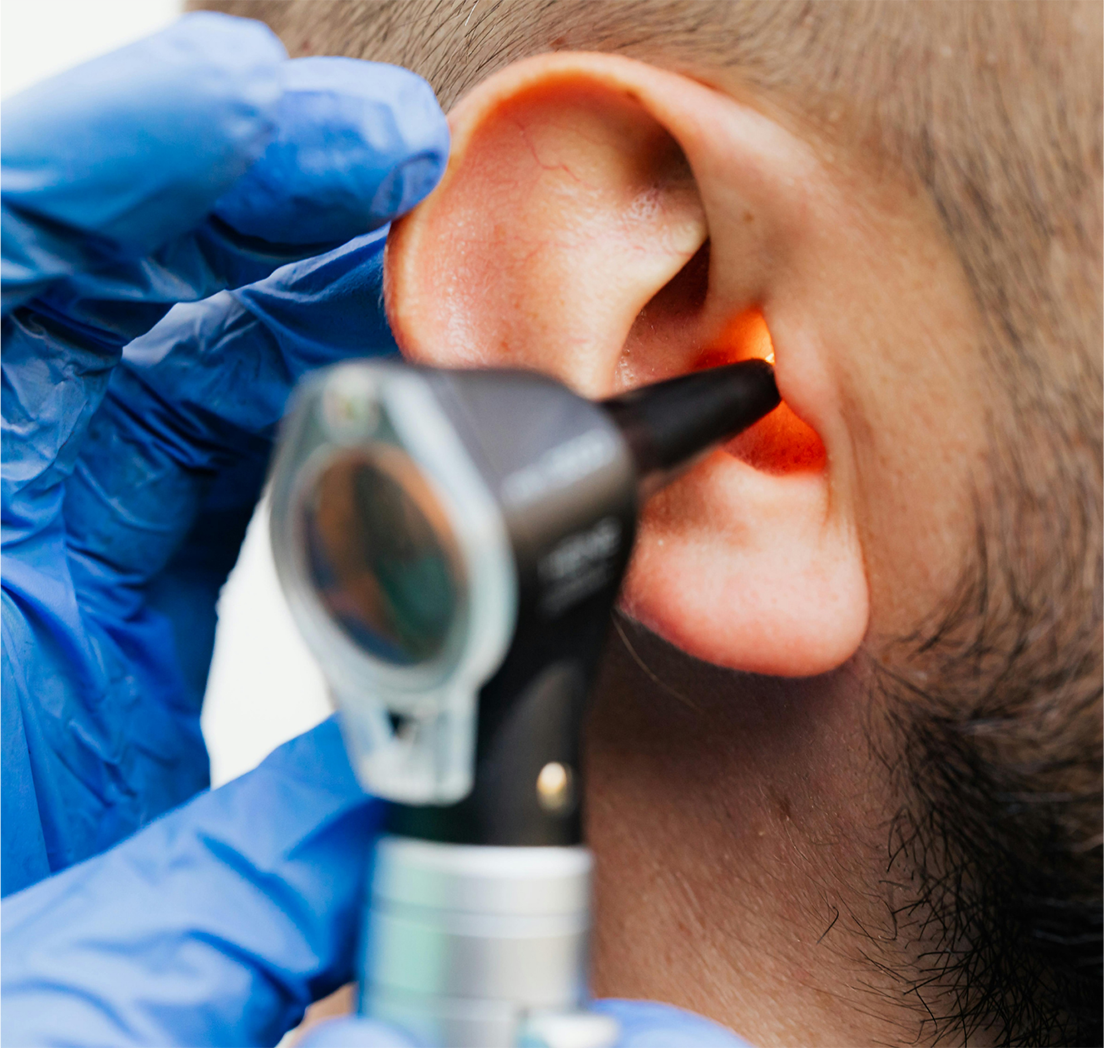
Most ear itching is minor and easily managed, but there are situations where it warrants prompt professional attention.
Contact your audiologist or physician if you experience:
- Persistent itching that doesn’t respond to home remedies after a week or two
- Pain or pressure inside the ear, alongside the itching
- Discharge or fluid coming from the ear canal
- Muffled or changing hearing that coincides with when itching began
- Visible redness or swelling around or inside the ear
- Itching after a recent illness, including some viral infections, like shingles, can affect the ear canal and require prompt medical treatment
These symptoms don’t always mean something serious is wrong, but they’re worth a professional look.
Catching an infection, skin condition, or wax impaction early is almost always easier than waiting it out.
Never Stick Something in Your Ear
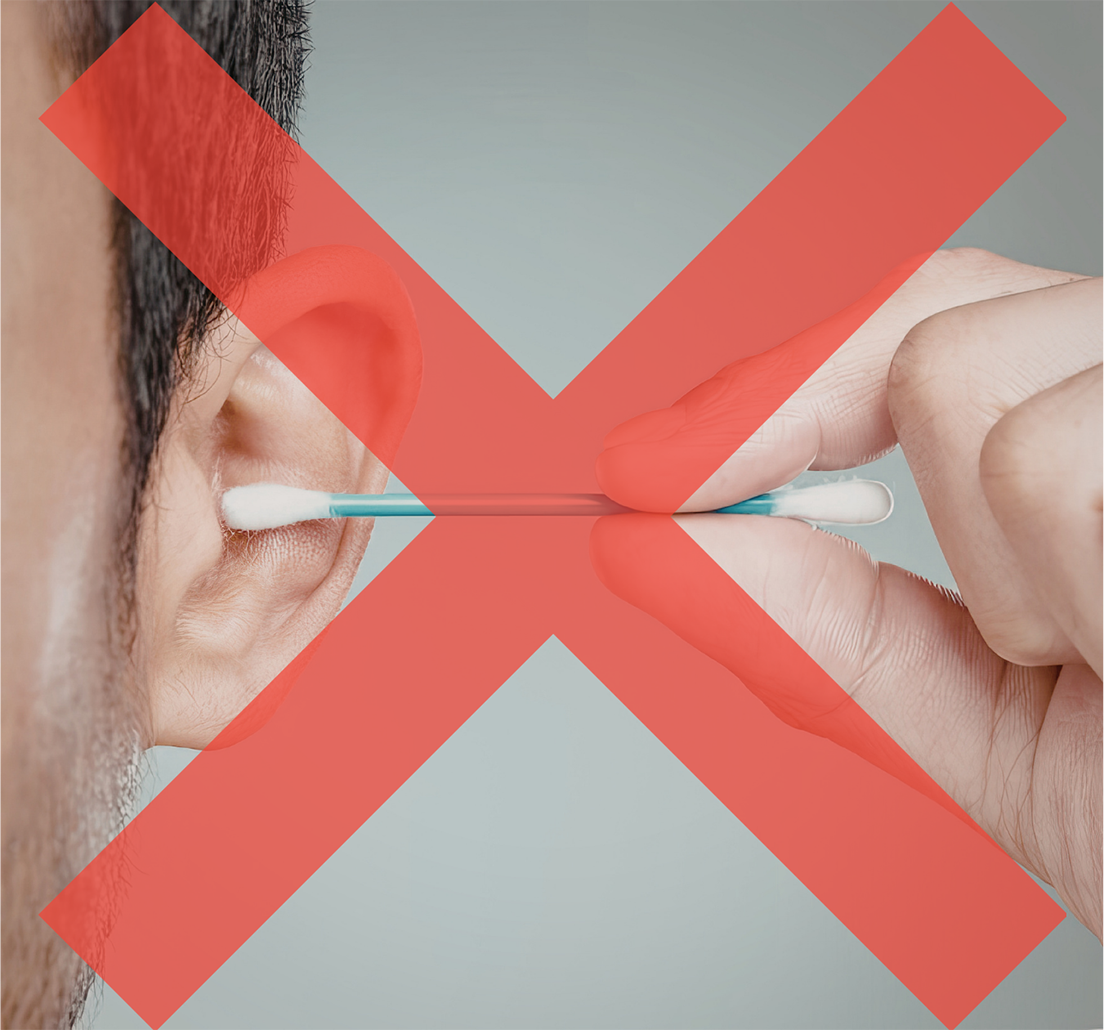
It’s always important to remember, don’t place foreign objects like Q-tips, bobby pins, long fingernails, pens or pencils, paperclips, or golf tees (yes, we’ve been told someone used a golf tee!) in your ears for itching or wax removal.
These objects can push earwax toward the eardrum or cut the skin inside the ear, causing bleeding.
When that cut begins to scab over and heal…it will itch even worse!
Itchy Ears? Dealing with Hearing Loss? Book an Appointment at Hearing Health Center Today!
If itching is persistent, worsening, or accompanied by pain, discharge, or muffled hearing, don’t wait it out.
The team at Hearing Health Center is here to help identify the source and get you comfortable again.
Schedule an appointment at any of our five convenient Chicagoland locations.
Your hearing health matters, and the choices you make about hearing aids affect not only your day-to-day living but also your long-term cognitive health.
As hearing technology improves, so do the buzzwords. Recently, there’s been a lot of noise about AI in hearing aids, and it’s important to understand what it means, how it affects your hearing aids, and why you may (or may not) need it.
Despite AI hearing aids being around for a few years, we wanted to help you separate fact from fiction so you and your audiologist can make the most informed decision possible.
How Does AI Work in Hearing Aids?
At this point, it’s impossible to avoid AI in nearly every aspect of our lives. From live chats with our phones to customized shopping lists at the grocery store, if there’s a way to include artificial intelligence in a product, you’re going to see it.
But did you know that hearing aids have been advertising AI for years?
For hearing aids, AI should be broken into two categories: machine learning and deep neural networks.
About two decades ago, the first hearing aids with AI were introduced to the public. For years, your hearing aids have identified audio patterns in restaurants, conversations, and music to build an internal memory system. Then, when the wearer’s environment matches the learned memory system, your hearing aids automatically apply the right settings for the situation.
In 2021, the first hearing aid with embedded deep neural networks hit the market. DNN’s are trained on massive datasets of real-world sounds to mimic the human brain, eventually separating sound from speech to provide a clearer hearing experience.
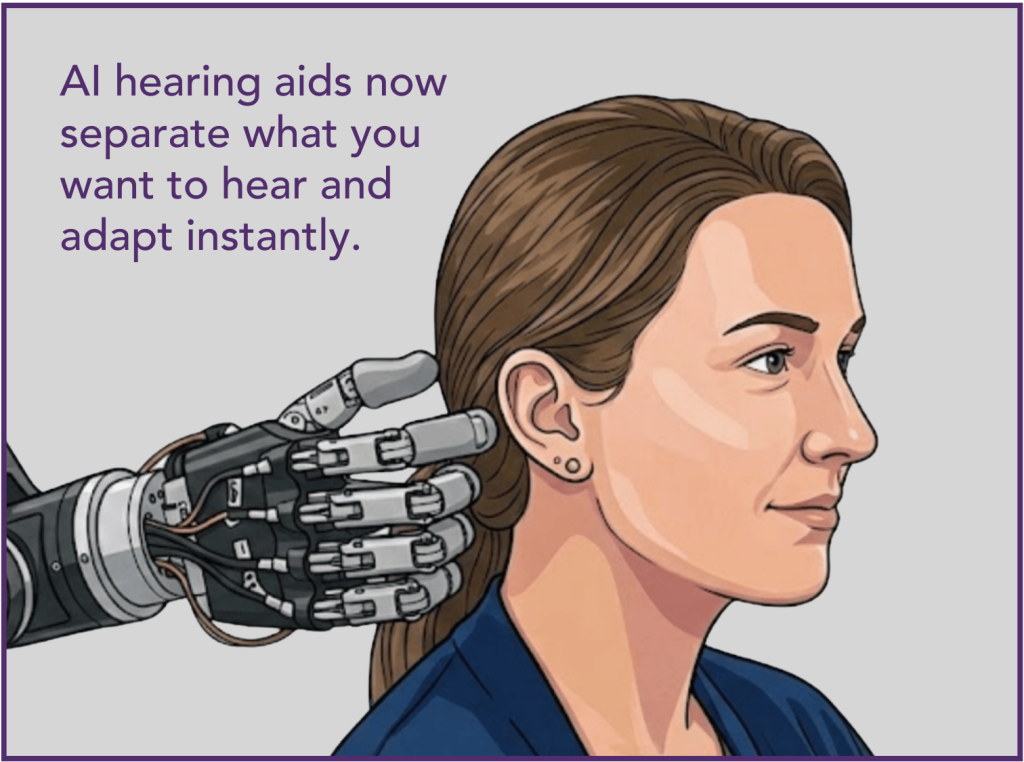
We are at the point where these hearing aids are being trained on tens of millions of sound samples and spoken sentences, creating a better-than-ever sound experience.
At this point, hearing aids with AI intelligently separate what you want to hear versus what you don’t. The AI continuously analyzes your environment to adapt in real time to patients’ needs.
A March 2024 study found that DNN-powered noise reduction outperformed traditional noise reduction techniques, and a 2025 follow-up field research study found that DNN improved interference control. For patients with cognitive load and mental fatigue that lead to conditions like Alzheimer’s, DNN-powered hearing aids are a welcome relief.
Some AI-powered hearing aids also allow audiologists to make remote adjustments to your devices based on patient feedback or data collected on the device. If you’re travelling or live far away from your audiologist, this ensures you get the essential fine-tuning you need for the best experience with hearing aids.
That being said, not all AI hearing aids are the same. Only a few products on the market offer real-time AI processing, which means it’s even more important to work with your audiologist to identify the best hearing aids for your situation.
4 Common Myths About AI in Hearing Aids
With “AI-powered” marketing language all around us, it’s harder than ever to understand what’s real and what’s fake when it comes to your hearing aids. Here are some of the most commonly believed myths and what the evidence actually proves.
Myth: All AI hearing aids think and adapt in real-time while you wear them.
The reality is that most hearing aids use AI during the development and training phase (i.e., before you purchase them), not while you wear them. There are a few products that offer real-time AI processing, but for the majority of hearing aids on the market, all of the AI tools are developed before your purchase.
But that isn’t a bad thing, as the AI algorithms are genuinely effective in providing an excellent hearing aid experience.
Myth: AI hearing aids automatically fix my hearing without the need for an audiologist.
The diagnostic experience and fine-tuning that comes from working with an experienced audiologist is the difference between a good and a bad experience with your hearing aids.
Audiologists ensure everything fits correctly and that the hearing aid is programmed correctly for your specific hearing loss.
Myth: More AI features mean better hearing.
Studies and tests show that while AI features work well, they aren’t universally better in every situation. Those with quieter daily routines probably don’t need adaptive technologies, unlike folks working in more chaotic sound environments.
As with any hearing aid, work with a trusted audiologist to ensure you get the right hearing aid for your sound environment.
Myth (mostly: AI hearing aids are always listening to my private conversations.
AI-powered devices use strict security measures to protect your personal information, with many newer hearing aids processing data on the chips themselves rather than sending audio to the cloud.
But one study revealed that hearing aids were broadcasting patients’ names over Bluetooth without users’ ability to change them. There are also some inconsistencies in how data is governed. Our recommendation is to ask your audiologist about how your data is stored, processed, and shared.
Do You Need AI In Your Hearing Aids?
When surrounded by AI marketing, the question becomes, “Do you need AI for your hearing aids too?”
The answer, unfortunately, isn’t as simple as yes or no; the truth lies in what environments you spend your time and what sort of hearing problems you have.
Almost all research universally agrees that AI in hearing aids helps with noise reduction, specifically in situations where you need to understand what someone is saying over competing background sounds.
A 2025 study published in Frontiers in Audiology and Otology evaluated DNN-based processing across seven real-world acoustic environments, including bars, restaurants, shopping malls, and construction sites, finding measurable improvements in both speech recognition and listener preference when AI-based noise reduction was active.
If these hearing aids reduce cognitive load, there’s a good chance they will positively affect brain health outcomes. When a hearing aid reduces the strain of processing sound in noise, it potentially frees up cognitive resources.
Modern AI-powered hearing aids provide an effortless listening experience, reducing the strain often associated with hearing in complex environments. For anyone at risk, these new AI-powered hearing aids can help reduce the risk of cognitive decline.
For people dealing with mild hearing loss or who spend most of their time in quiet environments, the most advanced AI isn’t as important. A well-fitted and adjusted hearing aid will deliver just as good outcomes.
Fit and Adjustments Are The Most Important Factors
More than any new technology, the most important factor in your hearing aid experience comes from the tuning, fitting, and adjustments your audiologist makes.
At Hearing Health Center, our audiologists have decades of experience working with patients of all ages, helping them get the most out of their hearing aids. When your hearing aids fit correctly and volumes are just right, you’re much more likely to continue wearing your hearing aids.
That’s why we always recommend coming to any of our five locations for fittings, adjustments, and to get any questions you might have about your hearing aids answered.
Having Trouble Hearing? Schedule Your Appointment at Hearing Health Center Today.
Having trouble hearing during conversations? Feel like social gatherings are getting harder and harder? Book your appointment online with Hearing Health Center for a free comprehensive hearing exam. An audiologist on staff performs a full exam and provides you with the information you need to get your hearing back on track.
Have you ever experienced a mysterious crackling sound haunting your ear, seemingly attacking you out of the blue?
If so, you may be wondering about this irritating sound and if you should be concerned about it.
This blog will unveil the secrets behind this peculiar yet annoying sound.
Let’s dive into the captivating journey of crackling sounds in the ear, understanding what they are, the early signs, and the treatments to explore.
What Is Crackling In The Ear?
Crackling in the ear symbolizes a peculiar sound similar to the crinkling of paper or the rustling of leaves. It can be annoying and even unnerving if it happens frequently enough.
We often refer to it as a clicking, popping sound in the ear or a persistent snapping noise. These noises make it difficult to focus on the work or their surroundings.
Causes include:
- Eustachian tube movement
- air pressure fluctuation
- excessive earwax
- muscle contractions
While harmless, ear crackling can be bothersome and may indicate an underlying issue that warrants further investigation.
Struggling with popping in your ear? Schedule your free consultation with Hearing Health Center today.
The Three Biggest Causes of Crackling in Ear
Sometimes the crackling in your ear is coming from an area near the ear, or a more specific medical condition. If the crackling conditions continue, consider one of the following:
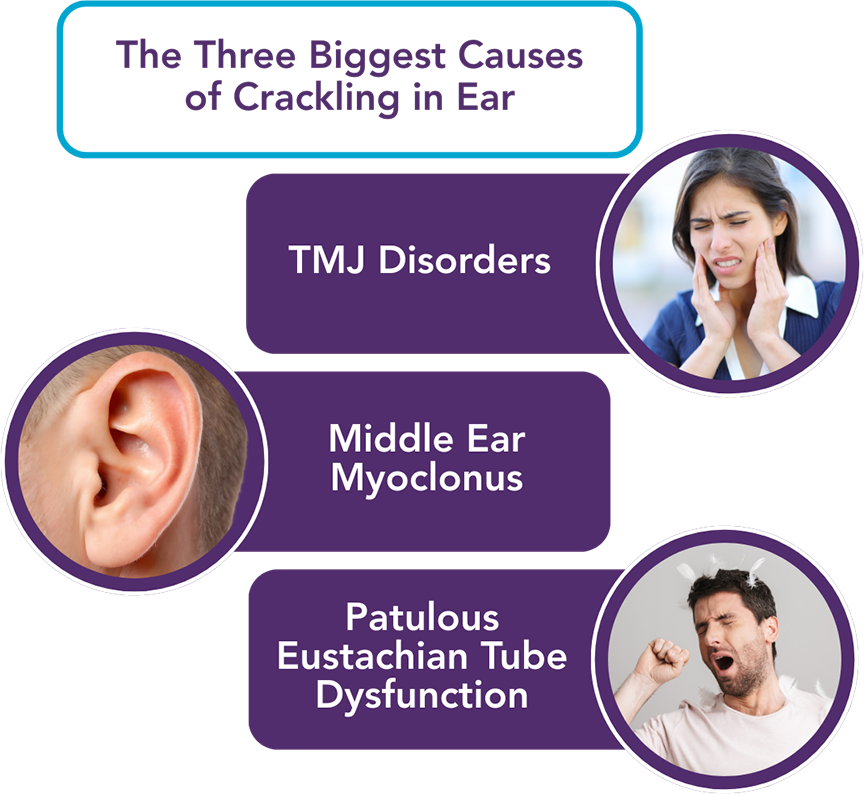
TMJ Disorders
Your temporomandibular joint (TMJ) sits right next to your ear canal.
If your jaw is misaligned or you’re dealing with teeth grinding, the clicking you hear is actually your jaw joint popping.
Middle Ear Myoclonus (MEM)
Think of this as a “twitchy eye” but inside your ear.
Tiny muscles (the stapedius or tensor tympani) can sometimes spasm rhythmically, causing a seemingly random thumping or clicking noise.
Patulous Eustachian Tube (PET) Dysfunction
Most of the time, the Eustachian tube remains closed and only opens when you swallow or yawn.
For people with PET Dysfunction, the tubes stay open constantly, causing “autophony,” a condition in which your breathing sounds echo or distort, often accompanied by crackling.
Five Early Signs Of A Crackling Sound In The Ear
Early signs of ear crackling can vary depending on the underlying cause.
Listed below are five common early signs that you must watch out for in case of something more serious going on:
- Popping & Clicking: You may notice popping or clicking sounds in one or both ears, similar to popping bubbles.
- The Sensation of Pressure: You might feel pressure in the ear, as if something is blocking it.
- Mild Discomfort: You may experience slight discomfort in the ear, which can be referred to as a sensation of mild pain or extreme itchiness.
- Fluctuation in Hearing Sensitivity: You might observe subtle changes in your ability to hear or even a slight reduction in hearing sensitivity, especially in the affected ear.
- Temporary Hearing Loss: Frequent episodes of temporary hearing loss or muffled sounds in your affected ear lasting for short periods are early signs of ear crackling.
It is essential to remember that these signs vary depending on the underlying causes.
If you experience any of these signs or have concerns about ear crackling, it is advised to consult medical professionals, including ENT specialists, for a proper diagnosis.
How To Preserve Your Ear From Crackling Sounds?
To preserve ear health and minimize crackling sounds, the best approach is simple ear health maintenance.

First, keep your ears clean and prevent excessive earwax buildup. Excessive earwax is a key contributor to the crackling sound and could lead to hearing damage if not treated appropriately.
If you work in a noisy environment or just love concerts, wear protective headphones (or safety earbuds). This is another instance of something that may not bother you in the moment but could cause serious injury later in life.
During activities like flying or swimming/scuba diving, it is advised to yawn or swallow to equalize pressure in your ears.
Also, this is very important. Do not use cotton swabs, car keys, or any other object to clean your ears.
Wonder why? Other than the obvious, any foreign object inserted into your ear pushes earwax deeper, causing damage to your delicate structure.
Lastly, drink enough water to maintain proper Eustachian tube function, facilitate equalization of pressure, and minimize the likelihood of crackling sounds.
How To Get Rid Of The Crackling Sound In The Ear?
The different treatments for the crackling sound you’re hearing really depend on the underlying cause. That’s why your audiologist will first focus on finding the reasons why it’s happening, then present you with a treatment plan.
One of the most common treatments begins with earwax removal. An audiologist will perform ear irrigation or use specialized tools to remove the buildup in a safe manner.
If you have issues caused by blockages, nasal congestion, or improper pressure equalization, the next step might be Eustachian Tube Dysfunction Management.
In case of ear infection or inflammation, antibiotics or anti-inflammatory medications should be prescribed to alleviate symptoms and resolve the underlying problems.
If the crackling sound is accompanied by tinnitus, treatments like CBT (Cognitive Behavioral Therapy), Sound Therapy, and TRT (Tinnitus Retraining Therapy) are recommended to help manage the symptoms.
For cases where muscle tension or spasm contributes to the crackling sound, techniques such as physical therapy, jaw exercises, and relaxation exercises help reduce tension and offer immense relief.
The best way to address ear crackling is to identify the underlying cause and work with your audiologist to resolve it.
When to Worry About Crackling in Your Ear
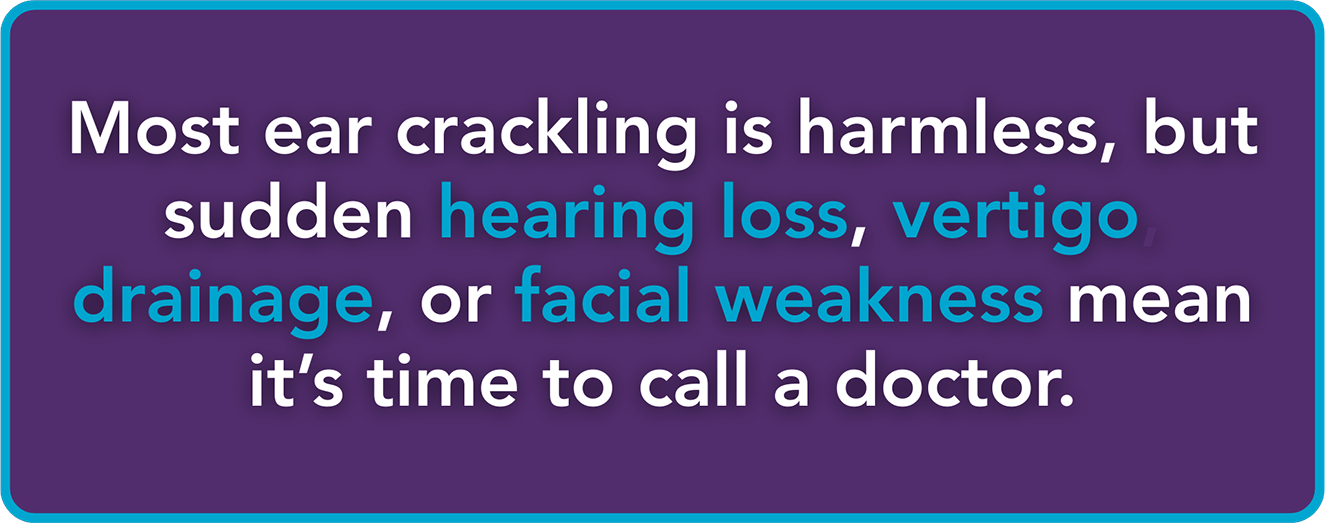
While most of the time, nothing to worry about, if you suddenly experience any of these additional symptoms, it is time to call a doctor right away.
Sudden Hearing Loss
If everything suddenly goes quiet, this becomes a medical emergency. The sooner you get treatment (often within 48 hours), the better the chance of recovery.
Vertigo
Vertigo is when the room starts to spin, or you become dizzy. If you are suffering from this, it might mean you have an inner ear infection or Vestibular issues that, when left untreated, can cause long-term hearing problems.
Drainage
It can be unsettling to see blood, pus, or clear fluid leaking from the ear canal, and it’s time to call a medical professional because this is an emergency.
Facial Weakness
Any drooping or facial numbness can be a sign that the nerves running near the ear are under significant stress. You should call a doctor immediately if you notice these signs.
How To Safeguard Young Kids Against Loud Noises?
Studies have shown that long-term hearing damage isn’t always the result of a single instance, but rather the combination of loud noises over significant periods of time. Since you don’t lose all of your hearing at once, you’ll gradually lose your ability to hear if you don’t get regularly scheduled hearing checks.
Step one is to limit exposure. Minimize exposure to loud sounds, especially during fireworks, machinery, and TV time. Also, offer properly fitted ear protection, such as earplugs or earmuffs to kids when in a noisy environment.
Second, make sure all electronic devices, media, and toys have volume limitations. The goal is to avoid prolonged exposure to loud noises.
You may also consider creating separate quiet areas at home for young kids where they can relax and take a break from the noise.
By practicing these measures, parents can safeguard their kids against damage caused by loud sounds.
Need Your Hearing Checked? Contact Hearing Health Center Today!
If you experience ear crackling with no pain, consult an ENT specialist or other medical expert to identify the issue and recommend treatment. It could be an earwax build-up, managing Eustachian tube dysfunction, or treating infections.
Consult our professionals at Hearing Health Center to get proper treatment, including earwax removal. We have a team to help patients find the treatment that best suits their unique hearing needs.