

Everything You Need to Know About Earwax
Dr. Ronna Fisher | Ask the Audiologist
For most people, earwax is a temporary nuisance that oftentimes isn’t even thought about. For others, earwax is a painful, debilitating problem that affects their daily life.
But the truth is, everyone has earwax, and depending on their health, they may need to take additional precautions to prevent serious hearing issues.
Our guide to earwax explains what it is, how to remove it, and, most importantly, when it’s time to see a doctor.
What Is Earwax?
Earwax is your ear canal’s cleaning system. Cerumen is created by the glands inside your ear canal to trap dust, carry antimicrobial properties, repel water, and keep the skin inside your ear from drying out.
While sometimes annoying and maybe a little gross, earwax is meant to protect the long-term health of your ears.
When you chew, talk, and move your jaw, old earwax moves towards the opening of your ear canal, where it usually flakes away,
For more information on earwax, we’ve written about when it crosses the line from normal to something worth addressing.
Impacted Earwax
Earwax impaction is when there’s a blockage in your ear canal and oftentimes requires a trip to the doctor for resolution.
A 2024 study found that 18.6% of people age 12 and older have some degree of cerumen impaction at any given time, and among adults 70 and older, that number jumps to 32.4%.
According to the AARP, about 8 million earwax removal procedures are performed each year in the United States.
Impacted earwax tends to come with the following symptoms:
- Sense of fullness or pressure
- Muffled or reduced hearing
- Tinnitus
- Itching
- Discharge with an odor
If you are experiencing any of these symptoms, it’s time to schedule an appointment with an audiologist for help.
Safe Earwax Removal at Home

At home, there are only a few safe ways to clean out your ears.
Earwax-softening drops such as mineral oil or an over-the-counter cerumenolytic may help loosen earwax. Some people can also safely use ear irrigation. However, this isn’t appropriate for everyone, so check with a healthcare professional if you’re unsure.
On the other end of the spectrum, there are a lot of tools you shouldn’t use to clean your ears.

First, stop using cotton swabs. Cotton swabs push wax deeper into the ear canal rather than pulling it out. Your earwax then gets impacted closer to the eardrum, where it’s more likely to become a real blockage.
Another popular but unhelpful activity is ear candling.
The idea is that a lit, hollow candle placed in your ear creates enough suction to draw out earwax. That isn’t the case, though.
Instead, leftover candle residue is collected, leaving your ears still impacted.
Over-the-counter removal kits are a mixed bag. Some use a syringe; others give you a mini-shovel-like tool. Without a doctor present, it’s hard to know whether or not you’re actually cleaning out wax or just irritating your ear.
We’ve gone into a full myth-by-myth breakdown, including a few we haven’t covered here, in Can I Clean My Own Ears?
What About Hearing Aids and Earwax
Earwax can also be a problem for your hearing aids.
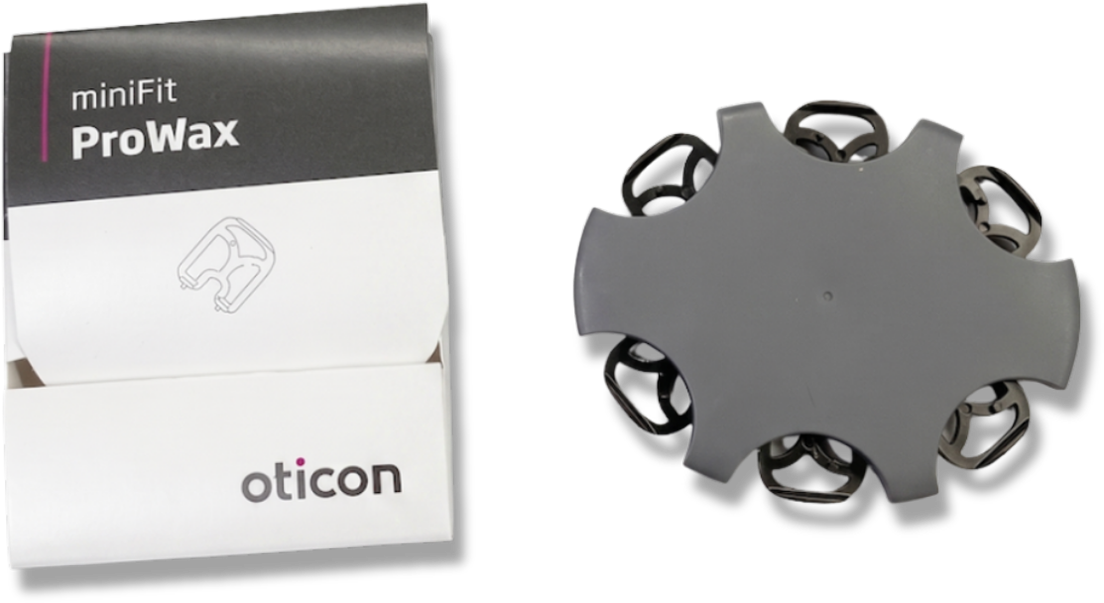
Hearing aids can make earwax more noticeable because wax can collect on the portion of the hearing aid that sits in or near the ear canal. Wax can also build up on the hearing aid’s receiver or wax filter, potentially affecting sound quality or causing feedback.
But wax also affects your hearing aids.
Sometimes you’ll experience a sudden squeal or whistle from earwax blocking the receiver, then leaking back out. If you’ve worn earbuds before, you also know that your ear can get trapped in the sound outlets, making everything muffled or off.
Hearing aids can cause earwax buildup, which in turn affects the quality of your hearing.
Wax guards are extremely helpful in preventing these issues, but it is also important to replace your guards more often than you think.
What to Expect During an Ear Cleaning with an Audiologist?
There isn’t a one-size-fits-all solution for earwax removal.
At Hearing Health Center, our audiologists are trained in suction, curettes, flushing, and other methods, depending on the type of earwax you may have. Loose wax needs a different approach than hard, impacted wax.
Older ear canals also tend to be more sensitive and more prone to irritation from the wrong approach, making it all the more important to have the right tools to protect your ears.
Our team has the knowledge and experience to help you hear better if you’re struggling with earwax buildup.
When Is It Time to Call a Doctor About Earwax?
Pain, odor, discharge, or fever all suggest calling your audiologist for a check-up. These symptoms could indicate an infection, requiring more urgent medical attention.
Another symptom that suggests a call is in order is the sudden appearance of one-sided muffled hearing. That can be a sign of sudden sensorineural hearing loss, a distinct condition that requires early treatment for the best chance of recovery.
If you are experiencing any of these symptoms, don’t hesitate to contact Hearing Health Center to schedule an appointment so our audiologists can help you hear better, sooner.
Need a Hearing Checkup? Struggling with Clogged Ears? Schedule an Appointment with Hearing Health Center Today.
Whether you’re dealing with too much earwax, need a hearing test, or are interested in hearing aids, we’ve got you covered at Hearing Health Center.
With five easy locations in the Chicagoland area, our expert audiologists are here when you need us most.
Schedule your appointment today.

About the Author: Dr. Ronna Fisher, AuD, CCC-A, FAAA is the founder and president of Hearing Health Center, which she established in 1984 in memory of her father, who suffered from untreated hearing loss and died at 53. That personal loss has shaped her entire career. Under her leadership, Hearing Health Center has been voted the best hearing practice in Illinois three years in a row by Hearing Review. In 2005, she expanded her mission by founding the Fisher Foundation for Hearing Health Care, a nonprofit dedicated to making auditory care more accessible. Dr. Fisher earned her doctorate in audiology from the Pennsylvania College of Optometry and holds a Certificate of Clinical Competence in Audiology (CCC-A) from the American Speech-Language-Hearing Association. She is a Fellow of the American Academy of Audiology and a member of the Academy of Dispensing Audiologists.
Recent Posts
- Can I Use Wireless Earbuds as Hearing Aids?
- Why You Should Wear Earplugs To Your Next Music Festival
- Why Do My Ears Feel Clogged?
- What Your Ears Might Be Warning You About Your Heart
- The Risks of Over-The-Counter Hearing Aids
- How to Bring Up Hearing Aids Without Starting a Fight
- Itchy, Itchy Ears: Common Causes and Solutions
-
Downtown Chicago
Magnificent Mile
142 E. Ontario St, Ste 1100
 (312) 263-7171
Learn More
(312) 263-7171
Learn More
-
Naperville
Fox Run Square
1212 S. Naper Blvd, Ste 103
(630) 369-8878
Learn More
-
Oak Brook
Oakbrook Prof. Bldg.
120 Oakbrook Ctr, Ste 709
(630) 571-7111
Learn More
-
Highland Park
Crossroads Shopping Cntr.
185 Skokie Valley Rd.
(847) 681-7000
Learn More
-
Park Ridge
Presence Resurrection
7447 W. Talcott Ave, Ste 360
(773) 466-8878
Learn More