
Why You Should Wear Earplugs To Your Next Music Festival
Dr. Ronna Fisher | Ask the Audiologist
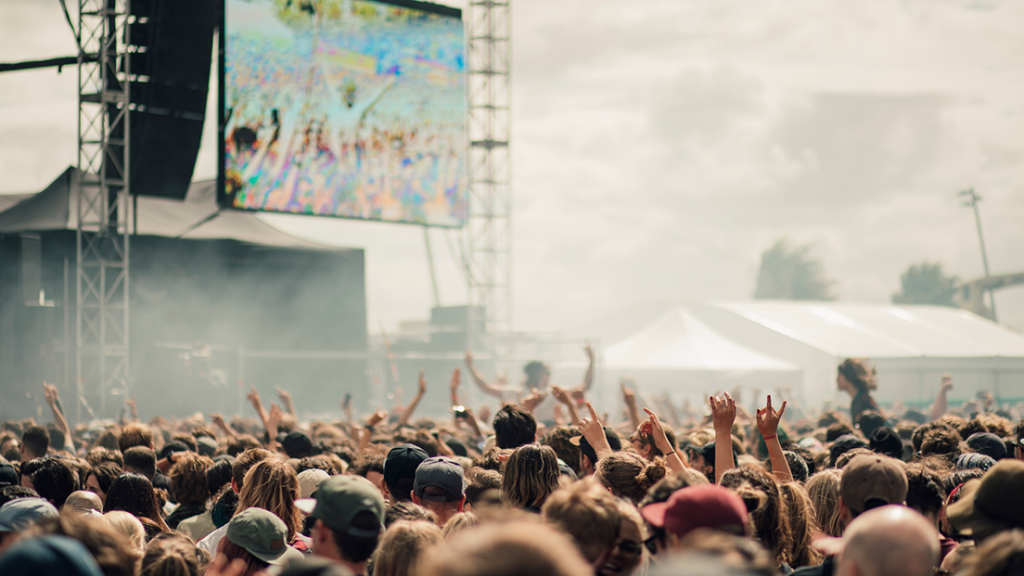
Every summer, Chicago holds hundreds of live concerts and music festivals, drawing thousands of people from all over the country.
But, if you’re one of the many audience members at Grant Park for Lollapalooza, Union Park for ARC Music festival, or the countless other festivals and free shows like the Millennium Park Summer Music Series, you might notice more and more people wearing earplugs.
Keep reading to find out why earplugs are a must-have for any concert-goer this summer.
Why Wear Earplugs?
The link between hearing loss and loud noise exposure is clear. According to one report, “nearly one in four (24.4%) U.S. adults aged 20-69 years show evidence of noise-induced hearing loss.”
Loud music in headphones and live events put nearly 1 billion teenagers and young adults at risk for hearing loss worldwide.
It’s been cited that “noise-induced hearing loss remains the second most common cause of sensorineural hearing loss after age-related loss, affecting approximately 5% of the world’s population.”
For perspective, the safe decibel level is 70 dB. That’s most conversations with your friends or noises around the house.
At 85 dB (city traffic, blenders), around 8 hours of prolonged exposure can cause hearing loss.
At 100 dB (chainsaws, sporting events), safe exposure is around 15 minutes.
Concerts and festivals often reach around 110 dB. At that volume, NIOSH recommends limiting exposure to about 2 minutes per day before the risk of permanent hearing damage increases.
Without hearing protection at a concert, you’re risking permanent hearing loss before the band even finishes its first song.
Who Should Wear Earplugs?
Everyone.
Whether you’re young, old, or in between, you should be wearing earplugs at every concert or festival you go to.
You obviously want to avoid bringing infants to loud environments as much as possible, but if you have to, they should wear earmuffs rather than earplugs to avoid damaging their ear canals.
Older children who can safely insert and remove earplugs on their own may be able to use musician-style earplugs designed for smaller ears. Parents should follow the manufacturer’s age recommendations or ask an audiologist for guidance.
And as you grow up, the need for earplugs continues, as hearing loss isn’t a young or old person’s problem; it’s everyone’s problem.
When Do You Need Earplugs?
Concerts, live music, festivals, and even sporting events all reach sound levels high enough that earplugs are recommended to avoid serious hearing problems.
Concerts and Live Music
Peer-reviewed research found that popular concerts ranged from 85 to 110 dB, and some shows push way past that.
Guinness World Records no longer tracks the loudest band in the world, but in 1994, one band proclaimed 129.5 dB as the loudest show ever recorded.
Nightclubs
Research found that the average continuous noise level in nightclubs hits around 91.2 dB, high enough to cause damage after a single night out.
Sporting Events
Noise levels recorded during a World Series game averaged 97 dB.
The Guinness World Record for stadium crowd noise was set at 142.2 decibels during a 2014 NFL game, breaking a previous record of 137.6 decibels set the year before.
Peer-reviewed sports-safety literature is direct about the consequence: hearing loss from these exposures is cumulative and irreversible, and children who regularly attend games with season-ticket-holding parents can sustain permanent hearing damage over time if not wearing protection.
Festivals
Measured research on outdoor music festivals has recorded sustained main-stage sound levels above 100 dB throughout full sets, and front-of-crowd areas at outdoor festivals commonly exceed 115 dB.
At those sound levels, recommended daily exposure limits can be reached in about 15 minutes, increasing the risk of permanent hearing damage.
How Do You Put In Earplugs?
The Noise Reduction Rating (NRR) printed on earplug packaging is a laboratory number, measured under ideal, expert-fitted conditions.
In the real world, a poorly fitted earplug delivers a fraction of that protection.
That’s exactly why NIOSH recommends derating a foam earplug’s labeled NRR by 25%, and OSHA’s own simplified formula — roughly (NRR − 7) ÷ 2 — cuts the rating by around half to account for real-world use.
An earplug rated for 30 dB of noise reduction might only provide 11–15 dB if it’s not fitted properly.
Earplugs fit differently depending on the type you purchase, so please follow the directions to ensure they’re as effective and protective as possible.
What Type of Earplugs Should I Use For Music Festivals?
There are multiple types of earplugs for purchase, and not all work as effectively.
Foam Earplugs
The cheapest and most widely available option is still effective (as long as they’re inserted correctly).
The problem is that foam earplugs work as a physical barrier and not a filter, which means everything sounds muffled rather than quieter.
Most disposable foam earplugs are designed for single use, making them less economical if you attend concerts frequently.
Noise-Reduction Earplugs
These use an acoustic filter rather than a solid plug.
Noise-reduction earplugs use filters that let in some frequencies but not others, reducing the overall decibel level reaching your ear while preserving the balance of the sound, unlike foam, which blocks all sound.
Custom Molded Earplugs
Usually fitted by an audiologist and molded to your ear, these earplugs offer the most reliable seal of any option.
Many musicians prefer custom-molded plugs over off-the-shelf options for exactly this reason.
Struggling With Your Hearing? Schedule Your Baseline Hearing Test Today!
Summer is here, which means that outdoor concert season is in full swing.
If you’ve noticed ringing in your ears after a concert, or just want to protect your ears before your next show, schedule an appointment with Hearing Health Center for a free baseline hearing exam.

About the Author: Dr. Ronna Fisher, AuD, CCC-A, FAAA is the founder and president of Hearing Health Center, which she established in 1984 in memory of her father, who suffered from untreated hearing loss and died at 53. That personal loss has shaped her entire career. Under her leadership, Hearing Health Center has been voted the best hearing practice in Illinois three years in a row by Hearing Review. In 2005, she expanded her mission by founding the Fisher Foundation for Hearing Health Care, a nonprofit dedicated to making auditory care more accessible. Dr. Fisher earned her doctorate in audiology from the Pennsylvania College of Optometry and holds a Certificate of Clinical Competence in Audiology (CCC-A) from the American Speech-Language-Hearing Association. She is a Fellow of the American Academy of Audiology and a member of the Academy of Dispensing Audiologists.
Recent Posts
- Can I Use Wireless Earbuds as Hearing Aids?
- Everything You Need to Know About Earwax
- Why Do My Ears Feel Clogged?
- What Your Ears Might Be Warning You About Your Heart
- The Risks of Over-The-Counter Hearing Aids
- How to Bring Up Hearing Aids Without Starting a Fight
- Itchy, Itchy Ears: Common Causes and Solutions
-
Downtown Chicago
Magnificent Mile
142 E. Ontario St, Ste 1100
 (312) 263-7171
Learn More
(312) 263-7171
Learn More
-
Naperville
Fox Run Square
1212 S. Naper Blvd, Ste 103
(630) 369-8878
Learn More
-
Oak Brook
Oakbrook Prof. Bldg.
120 Oakbrook Ctr, Ste 709
(630) 571-7111
Learn More
-
Highland Park
Crossroads Shopping Cntr.
185 Skokie Valley Rd.
(847) 681-7000
Learn More
-
Park Ridge
Presence Resurrection
7447 W. Talcott Ave, Ste 360
(773) 466-8878
Learn More