
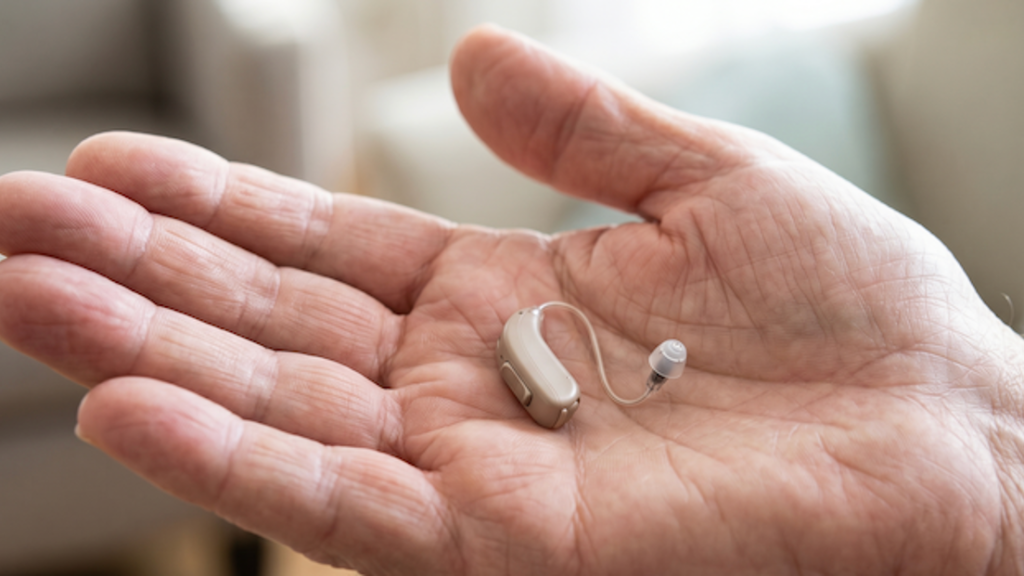
The Risks of Over-The-Counter Hearing Aids
Dr. Ronna Fisher | Ask the Audiologist
As more and more people turn to over-the-counter hearing aids, misinformation about them is increasing.
While not for everyone, if you are looking to purchase OTC hearing aids, there are a few considerations.
Our guide provides you with the critical information you need to make the right decision about your hearing aids.
What To Evaluate Hearing Aids On
When looking for a pair of hearing aids, there’s a lot to consider. How they fit and how they sound are just some of the criteria I use when making suggestions to patients about their next pair.
Before offering any options, here are the 13 factors we consider for your hearing aids:
1. Speech understanding (most important). People want to hear people, not just sounds. If you cannot be part of the conversation because of your hearing, then your hearing aids aren’t working as they should.
2. Evaluate speech understanding in various environments (moderate noise, heavy noise from behind, groups). Different locations require different settings for your hearing aids. If they aren’t adaptable, they might not be your best choice.
3. Evaluate clarity, ease of understanding, and listening effort. When wearing hearing aids, it shouldn’t be a struggle to understand what people are saying.
4. Noise management. We need to see how quickly your hearing aids adapt to environmental changes. Does noise overpower the ability to understand? This is an important element to consider before purchasing.
5. Sound quality. Simply, how do they sound listening to music, to TV, to everyday sounds (footsteps, paper)? Is it clear? Fuzzy? If the sound quality isn’t great, then look for other options.
6. Comfort and physical fit. If your hearing aids are not comfortable or do not fit perfectly, the “best” hearing aids will fail. That’s where working with an audiologist is so important. Our team works with you to ensure your comfort levels and fit align to get the most out of your hearing aids.
7. Streaming and connectivity. This is where many products fail. How do your hearing aids sound on the phone? Do they drop calls? How do they handle streaming music and switching devices?
8. Customization and flexible fitting allow us to assess fit, tinnitus features, and adjustments for specific needs. The less flexibility, the fewer options you have to make the hearing aids work for you.
9. Feedback. Do the hearing aids whistle when talking, eating, or wearing a hat? That could make things annoying and difficult to hear.
10. App features matter a lot these days. Depending on the brand, it’s important to consider what adjustments the patient controls – volume, programs, customization, and the learning curve for older or non-techy patients.
11. Battery life, like how long will the battery last in quiet and with streaming? How long do they take to charge?
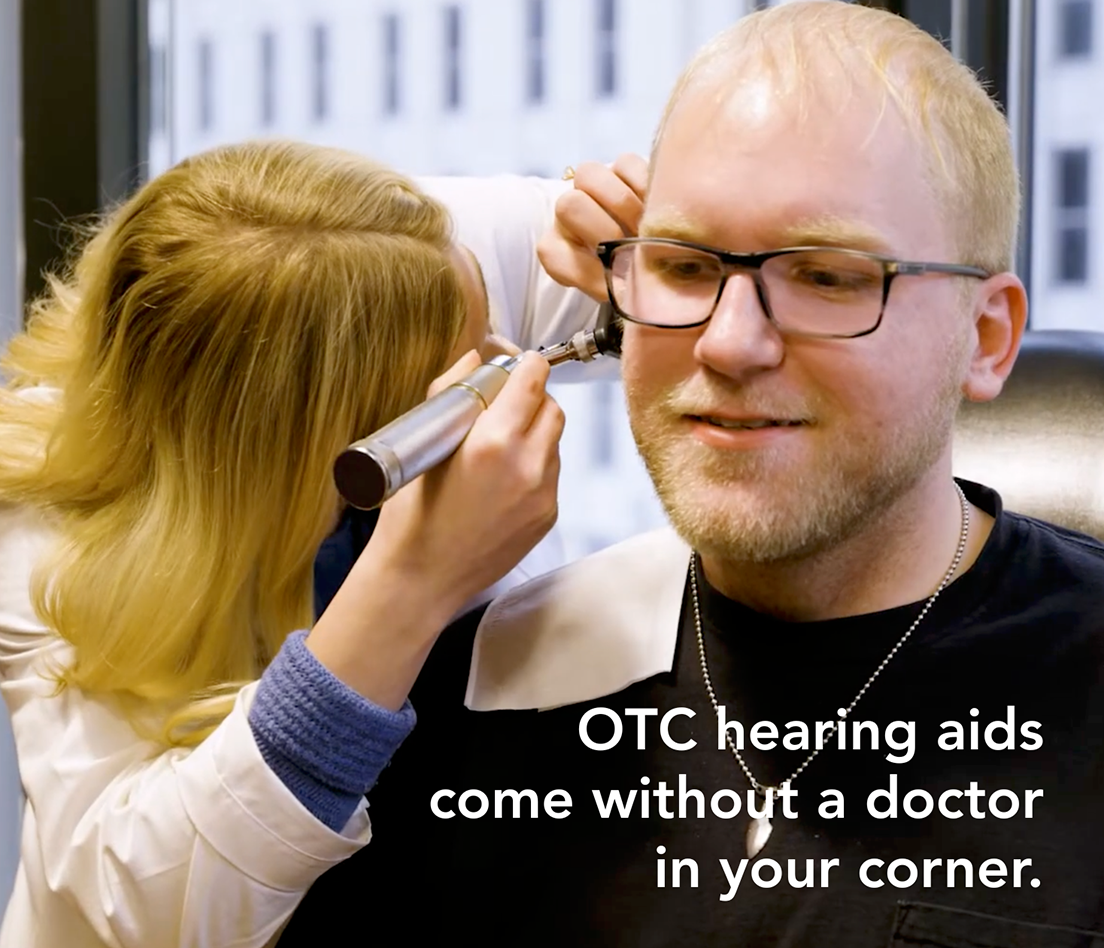
Purchasing a set of OTC hearing aids doesn’t pair you with a doctor who knows the ins and outs of what makes a set great. That’s why it’s so important to work with an audiologist when making this important decision.
What are the Major Risks of OTC Hearing Aids?
Over-the-counter (OTC) hearing aids can be genuinely helpful for many people, but they are not risk-free. As an audiologist who has worked with patients and hearing aids for decades, I’ve seen firsthand the benefits of custom fitting and adjustments for a better hearing experience.
One of the major risks of purchasing OTC hearing aids is that without a professional diagnostic evaluation, you may overlook serious medical issues and delay proper treatment. Hearing aids might not be the solution to your problems.
Some potential issues include:
- Earwax blockage
- Ear infection
- Fluid in the ear
- Sudden or one-sided hearing loss
- Tinnitus caused by something serious

No audiologist means no fine-tuning for your specific needs and hearing profile.
Another risk factor is the adjustments you make on your own. Some sounds may be over-amplified, which can worsen hearing damage. Other sounds may be under-amplified, making the device useless.
That’s the quickest way for your OTC hearing aids to end up in the trash.
Plus, your hearing won’t always stay the same. If there’s no adjustment to your devices as your hearing changes, then you risk a poor hearing aid experience.
Don’t forget about fit. If devices do not fit properly, it can cause:
- Ear canal irritation
- Soreness or pressure
- Moisture buildup that leads to infections
That’s not to say OTC hearing aids aren’t good products, but they can lead to more serious problems if not addressed early.
What to Expect When Adapting to OTC Hearing Aids?
Over-the-counter hearing aids are not programmed, customized, or fine-tuned to your hearing configuration, lifestyle, or needs.
Therefore, adaptation will take longer.
The first suggestion is to ease in. While this is true for all hearing aids, it’s important still. Your brain has not heard many sounds in a long time; it takes time for your brain to accept and normalize them.
Start in quiet environments and one-on-one conversations. Gradually try small groups, and then noisy places.
Also, be consistent. Your brain adapts through repetition, so if you’re not using your hearing aids, you will never get used to them.
Focus enough time on fit. Hearing aids should fit well and be comfortable.
You should stop and get help if:
- You feel any pain or pressure.
- Your hearing gets worse.
- You get ringing in your ears.
- There is a big difference in the way you hear between your ears.
- There is no improvement in your hearing.
It generally takes 1-2 months to fully adapt to amplification. If you are still struggling after 4-6 weeks, it means the settings are not right, or the aids are not a good match for you.
Want A Better Hearing Aid Experience? Book Online With Hearing Health Center.
The audiologists at Hearing Health Center want to help you have a better experience with your hearing aids. Book an appointment online, or call any one of our five Chicagoland locations for a hearing test, hearing aid fitting, and so much more.

About the Author: Dr. Ronna Fisher, AuD, CCC-A, FAAA is the founder and president of Hearing Health Center, which she established in 1984 in memory of her father, who suffered from untreated hearing loss and died at 53. That personal loss has shaped her entire career. Under her leadership, Hearing Health Center has been voted the best hearing practice in Illinois three years in a row by Hearing Review. In 2005, she expanded her mission by founding the Fisher Foundation for Hearing Health Care, a nonprofit dedicated to making auditory care more accessible. Dr. Fisher earned her doctorate in audiology from the Pennsylvania College of Optometry and holds a Certificate of Clinical Competence in Audiology (CCC-A) from the American Speech-Language-Hearing Association. She is a Fellow of the American Academy of Audiology and a member of the Academy of Dispensing Audiologists.
Recent Posts
- Can I Use Wireless Earbuds as Hearing Aids?
- Everything You Need to Know About Earwax
- Why You Should Wear Earplugs To Your Next Music Festival
- Why Do My Ears Feel Clogged?
- What Your Ears Might Be Warning You About Your Heart
- How to Bring Up Hearing Aids Without Starting a Fight
- Itchy, Itchy Ears: Common Causes and Solutions
-
Downtown Chicago
Magnificent Mile
142 E. Ontario St, Ste 1100
 (312) 263-7171
Learn More
(312) 263-7171
Learn More
-
Naperville
Fox Run Square
1212 S. Naper Blvd, Ste 103
(630) 369-8878
Learn More
-
Oak Brook
Oakbrook Prof. Bldg.
120 Oakbrook Ctr, Ste 709
(630) 571-7111
Learn More
-
Highland Park
Crossroads Shopping Cntr.
185 Skokie Valley Rd.
(847) 681-7000
Learn More
-
Park Ridge
Presence Resurrection
7447 W. Talcott Ave, Ste 360
(773) 466-8878
Learn More