
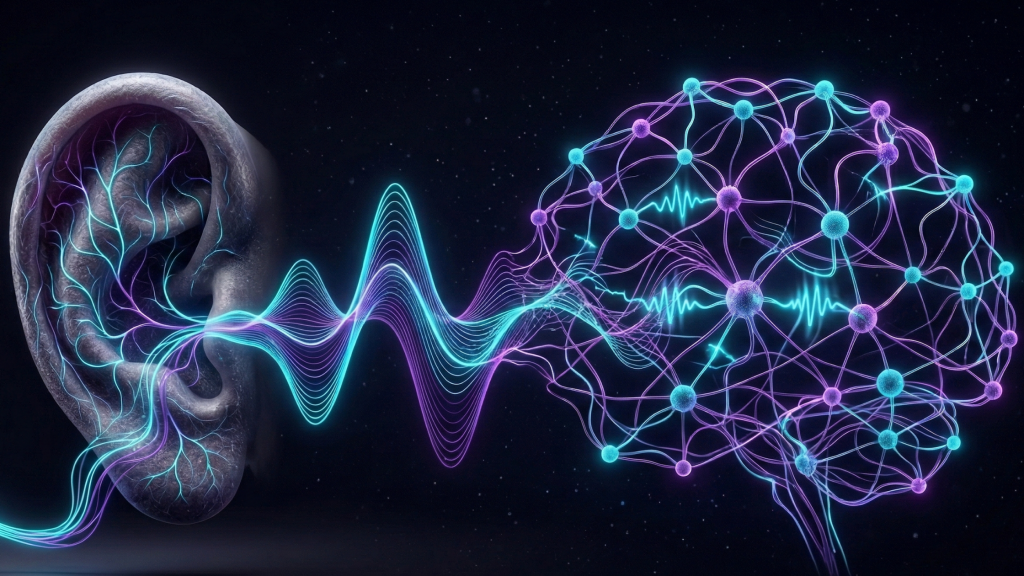
4 Common Myths About AI in Hearing Aids
Dr. Ronna Fisher | Ask the Audiologist
Your hearing health matters, and the choices you make about hearing aids affect not only your day-to-day living but also your long-term cognitive health.
As hearing technology improves, so do the buzzwords. Recently, there’s been a lot of noise about AI in hearing aids, and it’s important to understand what it means, how it affects your hearing aids, and why you may (or may not) need it.
Despite AI hearing aids being around for a few years, we wanted to help you separate fact from fiction so you and your audiologist can make the most informed decision possible.
How Does AI Work in Hearing Aids?
At this point, it’s impossible to avoid AI in nearly every aspect of our lives. From live chats with our phones to customized shopping lists at the grocery store, if there’s a way to include artificial intelligence in a product, you’re going to see it.
But did you know that hearing aids have been advertising AI for years?
For hearing aids, AI should be broken into two categories: machine learning and deep neural networks.
About two decades ago, the first hearing aids with AI were introduced to the public. For years, your hearing aids have identified audio patterns in restaurants, conversations, and music to build an internal memory system. Then, when the wearer’s environment matches the learned memory system, your hearing aids automatically apply the right settings for the situation.
In 2021, the first hearing aid with embedded deep neural networks hit the market. DNN’s are trained on massive datasets of real-world sounds to mimic the human brain, eventually separating sound from speech to provide a clearer hearing experience.
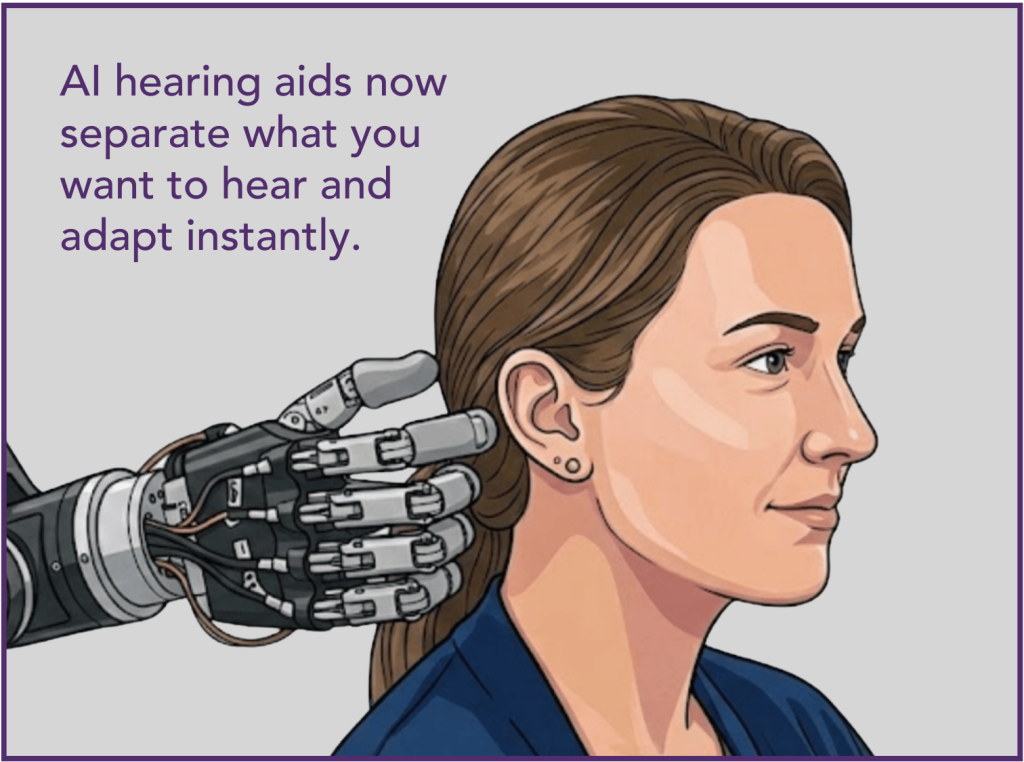
We are at the point where these hearing aids are being trained on tens of millions of sound samples and spoken sentences, creating a better-than-ever sound experience.
At this point, hearing aids with AI intelligently separate what you want to hear versus what you don’t. The AI continuously analyzes your environment to adapt in real time to patients’ needs.
A March 2024 study found that DNN-powered noise reduction outperformed traditional noise reduction techniques, and a 2025 follow-up field research study found that DNN improved interference control. For patients with cognitive load and mental fatigue that lead to conditions like Alzheimer’s, DNN-powered hearing aids are a welcome relief.
Some AI-powered hearing aids also allow audiologists to make remote adjustments to your devices based on patient feedback or data collected on the device. If you’re travelling or live far away from your audiologist, this ensures you get the essential fine-tuning you need for the best experience with hearing aids.
That being said, not all AI hearing aids are the same. Only a few products on the market offer real-time AI processing, which means it’s even more important to work with your audiologist to identify the best hearing aids for your situation.
4 Common Myths About AI in Hearing Aids
With “AI-powered” marketing language all around us, it’s harder than ever to understand what’s real and what’s fake when it comes to your hearing aids. Here are some of the most commonly believed myths and what the evidence actually proves.
Myth: All AI hearing aids think and adapt in real-time while you wear them.
The reality is that most hearing aids use AI during the development and training phase (i.e., before you purchase them), not while you wear them. There are a few products that offer real-time AI processing, but for the majority of hearing aids on the market, all of the AI tools are developed before your purchase.
But that isn’t a bad thing, as the AI algorithms are genuinely effective in providing an excellent hearing aid experience.
Myth: AI hearing aids automatically fix my hearing without the need for an audiologist.
The diagnostic experience and fine-tuning that comes from working with an experienced audiologist is the difference between a good and a bad experience with your hearing aids.
Audiologists ensure everything fits correctly and that the hearing aid is programmed correctly for your specific hearing loss.
Myth: More AI features mean better hearing.
Studies and tests show that while AI features work well, they aren’t universally better in every situation. Those with quieter daily routines probably don’t need adaptive technologies, unlike folks working in more chaotic sound environments.
As with any hearing aid, work with a trusted audiologist to ensure you get the right hearing aid for your sound environment.
Myth (mostly: AI hearing aids are always listening to my private conversations.
AI-powered devices use strict security measures to protect your personal information, with many newer hearing aids processing data on the chips themselves rather than sending audio to the cloud.
But one study revealed that hearing aids were broadcasting patients’ names over Bluetooth without users’ ability to change them. There are also some inconsistencies in how data is governed. Our recommendation is to ask your audiologist about how your data is stored, processed, and shared.
Do You Need AI In Your Hearing Aids?
When surrounded by AI marketing, the question becomes, “Do you need AI for your hearing aids too?”
The answer, unfortunately, isn’t as simple as yes or no; the truth lies in what environments you spend your time and what sort of hearing problems you have.
Almost all research universally agrees that AI in hearing aids helps with noise reduction, specifically in situations where you need to understand what someone is saying over competing background sounds.
A 2025 study published in Frontiers in Audiology and Otology evaluated DNN-based processing across seven real-world acoustic environments, including bars, restaurants, shopping malls, and construction sites, finding measurable improvements in both speech recognition and listener preference when AI-based noise reduction was active.
If these hearing aids reduce cognitive load, there’s a good chance they will positively affect brain health outcomes. When a hearing aid reduces the strain of processing sound in noise, it potentially frees up cognitive resources.
Modern AI-powered hearing aids provide an effortless listening experience, reducing the strain often associated with hearing in complex environments. For anyone at risk, these new AI-powered hearing aids can help reduce the risk of cognitive decline.
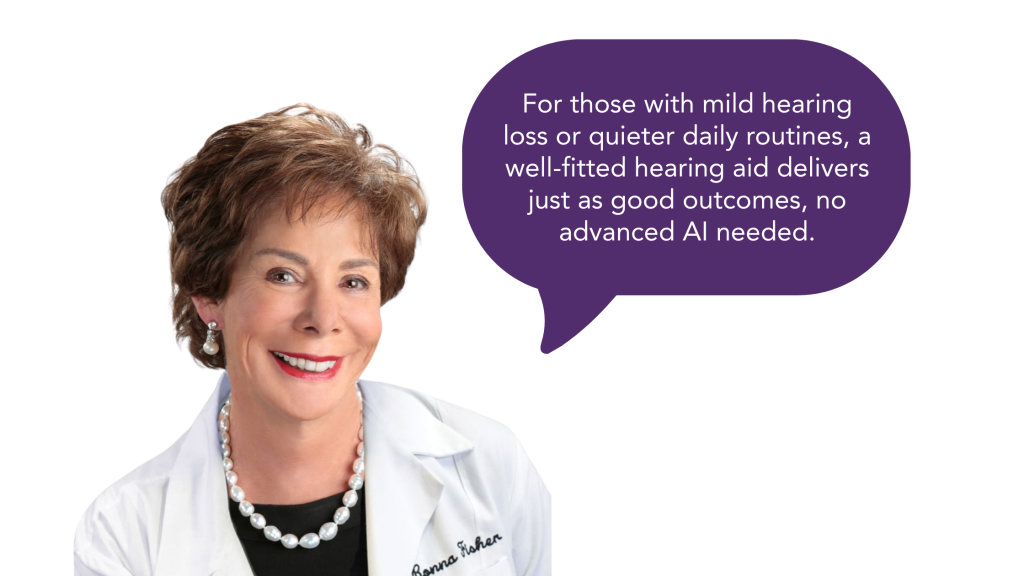
For people dealing with mild hearing loss or who spend most of their time in quiet environments, the most advanced AI isn’t as important. A well-fitted and adjusted hearing aid will deliver just as good outcomes.
Fit and Adjustments Are The Most Important Factors
More than any new technology, the most important factor in your hearing aid experience comes from the tuning, fitting, and adjustments your audiologist makes.
At Hearing Health Center, our audiologists have decades of experience working with patients of all ages, helping them get the most out of their hearing aids. When your hearing aids fit correctly and volumes are just right, you’re much more likely to continue wearing your hearing aids.
That’s why we always recommend coming to any of our five locations for fittings, adjustments, and to get any questions you might have about your hearing aids answered.
Having Trouble Hearing? Schedule Your Appointment at Hearing Health Center Today.
Having trouble hearing during conversations? Feel like social gatherings are getting harder and harder? Book your appointment online with Hearing Health Center for a free comprehensive hearing exam. An audiologist on staff performs a full exam and provides you with the information you need to get your hearing back on track.
Schedule your appointment today!

About the Author: Dr. Ronna Fisher, AuD, CCC-A, FAAA is the founder and president of Hearing Health Center, which she established in 1984 in memory of her father, who suffered from untreated hearing loss and died at 53. That personal loss has shaped her entire career. Under her leadership, Hearing Health Center has been voted the best hearing practice in Illinois three years in a row by Hearing Review. In 2005, she expanded her mission by founding the Fisher Foundation for Hearing Health Care, a nonprofit dedicated to making auditory care more accessible. Dr. Fisher earned her doctorate in audiology from the Pennsylvania College of Optometry and holds a Certificate of Clinical Competence in Audiology (CCC-A) from the American Speech-Language-Hearing Association. She is a Fellow of the American Academy of Audiology and a member of the Academy of Dispensing Audiologists.
Recent Posts
- Everything You Need to Know About Earwax
- Why You Should Wear Earplugs To Your Next Music Festival
- Why Do My Ears Feel Clogged?
- What Your Ears Might Be Warning You About Your Heart
- The Risks of Over-The-Counter Hearing Aids
- How to Bring Up Hearing Aids Without Starting a Fight
- Itchy, Itchy Ears: Common Causes and Solutions
-
Downtown Chicago
Magnificent Mile
142 E. Ontario St, Ste 1100
 (312) 263-7171
Learn More
(312) 263-7171
Learn More
-
Naperville
Fox Run Square
1212 S. Naper Blvd, Ste 103
(630) 369-8878
Learn More
-
Oak Brook
Oakbrook Prof. Bldg.
120 Oakbrook Ctr, Ste 709
(630) 571-7111
Learn More
-
Highland Park
Crossroads Shopping Cntr.
185 Skokie Valley Rd.
(847) 681-7000
Learn More
-
Park Ridge
Presence Resurrection
7447 W. Talcott Ave, Ste 360
(773) 466-8878
Learn More