
What Your Ears Might Be Warning You About Your Heart
Dr. Ronna Fisher | Ask the Audiologist
Have you been turning up the TV volume lately? Are dinner conversations just a little bit harder to understand lately?
Have you also been managing your blood pressure for years? Or your cholesterol? Or both?
What many patients do not realize is that their hearing and cardiovascular health tend to move together. Continue reading to understand why they’re connected, and what you can do to improve your overall well-being.
Your Inner Ear Has One Blood Supply
Unlike most organs, the cochlea receives its entire blood supply through a single artery with no collateral circulation.
Any disruption to that supply hits your hearing with nothing to soften the blow.
For most parts of your body, you have neighboring blood vessels that can compensate, but not your inner ear.
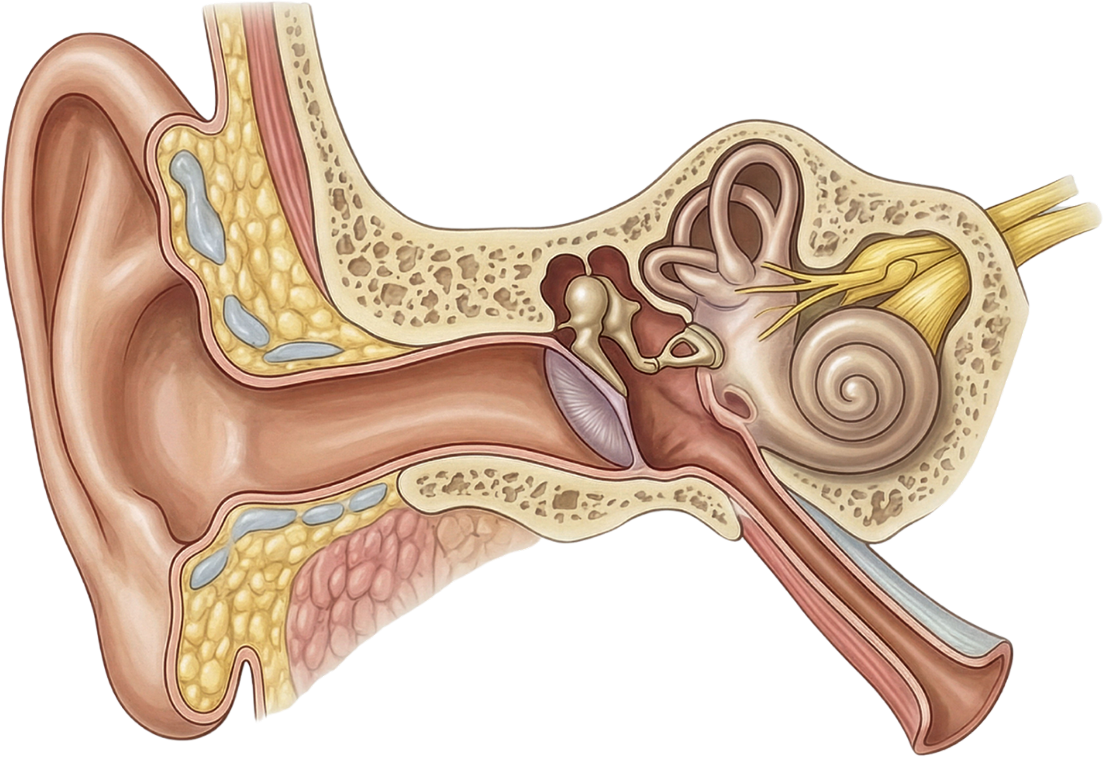
The cochlea, the spiral-shaped structure in your inner ear that converts sound waves into a signal, is supplied by a single terminal vessel, the labyrinthine artery, an end organ with deficient collateral circulation.
When that supply is restricted, reduced, or interrupted, the cochlea absorbs the full impact.
Inside the cochlea, a tissue called the stria vascularis maintains the precise electrochemical environment that enables hearing.
It depends on a constant flow of oxygen and nutrients.
A large 2025 population study found that hearing loss may serve as an early marker of systemic vascular dysfunction.
Particularly for people managing diabetes, where elevated blood sugar damages the same inner ear microvasculature that cardiovascular disease affects.
Because the cochlea depends on a delicate blood supply, hearing changes may sometimes appear alongside, or even before, other vascular complications.
The Cardiovascular Conditions Most Linked to Hearing Changes

Hypertension, atherosclerosis, elevated cholesterol, and heart disease restrict or injure the blood supply that the cochlea depends on to function.
High blood pressure is both a direct threat and an accelerant.
Sustained elevated pressure damages the linings of blood vessels.
It also accelerates atherosclerosis, the progressive buildup of plaque that narrows the labyrinthine artery over time. A 2024 study found that nearly half of people with hypertension showed measurable hearing impairment: 49.4%, compared to 34.8% of those with normal blood pressure.
That difference appeared across all frequency ranges, not just the high-frequency loss typically associated with aging.
Elevated cholesterol has its own cochlear mechanism.
High LDL and elevated triglyceride levels thicken vessel walls and reduce oxygen flow to inner ear structures.
Research has specifically linked dyslipidemia to sudden sensorineural hearing loss, the abrupt, often one-sided hearing drop that appears without obvious cause or warning.
Heart disease is broadly evident in the prevalence data.
A separate analysis of national health survey data found that individuals managing two or more cardiovascular risk factors carry an estimated 90% increased risk of hearing loss.
These are associations that do not guarantee hearing problems. Having high blood pressure does not mean your hearing will decline, but there is often a clear overlap between the two.
Pulsatile Tinnitus
If the sound in your ears beats in time with your heartbeat, that’s pulsatile tinnitus, and it’s your ear picking up the sound of blood moving through your arteries.
Most tinnitus, the ringing, buzzing, or hissing that many people experience, originates in the hearing system itself.
Pulsatile tinnitus is different. It has a rhythm. It pulses. If you sit quietly and pay attention, you may notice it matches your heartbeat exactly.
It’s the sound of turbulent blood flow in vessels near the ear, and the inner ear is sensitive enough to detect it.
In older adults, the most common underlying cause of pulsatile tinnitus is atherosclerotic carotid disease, plaque buildup in the carotid artery, which changes the way blood sounds as it moves.
Pulsatile tinnitus accounts for about 4% of all tinnitus cases.
The inner ear can sometimes reflect broader vascular health in ways many patients don’t realize
Other symptoms with vascular origins are worth noting: gradual, low-frequency hearing loss; sudden one-sided hearing changes; or a persistent feeling of fullness or pressure in the ear that doesn’t resolve on its own.
A Hearing Test Makes Sense as a Cardiovascular Health Step
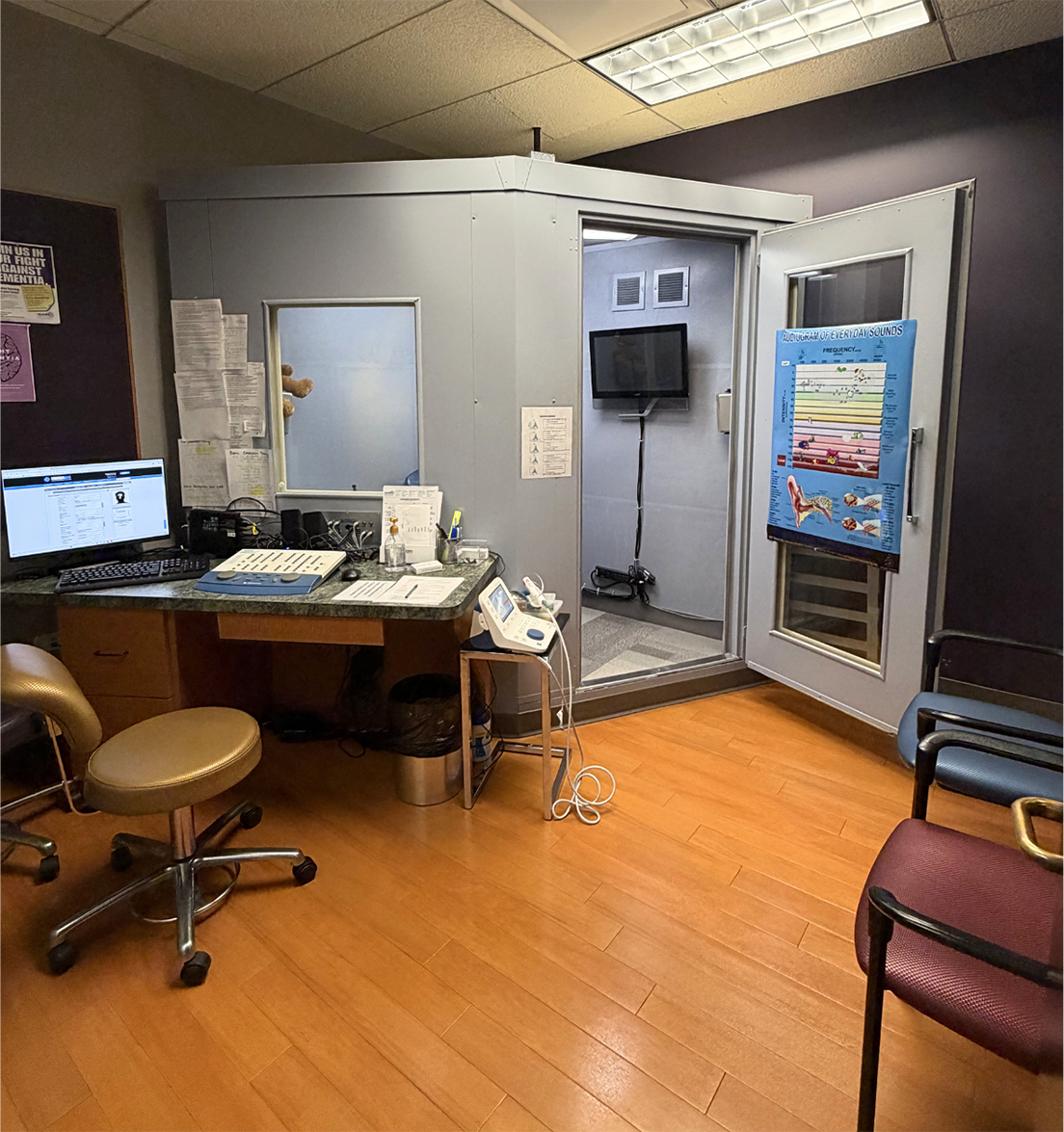
A hearing test can detect changes in cochlear function that reflect how your circulation is performing, and it gives you a documented baseline to track against in the years ahead.
You already monitor your blood pressure. You get your cholesterol checked on a schedule.
Your inner ear is part of the same vascular system, and a hearing evaluation gives you a specific, documented picture of cochlear function at a moment in time.
The pattern of the results (which frequencies are affected, how the loss is distributed, whether it’s symmetrical) can tell an audiologist something about its likely origin.
If you’re managing hypertension, elevated cholesterol, heart disease, or if you’ve experienced any of the symptoms described here, a hearing test is a reasonable addition to the picture you’re already building.
Schedule Your Free Comprehensive Hearing Exam Today
Struggling with hearing loss or cardiovascular issues? Schedule a free comprehensive hearing exam with Hearing Health Center to understand your current situation better and find solutions to any of your hearing problems.

About the Author: Dr. Ronna Fisher, AuD, CCC-A, FAAA is the founder and president of Hearing Health Center, which she established in 1984 in memory of her father, who suffered from untreated hearing loss and died at 53. That personal loss has shaped her entire career. Under her leadership, Hearing Health Center has been voted the best hearing practice in Illinois three years in a row by Hearing Review. In 2005, she expanded her mission by founding the Fisher Foundation for Hearing Health Care, a nonprofit dedicated to making auditory care more accessible. Dr. Fisher earned her doctorate in audiology from the Pennsylvania College of Optometry and holds a Certificate of Clinical Competence in Audiology (CCC-A) from the American Speech-Language-Hearing Association. She is a Fellow of the American Academy of Audiology and a member of the Academy of Dispensing Audiologists.
Recent Posts
- Everything You Need to Know About Earwax
- How Much Do Hearing Aids Cost?
- Why You Should Wear Earplugs To Your Next Music Festival
- Why Do My Ears Feel Clogged?
- The Risks of Over-The-Counter Hearing Aids
- How to Bring Up Hearing Aids Without Starting a Fight
- Itchy, Itchy Ears: Common Causes and Solutions
-
Downtown Chicago
Magnificent Mile
142 E. Ontario St, Ste 1100
 (312) 263-7171
Learn More
(312) 263-7171
Learn More
-
Naperville
Fox Run Square
1212 S. Naper Blvd, Ste 103
(630) 369-8878
Learn More
-
Oak Brook
Oakbrook Prof. Bldg.
120 Oakbrook Ctr, Ste 709
(630) 571-7111
Learn More
-
Highland Park
Crossroads Shopping Cntr.
185 Skokie Valley Rd.
(847) 681-7000
Learn More
-
Park Ridge
Presence Resurrection
7447 W. Talcott Ave, Ste 360
(773) 466-8878
Learn More