
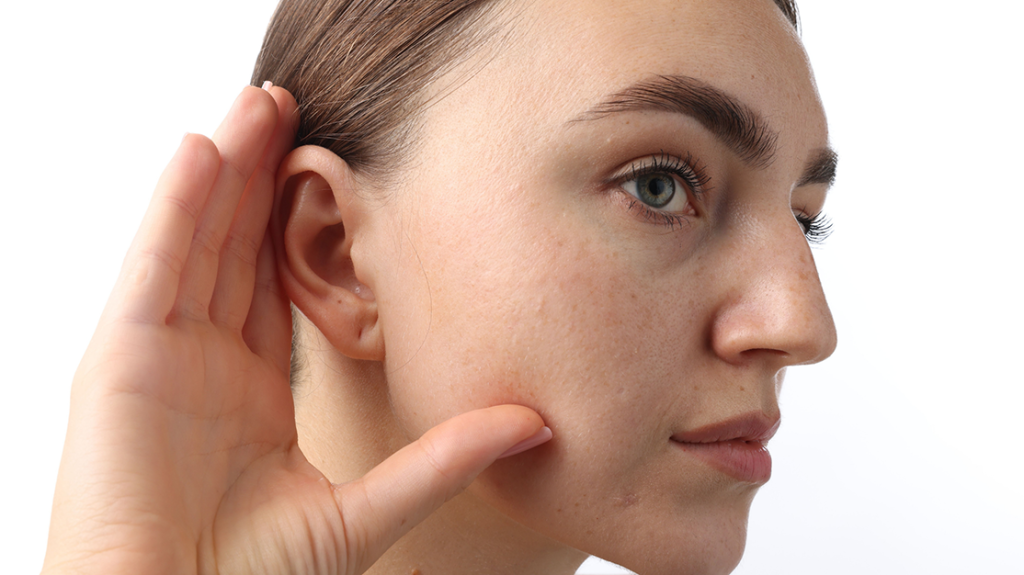
Crackling in Ear: What Does it Mean and How to Treat It
Dr. Ronna Fisher | Ask the Audiologist
Have you ever experienced a mysterious crackling sound haunting your ear, seemingly attacking you out of the blue?
If so, you may be wondering about this irritating sound and if you should be concerned about it.
This blog will unveil the secrets behind this peculiar yet annoying sound.
Let’s dive into the captivating journey of crackling sounds in the ear, understanding what they are, the early signs, and the treatments to explore.
What Is Crackling In The Ear?
Crackling in the ear symbolizes a peculiar sound similar to the crinkling of paper or the rustling of leaves. It can be annoying and even unnerving if it happens frequently enough.
We often refer to it as a clicking, popping sound in the ear or a persistent snapping noise. These noises make it difficult to focus on the work or their surroundings.
Causes include:
- Eustachian tube movement
- air pressure fluctuation
- excessive earwax
- muscle contractions
While harmless, ear crackling can be bothersome and may indicate an underlying issue that warrants further investigation.
Struggling with popping in your ear? Schedule your free consultation with Hearing Health Center today.
The Three Biggest Causes of Crackling in Ear
Sometimes the crackling in your ear is coming from an area near the ear, or a more specific medical condition. If the crackling conditions continue, consider one of the following:
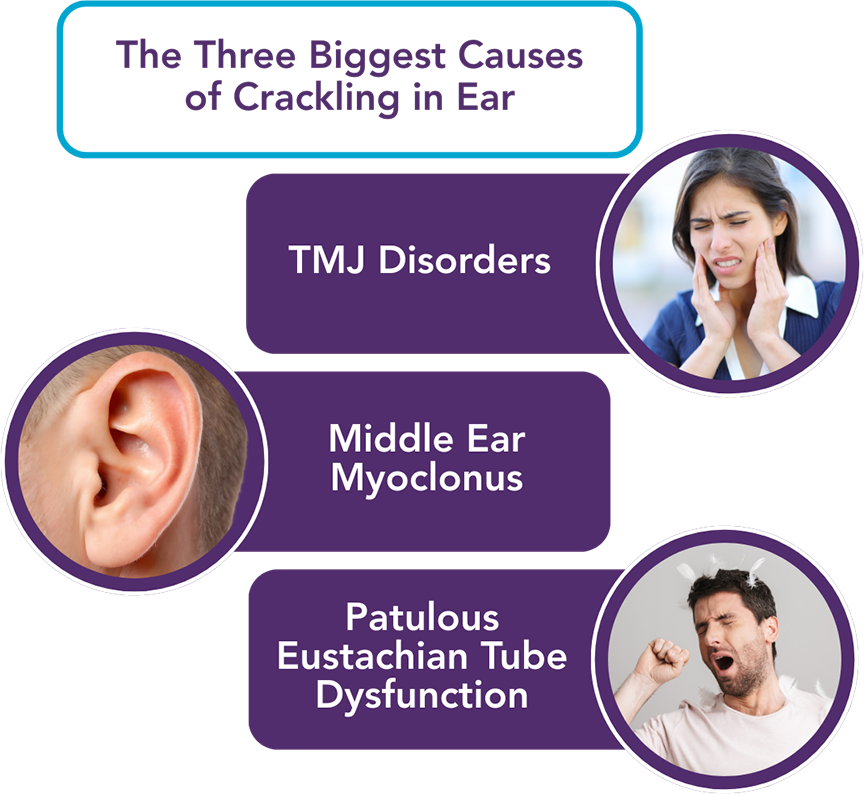
TMJ Disorders
Your temporomandibular joint (TMJ) sits right next to your ear canal.
If your jaw is misaligned or you’re dealing with teeth grinding, the clicking you hear is actually your jaw joint popping.
Middle Ear Myoclonus (MEM)
Think of this as a “twitchy eye” but inside your ear.
Tiny muscles (the stapedius or tensor tympani) can sometimes spasm rhythmically, causing a seemingly random thumping or clicking noise.
Patulous Eustachian Tube (PET) Dysfunction
Most of the time, the Eustachian tube remains closed and only opens when you swallow or yawn.
For people with PET Dysfunction, the tubes stay open constantly, causing “autophony,” a condition in which your breathing sounds echo or distort, often accompanied by crackling.
Five Early Signs Of A Crackling Sound In The Ear
Early signs of ear crackling can vary depending on the underlying cause.
Listed below are five common early signs that you must watch out for in case of something more serious going on:
- Popping & Clicking: You may notice popping or clicking sounds in one or both ears, similar to popping bubbles.
- The Sensation of Pressure: You might feel pressure in the ear, as if something is blocking it.
- Mild Discomfort: You may experience slight discomfort in the ear, which can be referred to as a sensation of mild pain or extreme itchiness.
- Fluctuation in Hearing Sensitivity: You might observe subtle changes in your ability to hear or even a slight reduction in hearing sensitivity, especially in the affected ear.
- Temporary Hearing Loss: Frequent episodes of temporary hearing loss or muffled sounds in your affected ear lasting for short periods are early signs of ear crackling.
It is essential to remember that these signs vary depending on the underlying causes.
If you experience any of these signs or have concerns about ear crackling, it is advised to consult medical professionals, including ENT specialists, for a proper diagnosis.
How To Preserve Your Ear From Crackling Sounds?
To preserve ear health and minimize crackling sounds, the best approach is simple ear health maintenance.

First, keep your ears clean and prevent excessive earwax buildup. Excessive earwax is a key contributor to the crackling sound and could lead to hearing damage if not treated appropriately.
If you work in a noisy environment or just love concerts, wear protective headphones (or safety earbuds). This is another instance of something that may not bother you in the moment but could cause serious injury later in life.
During activities like flying or swimming/scuba diving, it is advised to yawn or swallow to equalize pressure in your ears.
Also, this is very important. Do not use cotton swabs, car keys, or any other object to clean your ears.
Wonder why? Other than the obvious, any foreign object inserted into your ear pushes earwax deeper, causing damage to your delicate structure.
Lastly, drink enough water to maintain proper Eustachian tube function, facilitate equalization of pressure, and minimize the likelihood of crackling sounds.
How To Get Rid Of The Crackling Sound In The Ear?
The different treatments for the crackling sound you’re hearing really depend on the underlying cause. That’s why your audiologist will first focus on finding the reasons why it’s happening, then present you with a treatment plan.
One of the most common treatments begins with earwax removal. An audiologist will perform ear irrigation or use specialized tools to remove the buildup in a safe manner.
If you have issues caused by blockages, nasal congestion, or improper pressure equalization, the next step might be Eustachian Tube Dysfunction Management.
In case of ear infection or inflammation, antibiotics or anti-inflammatory medications should be prescribed to alleviate symptoms and resolve the underlying problems.
If the crackling sound is accompanied by tinnitus, treatments like CBT (Cognitive Behavioral Therapy), Sound Therapy, and TRT (Tinnitus Retraining Therapy) are recommended to help manage the symptoms.
For cases where muscle tension or spasm contributes to the crackling sound, techniques such as physical therapy, jaw exercises, and relaxation exercises help reduce tension and offer immense relief.
The best way to address ear crackling is to identify the underlying cause and work with your audiologist to resolve it.
When to Worry About Crackling in Your Ear
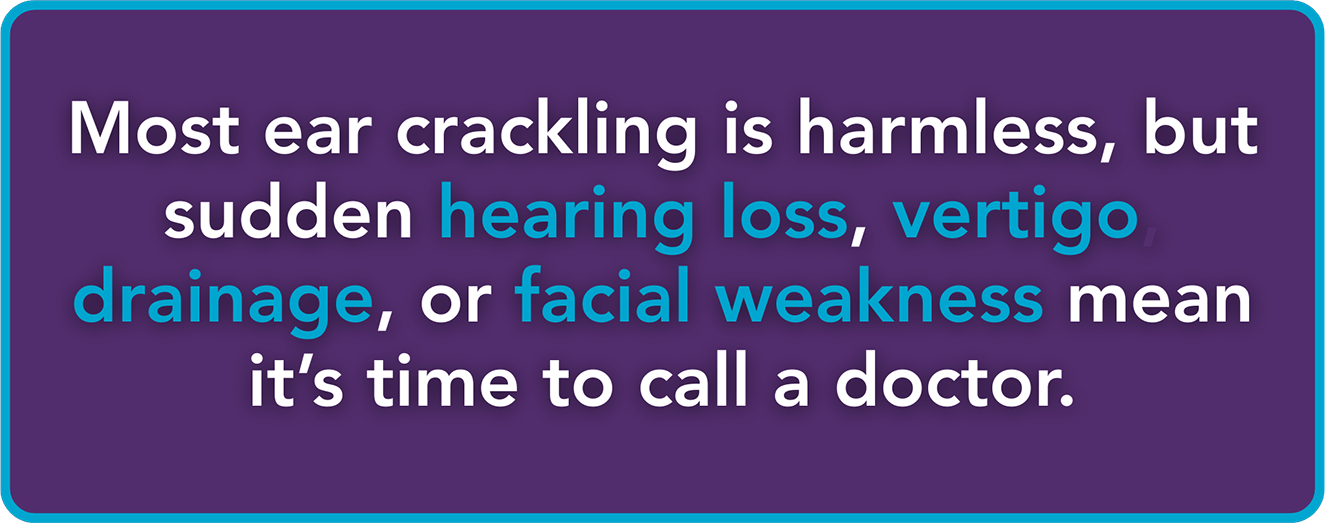
While most of the time, nothing to worry about, if you suddenly experience any of these additional symptoms, it is time to call a doctor right away.
Sudden Hearing Loss
If everything suddenly goes quiet, this becomes a medical emergency. The sooner you get treatment (often within 48 hours), the better the chance of recovery.
Vertigo
Vertigo is when the room starts to spin, or you become dizzy. If you are suffering from this, it might mean you have an inner ear infection or Vestibular issues that, when left untreated, can cause long-term hearing problems.
Drainage
It can be unsettling to see blood, pus, or clear fluid leaking from the ear canal, and it’s time to call a medical professional because this is an emergency.
Facial Weakness
Any drooping or facial numbness can be a sign that the nerves running near the ear are under significant stress. You should call a doctor immediately if you notice these signs.
How To Safeguard Young Kids Against Loud Noises?
Studies have shown that long-term hearing damage isn’t always the result of a single instance, but rather the combination of loud noises over significant periods of time. Since you don’t lose all of your hearing at once, you’ll gradually lose your ability to hear if you don’t get regularly scheduled hearing checks.
Step one is to limit exposure. Minimize exposure to loud sounds, especially during fireworks, machinery, and TV time. Also, offer properly fitted ear protection, such as earplugs or earmuffs to kids when in a noisy environment.
Second, make sure all electronic devices, media, and toys have volume limitations. The goal is to avoid prolonged exposure to loud noises.
You may also consider creating separate quiet areas at home for young kids where they can relax and take a break from the noise.
By practicing these measures, parents can safeguard their kids against damage caused by loud sounds.
Need Your Hearing Checked? Contact Hearing Health Center Today!
If you experience ear crackling with no pain, consult an ENT specialist or other medical expert to identify the issue and recommend treatment. It could be an earwax build-up, managing Eustachian tube dysfunction, or treating infections.
Consult our professionals at Hearing Health Center to get proper treatment, including earwax removal. We have a team to help patients find the treatment that best suits their unique hearing needs.

About the Author: Dr. Ronna Fisher, AuD, CCC-A, FAAA is the founder and president of Hearing Health Center, which she established in 1984 in memory of her father, who suffered from untreated hearing loss and died at 53. That personal loss has shaped her entire career. Under her leadership, Hearing Health Center has been voted the best hearing practice in Illinois three years in a row by Hearing Review. In 2005, she expanded her mission by founding the Fisher Foundation for Hearing Health Care, a nonprofit dedicated to making auditory care more accessible. Dr. Fisher earned her doctorate in audiology from the Pennsylvania College of Optometry and holds a Certificate of Clinical Competence in Audiology (CCC-A) from the American Speech-Language-Hearing Association. She is a Fellow of the American Academy of Audiology and a member of the Academy of Dispensing Audiologists.
Recent Posts
- Everything You Need to Know About Earwax
- How Much Do Hearing Aids Cost?
- Why You Should Wear Earplugs To Your Next Music Festival
- Why Do My Ears Feel Clogged?
- What Your Ears Might Be Warning You About Your Heart
- The Risks of Over-The-Counter Hearing Aids
- How to Bring Up Hearing Aids Without Starting a Fight
-
Downtown Chicago
Magnificent Mile
142 E. Ontario St, Ste 1100
 (312) 263-7171
Learn More
(312) 263-7171
Learn More
-
Naperville
Fox Run Square
1212 S. Naper Blvd, Ste 103
(630) 369-8878
Learn More
-
Oak Brook
Oakbrook Prof. Bldg.
120 Oakbrook Ctr, Ste 709
(630) 571-7111
Learn More
-
Highland Park
Crossroads Shopping Cntr.
185 Skokie Valley Rd.
(847) 681-7000
Learn More
-
Park Ridge
Presence Resurrection
7447 W. Talcott Ave, Ste 360
(773) 466-8878
Learn More