
If you suddenly feel a full, muffled, or underwater sensation in your ear, you might be tempted to use a cotton swab or ear drops to clear things up.
But sometimes you need some professional help to deal with your clogged ears.
Our blog helps you better understand the causes of a clogged ear and whether or not it’s time to reach out to an audiologist.
Why Does My Ear Feel Clogged?
That stuffed, underwater sensation is your ear telling you something is interfering with sound reaching your eardrum.
Unfortunately, the source could be anywhere from your ear canal to the back of your nose.
Here’s the short anatomy lesson: sound travels down the ear canal, hits the eardrum, and gets transmitted inward.
Anything that blocks or pressurizes that pathway creates a sensation of fullness or muffling.
The four most common causes of clogged ears include:
Earwax Build-Up
Earwax is normal and necessary, but it accumulates. A 2024 study published in Laryngoscope Investigative Otolaryngology found that nearly 1 in 5 adults has some degree of earwax impaction, and that number rises to nearly 1 in 3 for adults over 70.
Eustachian Tube Dysfunction
The eustachian tube runs from your middle ear to the back of your throat, and its job is to equalize pressure and drain fluid.
When you’re congested, the tube swells and can’t do its job. For Chicagoland residents, this is a near-seasonal experience as tree pollen, grass pollen, and ragweed give the eustachian tube something to fight from April through October.
Pressure Changes
That familiar ear-pop sensation on a flight is the eustachian tube trying to equalize cabin pressure. When it can’t fully catch up, you land with ears that won’t clear.
Fluid After Illness
After a cold, sinus infection, or ear infection, fluid can collect in the middle ear and linger for weeks after your other symptoms have resolved. The illness is gone. The muffled feeling is not.
Be Careful of At-Home Remedies
It’s important to think twice before using any at-home remedies to clean out your clogged ears, as the risk of further injury is high.
Your ear canals are self-cleaning; the skin lining them actually migrates outward, slowly carrying earwax toward the opening where it naturally falls out.
Jaw movement also helps move things along.
If you’re dealing with earwax buildup, there are safe at-home options to try.
Over-the-counter cerumenolytic drops (mineral oil, baby oil, or dilute hydrogen peroxide) soften wax and can help it move out naturally.
If that doesn’t work, reach out to an audiologist who can perform a quick, in-office procedure that takes just a few minutes to solve your problem.
If pressure or congestion is the culprit, try swallowing or yawning deliberately, or the Valsalva maneuver: pinch your nose closed, close your mouth, and gently blow.
Antihistamines or a nasal steroid spray can help if allergies are driving the eustachian tube swelling.
Could My Clogged Ears Be a Sign of Hearing Loss?
For many people, the first sign of gradual hearing change is when everything sounds slightly muffled.
Harvard Health has noted that hearing loss sometimes manifests as a plugged-up feeling rather than obvious auditory difficulty. The only way to know is a hearing test.
Sudden Hearing Loss is a Problem
If your ear suddenly went muffled without a clear cause (especially if it’s only one ear), it could be sudden sensorineural hearing loss, or SSNHL.
SSNHL comes on within 72 hours and affects roughly 66,000 Americans annually. Failure to treat within 72 hours of onset greatly diminishes the likelihood of permanent damage.
If you have ear pain, dizziness, drainage, or fever alongside the muffled hearing, see someone that day regardless of how it started.
How Hearing Health Center Helps with Clogged Ears
An appointment typically starts with a visual examination of the ear canal.
If earwax is present and causing the blockage, it can be removed during the same visit using professional instruments.
Alongside or following the wax check, an audiologist will often run a hearing test to establish a baseline and rule out any hearing change that might be contributing to the muffling.
If there’s a question about middle ear pressure, a tympanometry test can check whether the eardrum is moving normally and whether fluid might be present behind it.
If what you’re dealing with turns out to need ENT involvement, an audiologist can refer you directly. They’re often the right first stop, not the only stop.
Ears Feeling Clogged? Call Hearing Health Center Today
If your ears have been feeling full or muffled, come in and see us. We’ll take a look, run a hearing test, and tell you what’s actually going on.
Book an appointment online or call the location nearest you.
When asking about ears, every audiologist has heard this: “My ears don’t hurt, but they itch a lot!” Whether or not a person uses hearing aids, itching in the ears is very common.
But why?
A lot of things can cause itching all over the body, and the ear is no different. I’ve briefly listed some common causes and solutions, but saved an in-depth look for conditions related to hearing aid issues.
3 Common Causes of Itchy Ears
Itchy ears, while annoying, are often not a sign of more serious problems. Here are the three most common reasons we see patients with itchy ears.
Dry Skin
Itchy, dry skin in the ear canal can be caused by your environment. This includes cold, dry air in the winter and over-air-conditioned air in the summer.
It can also be caused by over-cleaning (especially with cotton swabs, which can absorb natural oils too quickly) and by natural aging.
Solution: Moisturize
A drop or two of an oil like Miracell® in each ear at night will absorb while you sleep and often provides fast relief, but take care to never place oil in an ear that has a history of holes in the eardrum.
Lotion on a little finger or a cotton swab can also be placed in the ear canal.
Often, a humidifier can help with dry skin.
Medical Conditions
Medical conditions such as allergies, outer ear infections like “swimmer’s ear,” and eczema or psoriasis can cause or worsen itching in the ear canal.
Surprisingly, high levels of stress or anxiety can be felt as itching and discomfort all over, including inside the ears.
Solution: Seek Medical Treatment
Ear, nose, and throat physicians can determine whether allergies or ear infections are the issue; physicians specializing in the ears, nose, and throat (“ENTs” or “otolaryngologists”) can prescribe appropriate treatments.
Dermatologists, skin-specialized doctors, can help with diagnoses such as eczema and psoriasis, for which many treatments are available.
If you think stress might be the problem, talk it out with a licensed counselor, psychologist, or psychiatrist.
You may relieve yourself of more than just an itch.
Hearing Aid Issues
Although hearing devices don’t usually cause allergic reactions, there are other ways they might contribute to itching.
If there is a build-up of earwax, a hearing aid can make it worse, causing itching or irritation until the ear is cleaned.
If a hearing aid sits too loosely inside the ear, it can “tickle” the ear canal and cause itching.
If a hearing aid has a very tight fit in the ear and is worn for a very long time each day, moisture can accumulate behind the hearing aid, causing a damp, itchy feeling (kind of like when you sweat in the summertime).
While the hearing aids themselves are usually hypoallergenic, clients rarely experience allergic reactions to cleaning solutions, whether in our clinic or to over-the-counter versions used at home.
Solution: See Your Hearing Care Provider
The hearing care providers at HHC can work with you to assess the fit of your hearing devices (loose/tight) and recommend next steps and other changes or treatments.
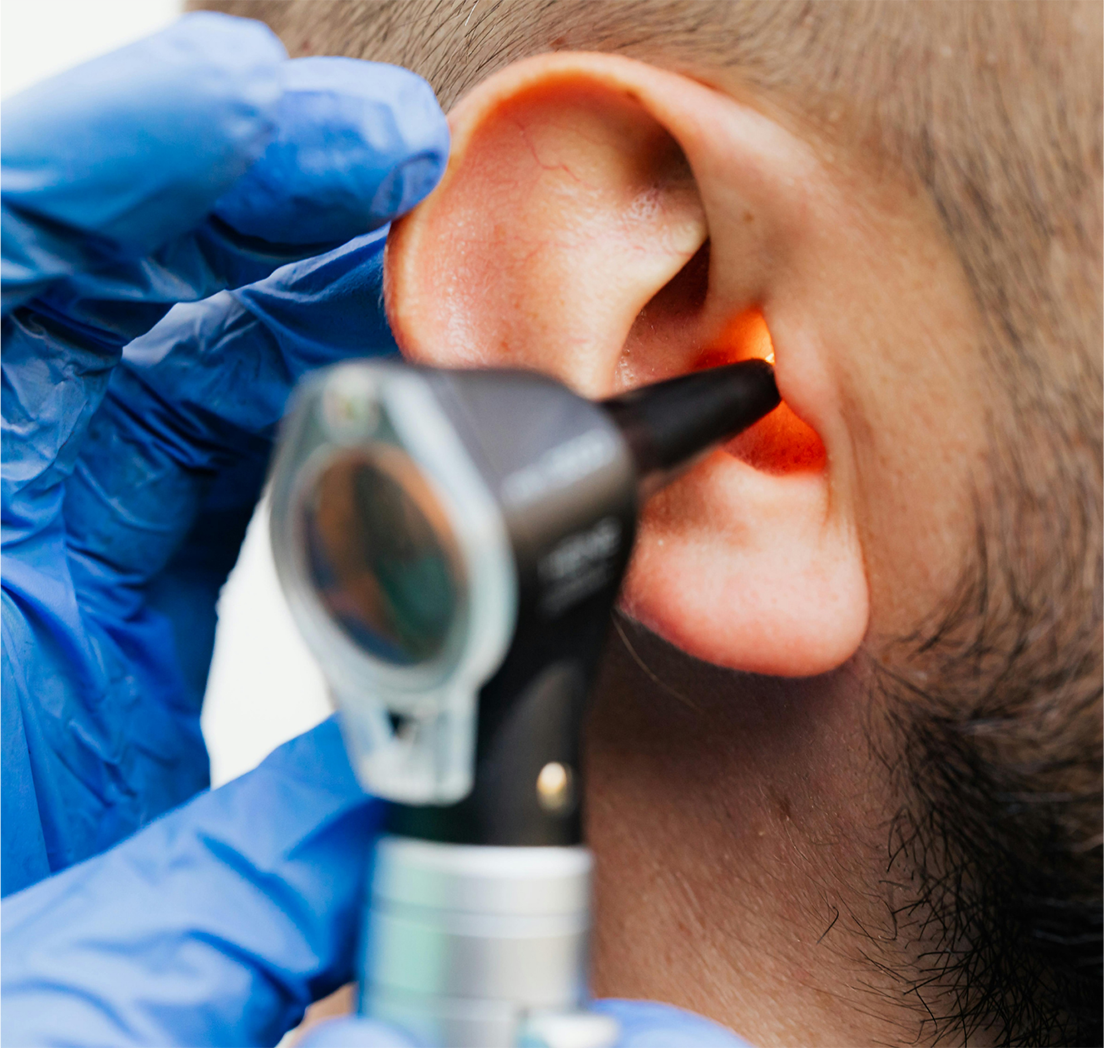
We can also look deeply into your ears, a process called “otoscopy,” to see whether dry skin, earwax, or an allergic reaction is the problem.
When in doubt, contact your audiologist.
How to Scratch Your Itchy Ears
There’s nothing else like scratching an itch, but we have some recommendations for how to go about it to avoid causing more problems.
Here are some techniques:
The Push and Wiggle
Placing a finger on the space in front of the ear and “wiggling” can help ease itching with or without a hearing aid in place. This is using the flat of your finger, not your fingernail!
Re- adjust your hearing device
If possible, remove and re-place your hearing aid, or pull the earbud in and out, to apply some pressure inside the ear and scratch that itch.
“Referred” itching
This one is a bit weird…Often used by people with missing limbs, “referred” itching is when you scratch an itch without actually scratching it.
Instead of trying to reach deep inside your ear canal, gently scratching another part of your body (like the back of your hand) while thinking about your itchy ear (“referring” the itch to the ear) can provide surprising relief.
I’ve used this myself when I get an itch on the bottom of my foot in the car. Sometimes it works.
Could Itchy Ears Be Something Serious?
Most ear itching is minor and easily managed, but there are situations where it warrants prompt professional attention.
Contact your audiologist or physician if you experience:
- Persistent itching that doesn’t respond to home remedies after a week or two
- Pain or pressure inside the ear, alongside the itching
- Discharge or fluid coming from the ear canal
- Muffled or changing hearing that coincides with when itching began
- Visible redness or swelling around or inside the ear
- Itching after a recent illness, including some viral infections, like shingles, can affect the ear canal and require prompt medical treatment
These symptoms don’t always mean something serious is wrong, but they’re worth a professional look.
Catching an infection, skin condition, or wax impaction early is almost always easier than waiting it out.
Never Stick Something in Your Ear
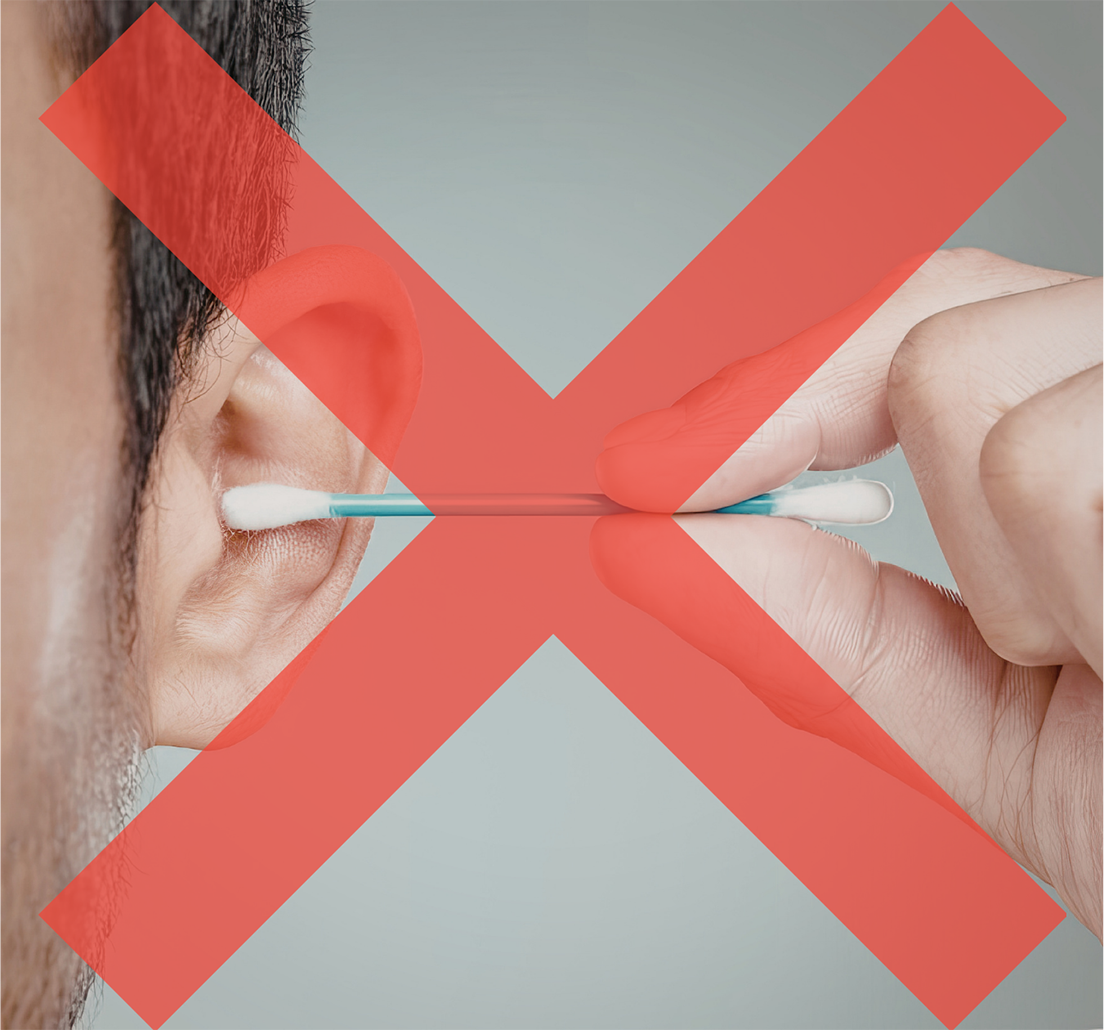
It’s always important to remember, don’t place foreign objects like Q-tips, bobby pins, long fingernails, pens or pencils, paperclips, or golf tees (yes, we’ve been told someone used a golf tee!) in your ears for itching or wax removal.
These objects can push earwax toward the eardrum or cut the skin inside the ear, causing bleeding.
When that cut begins to scab over and heal…it will itch even worse!
Itchy Ears? Dealing with Hearing Loss? Book an Appointment at Hearing Health Center Today!
If itching is persistent, worsening, or accompanied by pain, discharge, or muffled hearing, don’t wait it out.
The team at Hearing Health Center is here to help identify the source and get you comfortable again.
Schedule an appointment at any of our five convenient Chicagoland locations.
Have you ever experienced a mysterious crackling sound haunting your ear, seemingly attacking you out of the blue?
If so, you may be wondering about this irritating sound and if you should be concerned about it.
This blog will unveil the secrets behind this peculiar yet annoying sound.
Let’s dive into the captivating journey of crackling sounds in the ear, understanding what they are, the early signs, and the treatments to explore.
What Is Crackling In The Ear?
Crackling in the ear symbolizes a peculiar sound similar to the crinkling of paper or the rustling of leaves. It can be annoying and even unnerving if it happens frequently enough.
We often refer to it as a clicking, popping sound in the ear or a persistent snapping noise. These noises make it difficult to focus on the work or their surroundings.
Causes include:
- Eustachian tube movement
- air pressure fluctuation
- excessive earwax
- muscle contractions
While harmless, ear crackling can be bothersome and may indicate an underlying issue that warrants further investigation.
Struggling with popping in your ear? Schedule your free consultation with Hearing Health Center today.
The Three Biggest Causes of Crackling in Ear
Sometimes the crackling in your ear is coming from an area near the ear, or a more specific medical condition. If the crackling conditions continue, consider one of the following:
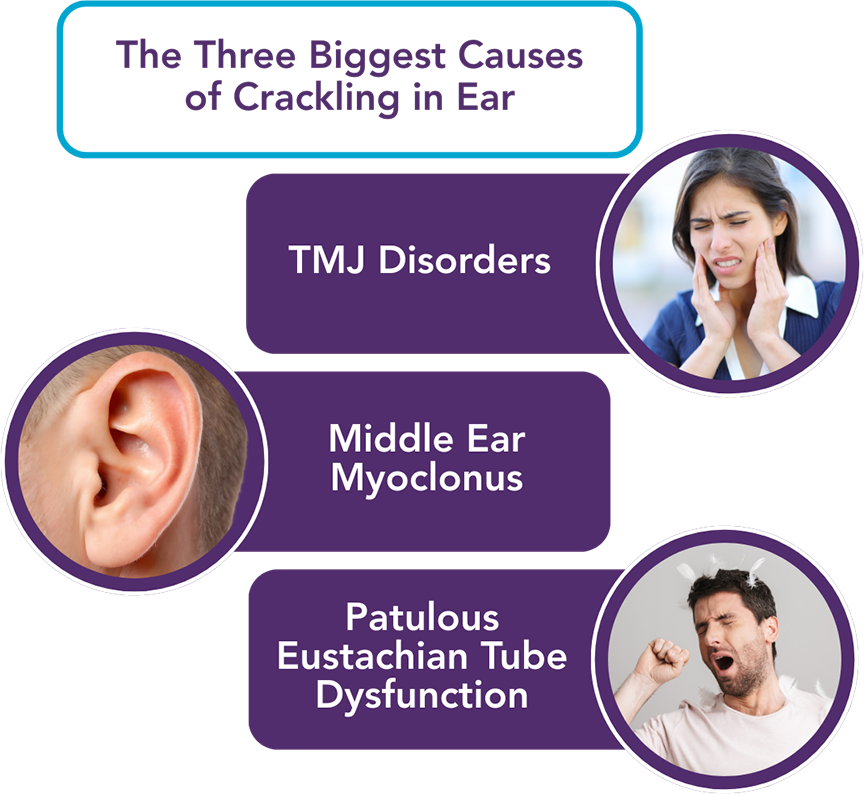
TMJ Disorders
Your temporomandibular joint (TMJ) sits right next to your ear canal.
If your jaw is misaligned or you’re dealing with teeth grinding, the clicking you hear is actually your jaw joint popping.
Middle Ear Myoclonus (MEM)
Think of this as a “twitchy eye” but inside your ear.
Tiny muscles (the stapedius or tensor tympani) can sometimes spasm rhythmically, causing a seemingly random thumping or clicking noise.
Patulous Eustachian Tube (PET) Dysfunction
Most of the time, the Eustachian tube remains closed and only opens when you swallow or yawn.
For people with PET Dysfunction, the tubes stay open constantly, causing “autophony,” a condition in which your breathing sounds echo or distort, often accompanied by crackling.
Five Early Signs Of A Crackling Sound In The Ear
Early signs of ear crackling can vary depending on the underlying cause.
Listed below are five common early signs that you must watch out for in case of something more serious going on:
- Popping & Clicking: You may notice popping or clicking sounds in one or both ears, similar to popping bubbles.
- The Sensation of Pressure: You might feel pressure in the ear, as if something is blocking it.
- Mild Discomfort: You may experience slight discomfort in the ear, which can be referred to as a sensation of mild pain or extreme itchiness.
- Fluctuation in Hearing Sensitivity: You might observe subtle changes in your ability to hear or even a slight reduction in hearing sensitivity, especially in the affected ear.
- Temporary Hearing Loss: Frequent episodes of temporary hearing loss or muffled sounds in your affected ear lasting for short periods are early signs of ear crackling.
It is essential to remember that these signs vary depending on the underlying causes.
If you experience any of these signs or have concerns about ear crackling, it is advised to consult medical professionals, including ENT specialists, for a proper diagnosis.
How To Preserve Your Ear From Crackling Sounds?
To preserve ear health and minimize crackling sounds, the best approach is simple ear health maintenance.

First, keep your ears clean and prevent excessive earwax buildup. Excessive earwax is a key contributor to the crackling sound and could lead to hearing damage if not treated appropriately.
If you work in a noisy environment or just love concerts, wear protective headphones (or safety earbuds). This is another instance of something that may not bother you in the moment but could cause serious injury later in life.
During activities like flying or swimming/scuba diving, it is advised to yawn or swallow to equalize pressure in your ears.
Also, this is very important. Do not use cotton swabs, car keys, or any other object to clean your ears.
Wonder why? Other than the obvious, any foreign object inserted into your ear pushes earwax deeper, causing damage to your delicate structure.
Lastly, drink enough water to maintain proper Eustachian tube function, facilitate equalization of pressure, and minimize the likelihood of crackling sounds.
How To Get Rid Of The Crackling Sound In The Ear?
The different treatments for the crackling sound you’re hearing really depend on the underlying cause. That’s why your audiologist will first focus on finding the reasons why it’s happening, then present you with a treatment plan.
One of the most common treatments begins with earwax removal. An audiologist will perform ear irrigation or use specialized tools to remove the buildup in a safe manner.
If you have issues caused by blockages, nasal congestion, or improper pressure equalization, the next step might be Eustachian Tube Dysfunction Management.
In case of ear infection or inflammation, antibiotics or anti-inflammatory medications should be prescribed to alleviate symptoms and resolve the underlying problems.
If the crackling sound is accompanied by tinnitus, treatments like CBT (Cognitive Behavioral Therapy), Sound Therapy, and TRT (Tinnitus Retraining Therapy) are recommended to help manage the symptoms.
For cases where muscle tension or spasm contributes to the crackling sound, techniques such as physical therapy, jaw exercises, and relaxation exercises help reduce tension and offer immense relief.
The best way to address ear crackling is to identify the underlying cause and work with your audiologist to resolve it.
When to Worry About Crackling in Your Ear
While most of the time, nothing to worry about, if you suddenly experience any of these additional symptoms, it is time to call a doctor right away.
Sudden Hearing Loss
If everything suddenly goes quiet, this becomes a medical emergency. The sooner you get treatment (often within 48 hours), the better the chance of recovery.
Vertigo
Vertigo is when the room starts to spin, or you become dizzy. If you are suffering from this, it might mean you have an inner ear infection or Vestibular issues that, when left untreated, can cause long-term hearing problems.
Drainage
It can be unsettling to see blood, pus, or clear fluid leaking from the ear canal, and it’s time to call a medical professional because this is an emergency.
Facial Weakness
Any drooping or facial numbness can be a sign that the nerves running near the ear are under significant stress. You should call a doctor immediately if you notice these signs.
How To Safeguard Young Kids Against Loud Noises?
Studies have shown that long-term hearing damage isn’t always the result of a single instance, but rather the combination of loud noises over significant periods of time. Since you don’t lose all of your hearing at once, you’ll gradually lose your ability to hear if you don’t get regularly scheduled hearing checks.
Step one is to limit exposure. Minimize exposure to loud sounds, especially during fireworks, machinery, and TV time. Also, offer properly fitted ear protection, such as earplugs or earmuffs to kids when in a noisy environment.
Second, make sure all electronic devices, media, and toys have volume limitations. The goal is to avoid prolonged exposure to loud noises.
You may also consider creating separate quiet areas at home for young kids where they can relax and take a break from the noise.
By practicing these measures, parents can safeguard their kids against damage caused by loud sounds.
Need Your Hearing Checked? Contact Hearing Health Center Today!
If you experience ear crackling with no pain, consult an ENT specialist or other medical expert to identify the issue and recommend treatment. It could be an earwax build-up, managing Eustachian tube dysfunction, or treating infections.
Consult our professionals at Hearing Health Center to get proper treatment, including earwax removal. We have a team to help patients find the treatment that best suits their unique hearing needs.
Hearing Health Center’s Dr. Sarah Schwartzer, an audiologist and balance specialist, offers this informative video that explains the link between …
Struggling with ringing in your ears? Dealing with a constant buzzing sound? If so, you might be among the millions affected by tinnitus, a sometimes debilitating condition that causes ringing, buzzing, or hissing sounds in your ears.
Tinnitus is one of the most common yet difficult conditions to deal with. Symptoms include sleep loss, difficulty concentrating, and even dizziness.
If you’re unsure whether you have tinnitus or want to learn more about it for a loved one, our guide to tinnitus helps you identify the common symptoms, causes, and available relief options to keep your and your loved ones’ hearing health in mind.
What is Tinnitus?
Tinnitus is the perception of sound in one or both ears without an external source. This sound may take different forms, including:
- Ringing
- Buzzing
- Hissing
- Clicking
- Roaring
Tinnitus is most often caused by an underlying ear condition, such as hearing loss, an ear injury, or a problem with the circulatory system.
There are four common types of tinnitus: subjective, objective, pulsatile, and somatic. Each affects people differently; some struggle with daily activities, whereas others’ symptoms fluctuate.
Hearing loss, stress, and anxiety all have the potential to increase the intensity of tinnitus, so it’s best to work with a trained audiologist if you or someone you love is suffering from tinnitus.
How Common is Tinnitus?
 Tinnitus is relatively common in the United States. Around 25 million adults reported experiencing tinnitus in the past year, with approximately 14% worldwide suffering from the condition. Around 2% of those cases are severe, resulting in difficulty concentrating and other negative impacts on daily life.
As you get older, you become more likely to experience tinnitus. That’s because of normal age-related hearing loss, and the wear and tear experienced on your inner ears cells. When those cells become damaged, the brain interprets the electrical signals along the nerve from your ear to your brain as sound.
What Causes Tinnitus?
Tinnitus is often linked to hearing loss, but several factors can contribute to its development, including exposure to loud noises, age-related hearing loss, ear infections, ear wax blockages, medications, and other health conditions.
You increase your risk of tinnitus if you work in a noisy environment like a construction site, frequently attend loud concerts, or use headphones for extended periods.
The same goes for ignoring ear infections or ear wax blockages. If left untreated, you will likely experience temporary or permanent tinnitus.
Tinnitus is sometimes linked to other medical conditions, including:
- High blood pressure
- Cardiovascular diseases
- Ménière’s disease
While occasional tinnitus symptoms might not be an immediate concern, please contact your doctor if the ringing persists for more than a day, you’re experiencing hearing loss, or you’ve lost the ability to concentrate during the day due to the noise.
At that point, an expert audiologist can examine your ears and provide the right treatments to protect your hearing and mental health in the long term.
To diagnose tinnitus, an audiologist will perform a series of hearing exams, and if there is a more serious concern, schedule imaging and blood tests to ensure any other underlying problems can be addressed.
How Do You Treat Tinnitus?
 Unfortunately, there is no cure for tinnitus. That being said, numerous treatment options are available that can help reduce its impact on everyday life.
The first is hearing aids. Since most tinnitus cases overlap with hearing loss, hearing aids amplify sound to help make tinnitus less noticeable.
Another option is to use white noise machines, nature sounds, or background music to help mask tinnitus and provide relief.
Lifestyle adjustments are also recommended to help with tinnitus treatment. These might include avoiding situations with loud noises, reducing caffeine intake, and maintaining a healthy diet.
Some audiologists might suggest cognitive behavioral therapy to assist with any anxiety, stress, or other reactions to tinnitus symptoms.
The good news is that tinnitus is treatable, and millions of people living with the condition live happy, fulfilling lives.
Ready to Protect Your Hearing Health?
Tinnitus is frustrating, but you don’t have to deal with it alone. If you’re experiencing persistent ringing, buzzing, or phantom sounds, schedule an appointment with Hearing Health Center to help diagnose and manage your tinnitus.
Don’t let tinnitus take over your life; schedule a hearing exam with Hearing Health Center today.
What to do if you suddenly experience hearing loss
As a Patient Care Coordinator, nothing is more alarming then getting a frantic call from a patient in panic mode because they suddenly lost their hearing. Working at the front desk and handling calls from patients at the Chicago office for the last six years, I’ve noticed an increase in these cases of sudden idiopathic hearing loss, or “sudden deafness”. This phenomenon, known as Sudden Sensorineural Hearing Loss (SSHL) is often unexplained. Although the exact cause, in many cases, is unknown, some causes for SSHL are barotrauma, certain medications, a viral attack and autoimmune disorders. SSHL is characterized as a rapid loss, usually in one ear, either all at once or over the course of a few days.
It concerns me that patients often do not realize the severity of their sudden hearing loss. Permanent ramifications, such as irreversible hearing impairment and/or constant ringing in the ear, called tinnitus, can result if the loss is not treated immediately.
Working in one of the premier audiology offices in the world, I know what is at stake for these patients, and always find ways to fit them in to see one of our Doctors of Audiology.
The audiologist first determines that the sudden hearing loss is not due to allergies, sinus infection, earwax clogging the ear canal, or other common conditions. If the loss is indeed SSHL, we refer immediately to an ENT (Otolaryngologist), or the nearest ER. Oral steroids or steroid injections into the ear is the standard treatment for SSHL. Steroids can minimize and/or reverse the hearing loss.
Most importantly, know that you are not alone. If you experience sudden deafness, the hearing professionals at the Hearing Health Center will do everything they can to combat the hearing loss and return your hearing back to normal.
Resources:
NIDCD (National Institute on Deafness and other Communication Disorders) Fact Sheet
(1) Sudden Deafness
NIH Pub. No. 00-4757
March 2018
The NIDCD maintains a directory of organizations that provide information on the normal and disordered processes of hearing, balance, taste, smell, voice, speech and language. Visit the NIDCD website at https://nidcd.nih.gov/directory to search the directory.
NIDCD Information Clearinghouse
1 Communication Avenue
Bethesda, MD 20892-3456
Toll Free Voice: 800-241-1044
Toll Free TTY: 800-241-1055
Email: nidcdinfo@nidcd.nih.gov
Web: www.nidcd.nih.gov
Falls and Balance
Dizziness and balance problems increase significantly with age. Over 70% of those over age 65 seek treatment and one third of everyone over 65 will fall. (Center for Disease Control). Falls are the leading cause of death over age 65.
THE LINK
A recent study done by Johns Hopkins School of Medicine and the National Institute on Aging found that hearing loss significantly increase the risk of falling. The news could have far-reaching implications when it comes to preventing falls and maintaining independent lives.
There are several reasons why a decrease in hearing increases balance problems and the risk of falling. Hearing loss decreases awareness of of people, pets or other sounds in the environment. Spatial awareness, i.e. where the body is positioned in relation to other people and objects around it, and is crucial for maintaining gait and balance. In addition, many researchers point to cognitive overload as a hindrance to balance
Research as to whether hearing aids helped maintain balance were resoundingly conclusive – the results were overwhelmingly YES. Sound information alone, coming through the hearing aids, plays a large role in maintaining balance.
WHAT YOU CAN DO
Get a baseline hearing test now. Make a list of your current medications. Report any balance, dizziness or vertigo issues and symptoms to your audiologist. Physical therapy, balance training and exercises are effective in treating 85% of all balance and dizziness problems. If you have any balance, hearing or clarity problems, seek treatment immediately.

Dr. Ronna Fisher, Au.D.
Founder & President
Hearing Health Center, Inc.
Hearing loss is the most common chronic condition associated with depression in people 60 years or older (JAMA Otolaryngology – Head and Neck Surgery. 2017), particularly in women. The National Council on Aging found that wearing hearing aids helps prevent social isolation and depression. Most impressive is the study published in the Archives of Gerontology and Geriatrics showing a marked improvement in emotional, social and cognitive conditions after wearing hearing aids for just three months.
Individuals with hearing loss show a 40% accelerated rate of cognitive decline (Frank Lin, MD., Ph.D., Johns Hopkins). With significant to profound the hearing loss, there is a greater the likelihood of developing a cognitive disorder and the steeper decline in mental function. Even those with a very mild hearing loss (even before the hearing loss becomes noticeable), these individuals show accelerated rates of gray matter shrinkage in the brain.
THE LINK
“Belongingness” is a basic and innate human emotional need. According to Roy Baumeister and Mark Leary, all human beings need a certain minimnum quantiy of regular, satisfying interactions. Inability to meet this need results in loneliness and mental distress. The desire to form and maintain social bonds is among the most powerful human motives. Without social bonds, the ability to self-regulate suffers. (Baumesiter, R. F., DeWall, C. N., Ciarocco, N. J., & Twenge, J.M. (2005), Social exclusion impairs self-regulation. Journal of Personality and Social Psychology, (88)4, 589.)
Humans have a profound need to connect with others and gain acceptance into social groups. When relationships deteriorate or when social bonds are broken, depression may set in. The world over, in every country, culture and religion, people are most happy when they are with those they care about and love. It is a frustrating and isolating feeling to be with those who you hold dear only to feel left out because you do not understand the conversations and cannot participate in sharing. According to Steger, M. F., & Kashdan, (T. B. 2009) people who are depressed often feel unable to satisfy their need for belonging, leading to having fewer intimate relationships. They also induce negative feelings and reactions in others, which consequently elicits rejections. The effects of rejection are more potent than the effects of acceptance because rejection causes emotional hurt and pain (Buckley, Winkel and Leary).
WHAT YOU CAN DO
Get a baseline hearing test and brain processing evaluation now. If you have any hearing or processing difficulties, seek immediate treatment.
Dr. Ronna Fisher, Au.D.
Founder & President
Hearing Health Center, Inc.

February is American Heart Month. The American Heart Association reports that heart disease is the leading cause of death in both men and women, with nearly 787,000 deaths in the United States linked to heart disease, stroke and other cardiovascular diseases in 2011 or 1 in 3 people. For women, cardiovascular disease ranks as the number 1 killer, resulting in more deaths than all forms of cancer. These statistics alone push cardiovascular disease to the top of the list for America’s most serious health issue.
Cardiovascular disease presents a variety of different complications including high blood pressure, arrhythmia, stroke and heart attack. Recently a growing body of research is also linking hearing loss and heart disease. A study conducted by Harvard University cited a staggering relation between heart disease and hearing loss finding “hearing loss occurred 54% more often in people with heart disease then in the general population.” Hearing loss is one of the most common physical ailments for the general public, third only to heart disease and arthritis respectively.
So what is the heart-hearing link? Cardiovascular disease is a disease of the heart and blood vessels. Many of the problems surrounding heart disease are a direct result of a condition called atherosclerosis in which plaque builds up on the arteries, narrowing the arterial path, making it harder for blood to flow through the veins, arteries and ultimately bodily organs. The inner ear is extremely sensitive to blood flow. If blood flow is inadequate, interrupted or the vessels suffer a trauma, the result can be damage to the inner ear nerves, negatively impacting a person’s ability to hear. In fact, the nerves in the inner ear as so fragile that Harvard researches believe they may be the first organ affected by cardiovascular disease. In essence, hearing loss may be one of the earliest indicators of heart disease.
A leading researcher in the area of the heart-hearing link is David R. Friedland, MD, PhD, Professor and Vice-Chair of Otolaryngology and Communication Sciences at the Medical College of Wisconsin in Milwaukee. He has been studying the relationship for years and says “The inner ear is so sensitive to blood flow that it is possible that abnormalities in the cardiovascular system could be noted here earlier than in other less sensitive parts of the body.”
Subsequently, a healthy cardiovascular system can have a positive impact on hearing. It’s important to adopt a lifestyle that supports both a healthy heart and healthy hearing. The American Heart Association suggest the following to a healthier life: get active, reduce stress, eat healthy, lose weight, quit smoking, get adequate sleep, watch your cholesterol, manage blood pressure, and reduce your blood sugar and risk for diabetes. Also, incorporate hearing checks into your routine medical exams.
Cardiovascular disease is the cause of more deaths than cancer, chronic lower respiratory diseases, and accidents combined. It is not only the leading cause of death in America, but globally accounts for 17.3 million per year with the American Heart Association estimating that number to grow to more than 23.6 million by 2030. A healthy heart and hearing are not only beneficial to one’s physical well-being but are also beneficial to a positive outcome and an optimum quality of life.
Balance disorders are very difficult to diagnose and treat because there is often more than one underlying cause. Knowledge of all the sensory systems that contribute to balance as well as how each system works together and interacts with the brain is essential.
How are balance disorders caused?
- Benign Positional Vertigo (BPPV) – BPPV is the number one cause of all dizziness. It involves intense, brief episodes of vertigo associated with a change in the position of your head, often when you turn over in bed or sit up in the morning.
- Vestibular Neuronitis – inflammation of the inner ear
- Ménière’s Disease – a buildup of fluid in the inner ear
- Vestibular Migraine – dizziness and vertigo that may or may not be accompanied by headaches
- Head Trauma
- Multiple Sclerosis
- Stroke and heart attack
- Slow-growing tumors
- Joint and muscle weakness
- High or low blood pressure
- Viral infections
How are balance disorders diagnosed?
- Case History: one of the most important components in diagnosing balance disorders. Details about the imbalance can often determine which part of the inner ear or brain is involved.
- Diagnostic Hearing Evaluation: the hearing system and the vestibular system are very close in physical proximity. They function together. Any part of the ear can cause and/or contribute to a loss of balance.
- Auditory Brainstem Response: tests both the ear and the brain by measuring the timing of electrical waves from the brainstem.
- Voluntary Eye Movement Testing: measures the ability to coordinate eye movements with head movements crucial for walking, driving, etc.
- Videonystagmography (VNG): computerized testing that measures, records and analyzes eye movements under various conditions.
- Computerized Dynamic Posturography (CDP): measures and tracks all of the components (eyes, inner ear, muscles and joints) involved in maintaining balance.
How are balance disorders treated?
Treatment of balance disorders consists of Vestibular Rehabilitation and Balance Retraining. An individual treatment plan is designed for each patient based upon the patient’s history, the findings from the diagnostic testing performed and the functional limitations caused by the imbalance.
The goals of all treatment plans are:
- Decreasing or eliminating dizziness/vertigo
- Improving balance function and safety
- Improving visual motor control and tolerance of motion
- Increasing activity levels
- Reducing falls or risks of falls