
How to Bring Up Hearing Aids Without Starting a Fight
Dr. Ronna Fisher | Ask the Audiologist
You’ve noticed it for a while now. The TV volume rattles the windows. The “huh?” and “what?” have become their own conversational soundtrack. The way family dinners have quietly reorganized themselves around the one person who can’t quite follow along.
You love this person, and you are losing your mind.
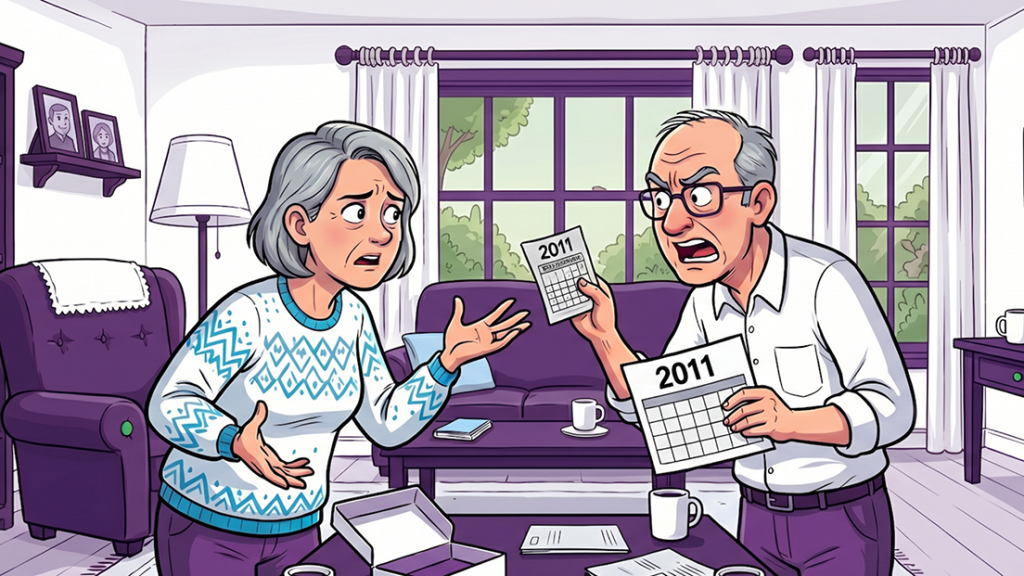
So you bring it up, and somehow, within thirty seconds, you’re in a full argument about something that happened in 2011.
Welcome to the hearing loss conversation. It rarely goes the way you planned.
Here’s what you need to understand before you try again: the person you’re worried about isn’t being difficult. They genuinely don’t know how bad it’s gotten.
Hearing loss is sneaky. It doesn’t show up one morning like a broken arm.
It creeps in over the years, and by the time you’re frustrated enough to say something, they’ve long since convinced themselves that restaurants have gotten noisier, that everyone mumbles now, and that the TV volume is completely reasonable.
Denial isn’t stubbornness. Their brain has been quietly gaslighting them for years, and it’s very good at its job.
Pick Your Moment And Your Words

Timing matters more than you think. Don’t bring this up mid-argument, mid-meal, or mid-anything. Find a quiet moment, one-on-one, when neither of you is already irritated, and lead with love, not logistics.
“I miss talking to you” lands completely differently than “you need to get your hearing checked.” One opens a door. The other reads like a summons.
Don’t say: “You never hear anything I say.”
Do say: “I want to hear your voice, and I want you to hear mine, and lately I feel like we’re losing that.”
Don’t Lead With The Hearing Aids

The minute you say “hearing aids,” a significant portion of the population will mentally check out because what they hear is “you’re old,” “something is wrong with you,” and “everyone is going to notice.”
Which, to be fair, is a lot to absorb before dessert.
So, skip the devices entirely in the first conversation.
Talk about what’s actually being lost: grandkids’ voices at the dinner table, phone calls that have gotten shorter because the connection always seems “bad,” the Sunday night shows they used to watch with you that have quietly stopped.
That’s the real conversation. The appointment with the audiologist is just the next step.
Use Evidence From Their Own Life
Point to the turn signal they didn’t hear.
Mention gently that you said their name three times before they looked up.
Do this without the tone of someone keeping score, which, be honest, is hard when you have been keeping score.
If they push back, skip the debate about whose perception is accurate and suggest a simple baseline hearing screening instead.
Frame it like any other routine health check. You get your eyes checked. You go to the dentist. You let someone look at that mole.
Your ears have been working very hard for a very long time, and they deserve a little attention, too.
Know When To Stop Pushing
You may not win this conversation the first time…or the third time. In my experience, the record is considerably higher than that, and both parties had aged visibly by the end.
Planting the seed matters, though.
Saying something once, calmly, with love, is more powerful than a weekly campaign. They heard you. The irony of that sentence is not lost on me. But they did. Give it time.
Sometimes it takes a grandchild saying, “I want to tell you something, and I really need you to hear me.” Sometimes it takes a doctor mentioning it offhandedly in an appointment. Sometimes it takes one bad moment at a wedding, when they feel completely cut off from everyone they love, for them to come home quieter than usual.
Your job isn’t to force the decision. Your job is to make sure they know you’re asking because you love them, and that when they’re ready, you’ll be right there.
A Note For The Person This Is Actually About
If someone handed you this article, it’s because they love you. They want you at the table, fully present, not nodding along and hoping for the best.
Getting your hearing checked takes about an hour. You’ve spent more time than that looking for your keys.
Come in and see me. We’ll figure it out together.

About the Author: Dr. Ronna Fisher, AuD, CCC-A, FAAA is the founder and president of Hearing Health Center, which she established in 1984 in memory of her father, who suffered from untreated hearing loss and died at 53. That personal loss has shaped her entire career. Under her leadership, Hearing Health Center has been voted the best hearing practice in Illinois three years in a row by Hearing Review. In 2005, she expanded her mission by founding the Fisher Foundation for Hearing Health Care, a nonprofit dedicated to making auditory care more accessible. Dr. Fisher earned her doctorate in audiology from the Pennsylvania College of Optometry and holds a Certificate of Clinical Competence in Audiology (CCC-A) from the American Speech-Language-Hearing Association. She is a Fellow of the American Academy of Audiology and a member of the Academy of Dispensing Audiologists.
Recent Posts
- Why Do My Ears Feel Clogged?
- What Your Ears Might Be Warning You About Your Heart
- The Risks of Over-The-Counter Hearing Aids
- Itchy, Itchy Ears: Common Causes and Solutions
- 4 Common Myths About AI in Hearing Aids
- Crackling in Ear: What Does it Mean and How to Treat It
- How to Keep a Little Hearing Loss from Becoming a Big Deal
-
Downtown Chicago
Magnificent Mile
142 E. Ontario St, Ste 1100
 (312) 263-7171
Learn More
(312) 263-7171
Learn More
-
Naperville
Fox Run Square
1212 S. Naper Blvd, Ste 103
(630) 369-8878
Learn More
-
Oak Brook
Oakbrook Prof. Bldg.
120 Oakbrook Ctr, Ste 709
(630) 571-7111
Learn More
-
Highland Park
Crossroads Shopping Cntr.
185 Skokie Valley Rd.
(847) 681-7000
Learn More
-
Park Ridge
Presence Resurrection
7447 W. Talcott Ave, Ste 360
(773) 466-8878
Learn More