
If you suddenly feel a full, muffled, or underwater sensation in your ear, you might be tempted to use a cotton swab or ear drops to clear things up.
But sometimes you need some professional help to deal with your clogged ears.
Our blog helps you better understand the causes of a clogged ear and whether or not it’s time to reach out to an audiologist.
Why Does My Ear Feel Clogged?
That stuffed, underwater sensation is your ear telling you something is interfering with sound reaching your eardrum.
Unfortunately, the source could be anywhere from your ear canal to the back of your nose.
Here’s the short anatomy lesson: sound travels down the ear canal, hits the eardrum, and gets transmitted inward.
Anything that blocks or pressurizes that pathway creates a sensation of fullness or muffling.
The four most common causes of clogged ears include:
Earwax Build-Up
Earwax is normal and necessary, but it accumulates. A 2024 study published in Laryngoscope Investigative Otolaryngology found that nearly 1 in 5 adults has some degree of earwax impaction, and that number rises to nearly 1 in 3 for adults over 70.
Eustachian Tube Dysfunction
The eustachian tube runs from your middle ear to the back of your throat, and its job is to equalize pressure and drain fluid.
When you’re congested, the tube swells and can’t do its job. For Chicagoland residents, this is a near-seasonal experience as tree pollen, grass pollen, and ragweed give the eustachian tube something to fight from April through October.
Pressure Changes
That familiar ear-pop sensation on a flight is the eustachian tube trying to equalize cabin pressure. When it can’t fully catch up, you land with ears that won’t clear.
Fluid After Illness
After a cold, sinus infection, or ear infection, fluid can collect in the middle ear and linger for weeks after your other symptoms have resolved. The illness is gone. The muffled feeling is not.
Be Careful of At-Home Remedies
It’s important to think twice before using any at-home remedies to clean out your clogged ears, as the risk of further injury is high.
Your ear canals are self-cleaning; the skin lining them actually migrates outward, slowly carrying earwax toward the opening where it naturally falls out.
Jaw movement also helps move things along.
If you’re dealing with earwax buildup, there are safe at-home options to try.
Over-the-counter cerumenolytic drops (mineral oil, baby oil, or dilute hydrogen peroxide) soften wax and can help it move out naturally.
If that doesn’t work, reach out to an audiologist who can perform a quick, in-office procedure that takes just a few minutes to solve your problem.
If pressure or congestion is the culprit, try swallowing or yawning deliberately, or the Valsalva maneuver: pinch your nose closed, close your mouth, and gently blow.
Antihistamines or a nasal steroid spray can help if allergies are driving the eustachian tube swelling.
Could My Clogged Ears Be a Sign of Hearing Loss?
For many people, the first sign of gradual hearing change is when everything sounds slightly muffled.
Harvard Health has noted that hearing loss sometimes manifests as a plugged-up feeling rather than obvious auditory difficulty. The only way to know is a hearing test.
Sudden Hearing Loss is a Problem
If your ear suddenly went muffled without a clear cause (especially if it’s only one ear), it could be sudden sensorineural hearing loss, or SSNHL.
SSNHL comes on within 72 hours and affects roughly 66,000 Americans annually. Failure to treat within 72 hours of onset greatly diminishes the likelihood of permanent damage.
If you have ear pain, dizziness, drainage, or fever alongside the muffled hearing, see someone that day regardless of how it started.
How Hearing Health Center Helps with Clogged Ears
An appointment typically starts with a visual examination of the ear canal.
If earwax is present and causing the blockage, it can be removed during the same visit using professional instruments.
Alongside or following the wax check, an audiologist will often run a hearing test to establish a baseline and rule out any hearing change that might be contributing to the muffling.
If there’s a question about middle ear pressure, a tympanometry test can check whether the eardrum is moving normally and whether fluid might be present behind it.
If what you’re dealing with turns out to need ENT involvement, an audiologist can refer you directly. They’re often the right first stop, not the only stop.
Ears Feeling Clogged? Call Hearing Health Center Today
If your ears have been feeling full or muffled, come in and see us. We’ll take a look, run a hearing test, and tell you what’s actually going on.
Book an appointment online or call the location nearest you.
Have you ever experienced a mysterious crackling sound haunting your ear, seemingly attacking you out of the blue?
If so, you may be wondering about this irritating sound and if you should be concerned about it.
This blog will unveil the secrets behind this peculiar yet annoying sound.
Let’s dive into the captivating journey of crackling sounds in the ear, understanding what they are, the early signs, and the treatments to explore.
What Is Crackling In The Ear?
Crackling in the ear symbolizes a peculiar sound similar to the crinkling of paper or the rustling of leaves. It can be annoying and even unnerving if it happens frequently enough.
We often refer to it as a clicking, popping sound in the ear or a persistent snapping noise. These noises make it difficult to focus on the work or their surroundings.
Causes include:
- Eustachian tube movement
- air pressure fluctuation
- excessive earwax
- muscle contractions
While harmless, ear crackling can be bothersome and may indicate an underlying issue that warrants further investigation.
Struggling with popping in your ear? Schedule your free consultation with Hearing Health Center today.
The Three Biggest Causes of Crackling in Ear
Sometimes the crackling in your ear is coming from an area near the ear, or a more specific medical condition. If the crackling conditions continue, consider one of the following:
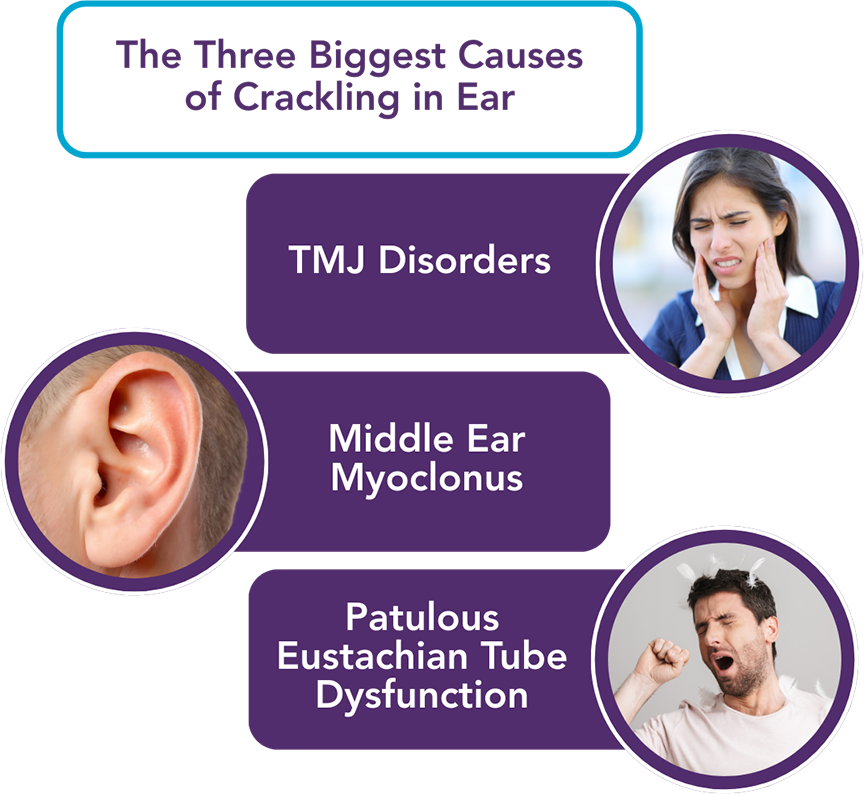
TMJ Disorders
Your temporomandibular joint (TMJ) sits right next to your ear canal.
If your jaw is misaligned or you’re dealing with teeth grinding, the clicking you hear is actually your jaw joint popping.
Middle Ear Myoclonus (MEM)
Think of this as a “twitchy eye” but inside your ear.
Tiny muscles (the stapedius or tensor tympani) can sometimes spasm rhythmically, causing a seemingly random thumping or clicking noise.
Patulous Eustachian Tube (PET) Dysfunction
Most of the time, the Eustachian tube remains closed and only opens when you swallow or yawn.
For people with PET Dysfunction, the tubes stay open constantly, causing “autophony,” a condition in which your breathing sounds echo or distort, often accompanied by crackling.
Five Early Signs Of A Crackling Sound In The Ear
Early signs of ear crackling can vary depending on the underlying cause.
Listed below are five common early signs that you must watch out for in case of something more serious going on:
- Popping & Clicking: You may notice popping or clicking sounds in one or both ears, similar to popping bubbles.
- The Sensation of Pressure: You might feel pressure in the ear, as if something is blocking it.
- Mild Discomfort: You may experience slight discomfort in the ear, which can be referred to as a sensation of mild pain or extreme itchiness.
- Fluctuation in Hearing Sensitivity: You might observe subtle changes in your ability to hear or even a slight reduction in hearing sensitivity, especially in the affected ear.
- Temporary Hearing Loss: Frequent episodes of temporary hearing loss or muffled sounds in your affected ear lasting for short periods are early signs of ear crackling.
It is essential to remember that these signs vary depending on the underlying causes.
If you experience any of these signs or have concerns about ear crackling, it is advised to consult medical professionals, including ENT specialists, for a proper diagnosis.
How To Preserve Your Ear From Crackling Sounds?
To preserve ear health and minimize crackling sounds, the best approach is simple ear health maintenance.

First, keep your ears clean and prevent excessive earwax buildup. Excessive earwax is a key contributor to the crackling sound and could lead to hearing damage if not treated appropriately.
If you work in a noisy environment or just love concerts, wear protective headphones (or safety earbuds). This is another instance of something that may not bother you in the moment but could cause serious injury later in life.
During activities like flying or swimming/scuba diving, it is advised to yawn or swallow to equalize pressure in your ears.
Also, this is very important. Do not use cotton swabs, car keys, or any other object to clean your ears.
Wonder why? Other than the obvious, any foreign object inserted into your ear pushes earwax deeper, causing damage to your delicate structure.
Lastly, drink enough water to maintain proper Eustachian tube function, facilitate equalization of pressure, and minimize the likelihood of crackling sounds.
How To Get Rid Of The Crackling Sound In The Ear?
The different treatments for the crackling sound you’re hearing really depend on the underlying cause. That’s why your audiologist will first focus on finding the reasons why it’s happening, then present you with a treatment plan.
One of the most common treatments begins with earwax removal. An audiologist will perform ear irrigation or use specialized tools to remove the buildup in a safe manner.
If you have issues caused by blockages, nasal congestion, or improper pressure equalization, the next step might be Eustachian Tube Dysfunction Management.
In case of ear infection or inflammation, antibiotics or anti-inflammatory medications should be prescribed to alleviate symptoms and resolve the underlying problems.
If the crackling sound is accompanied by tinnitus, treatments like CBT (Cognitive Behavioral Therapy), Sound Therapy, and TRT (Tinnitus Retraining Therapy) are recommended to help manage the symptoms.
For cases where muscle tension or spasm contributes to the crackling sound, techniques such as physical therapy, jaw exercises, and relaxation exercises help reduce tension and offer immense relief.
The best way to address ear crackling is to identify the underlying cause and work with your audiologist to resolve it.
When to Worry About Crackling in Your Ear
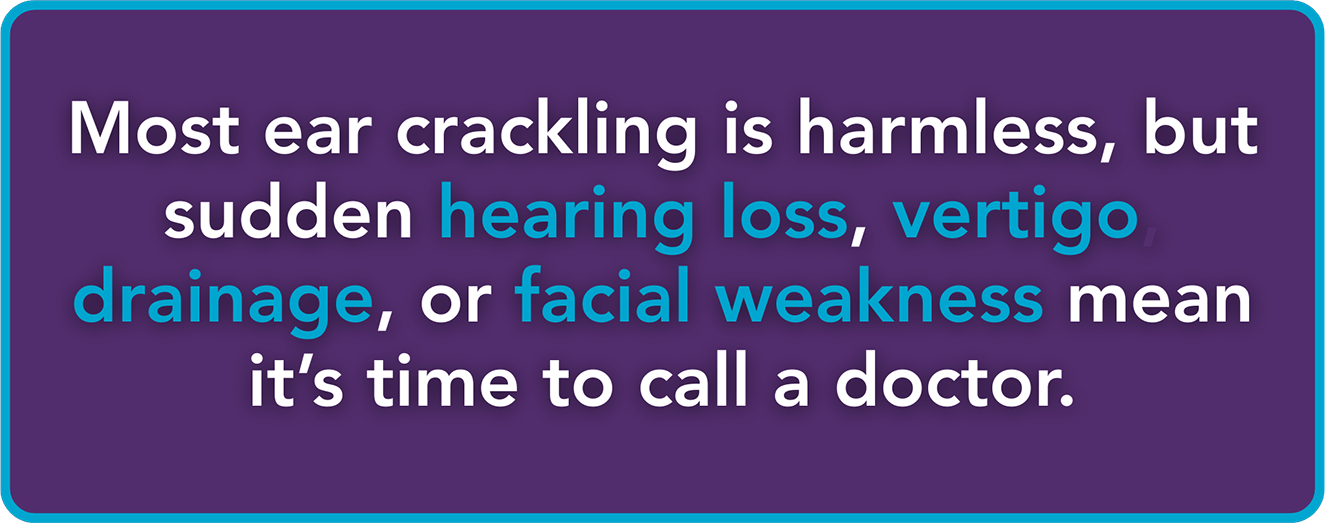
While most of the time, nothing to worry about, if you suddenly experience any of these additional symptoms, it is time to call a doctor right away.
Sudden Hearing Loss
If everything suddenly goes quiet, this becomes a medical emergency. The sooner you get treatment (often within 48 hours), the better the chance of recovery.
Vertigo
Vertigo is when the room starts to spin, or you become dizzy. If you are suffering from this, it might mean you have an inner ear infection or Vestibular issues that, when left untreated, can cause long-term hearing problems.
Drainage
It can be unsettling to see blood, pus, or clear fluid leaking from the ear canal, and it’s time to call a medical professional because this is an emergency.
Facial Weakness
Any drooping or facial numbness can be a sign that the nerves running near the ear are under significant stress. You should call a doctor immediately if you notice these signs.
How To Safeguard Young Kids Against Loud Noises?
Studies have shown that long-term hearing damage isn’t always the result of a single instance, but rather the combination of loud noises over significant periods of time. Since you don’t lose all of your hearing at once, you’ll gradually lose your ability to hear if you don’t get regularly scheduled hearing checks.
Step one is to limit exposure. Minimize exposure to loud sounds, especially during fireworks, machinery, and TV time. Also, offer properly fitted ear protection, such as earplugs or earmuffs to kids when in a noisy environment.
Second, make sure all electronic devices, media, and toys have volume limitations. The goal is to avoid prolonged exposure to loud noises.
You may also consider creating separate quiet areas at home for young kids where they can relax and take a break from the noise.
By practicing these measures, parents can safeguard their kids against damage caused by loud sounds.
Need Your Hearing Checked? Contact Hearing Health Center Today!
If you experience ear crackling with no pain, consult an ENT specialist or other medical expert to identify the issue and recommend treatment. It could be an earwax build-up, managing Eustachian tube dysfunction, or treating infections.
Consult our professionals at Hearing Health Center to get proper treatment, including earwax removal. We have a team to help patients find the treatment that best suits their unique hearing needs.
Hearing ability is a precious gift that enriches us and helps us connect to the world. Unfortunately, due to hectic lifestyles and impractical choices, hearing loss has become increasingly common, affecting all ages.
But the good news is that many of these cases of hearing loss are preventable. By practicing healthy choices and taking proactive steps, you can safeguard your hearing health for ages to come.
What Is Hearing Loss?
Hearing loss refers to a reduced or diminished ability to pick up on sounds or even understand them. Its severity can range from minor to extreme, depending on the underlying reasons.
This includes ear infections, prolonged exposure to loud sounds, hereditary predisposition, head injury, side effects of a medicine, and aging.
The key to preventing or slowing hearing loss is to understand what is “loud” and to limit exposure. Understand that the louder the volume, the less time you can listen to it before it harms your hearing.
Why Is Hearing Loss Affecting People at Younger Ages?
There are myriad reasons why hearing loss appears to affect people now at earlier ages.
Loud environments and prolonged exposure to extreme volumes, such as recreational activities, concerts, and the constant use of personal audio devices at high volumes, are contributing significantly to hearing damage among young people.
With headphones becoming an everyday staple, constant exposure to loud music is slowly affecting people’s hearing. Add in how some occupations (construction sites, manufacturing facilities, aviation, transportation, and entertainment) regularly expose people to high levels of noise, and young people are more likely than ever to experience hearing loss.
Some medical conditions, such as genetic disorders, infections, and autoimmune diseases, can also lead to hearing loss, especially in younger individuals.
Genetic predisposition can make individuals more prone to hearing issues.
Thanks to cutting-edge diagnostic tools, more and more people are now aware of the importance of hearing health.
This includes improved identification and early detection of hearing loss. You can schedule a free comprehensive hearing exam at Hearing Health Center today.
What Are The Early Signs of Hearing Loss?
It is essential to note the early signs, although they vary by individual or specific type of hearing loss.
If you notice any of these signs or have concerns, connect with the Hearing Health Center team to avoid more serious, long-term damage.
Difficulty Deciphering Conversations
One of the early signs of hearing loss is trouble following conversations, especially in noisy environments.
You may find it challenging to understand what others are saying, leading to repeated questions or requests for clarification.
Increasing Volume
Turning the volume up or asking others to repeat themselves if you find it too loud or extremely loud indicates the onset of hearing loss.
Gradually increasing the volume is a major early sign that most people do not recognize.
Withdrawal from Social Events
Individuals with hearing loss often withdraw from social gatherings or group conversations.
This is the result of difficulties understanding conversations, which then leads to feeling frustrated, embarrassed, and even isolated.
Eventually, individuals will avoid situations that demand extensive communication.
Tinnitus
The perception of ringing, buzzing, or other ghost sounds in the ears is associated with hearing loss.
If you often experience tinnitus, especially with other symptoms such as difficulty hearing, it is advised to have your hearing checked.
6 Ways To Protect Yourself From Hearing Loss
1. Protect Your Ears Against Noise
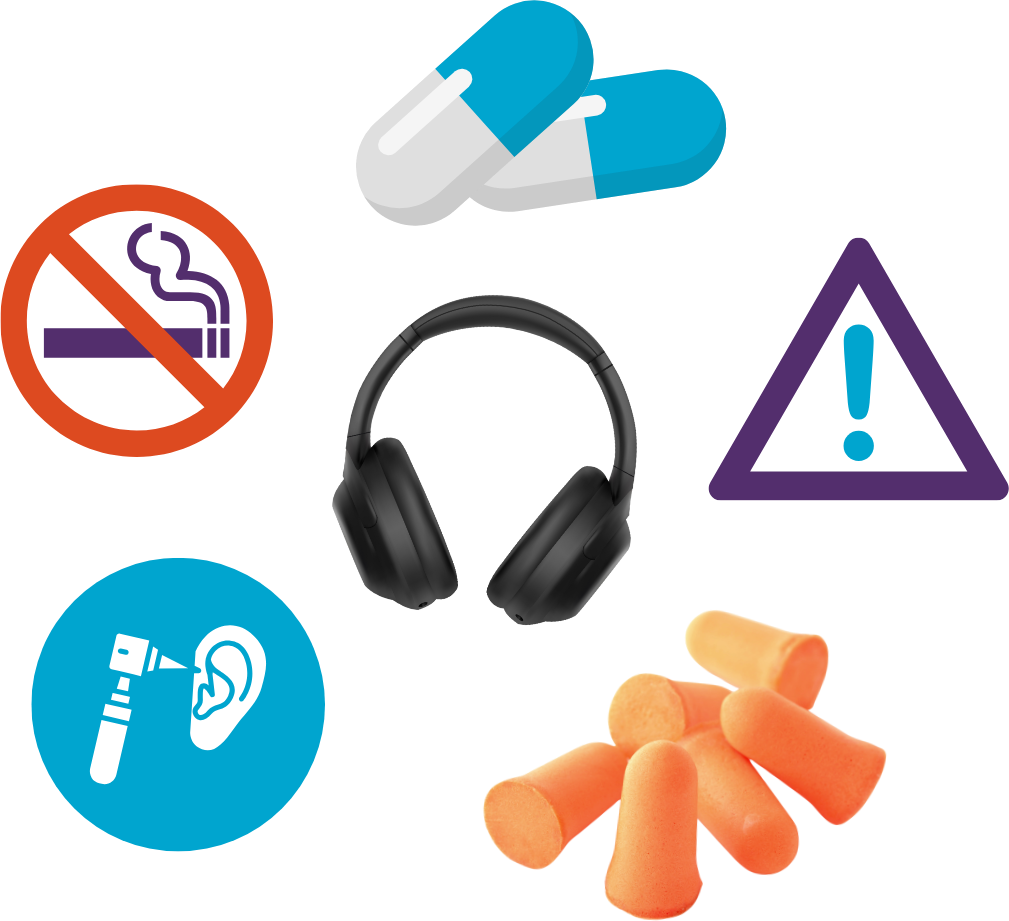
Wear earplugs or muffs to reduce the impact of excessive sound at concerts or sporting events.
When at home, keep the volume at a normal level, especially when listening to music or watching TV, and use headphones.
2. Take Breaks from Noise
Taking regular breaks from noise is advised, especially in loud environments or when wearing headphones.
If you work at a loud site or in a noisy setting, take proper breaks in quieter areas to allow your ears to recover.
3. Be Cautious with Headphones
While earbuds and headphones entertain with convenience, don’t forget that they can be harmful, especially when misused.
Limit your use of headphones or earbuds, and when you do use them, keep the volume at a reasonable level.
Consider using noise-canceling headphones, which block external noise, so you can enjoy music without turning up the volume.
4. Follow a Healthy Lifestyle
Lifestyle factors influence your hearing health.
Avoid smoking; it can contribute to hearing loss. Manage chronic conditions like hypertension and diabetes – they affect your auditory system.
Stay physically active and practice a balanced diet to promote overall well-being, including your ears’ health.
5. Be Cautious with Medicines
Certain medications, also known as ototoxic drugs, damage your hearing.
This means if you are prescribed medication, consult your healthcare professionals about potential side effects on your hearing.
Be vigilant and report any effects or changes in your hearing during or post medication.
6. Schedule Regular Hearing Tests
Like any other routine medical check-up, regular hearing evaluations play a key role in detecting potential hearing loss early.
Schedule an appointment with a trusted audiologist or hearing healthcare expert to monitor your hearing health and address your concerns.
Ready To Protect Your Hearing? Schedule Your Free Hearing Exam Today.
Hearing loss can happen at any age and for many reasons, but fear not.
You can avoid noise-related hearing loss by getting annual hearing health testing, avoiding ear-damaging loud sounds, wearing ear protection muffs around loud noises, and practicing safe headphone usage.
Schedule your free hearing health exam at Hearing Health Center today.
Hearing loss costs a lot more than just your hearing. Every single day, patients walk into our practice not realizing how much they’ve lost financially, physically, and emotionally due to ignored hearing healthcare.
To help patients better understand what untreated hearing loss costs them, we put together this guide that explains how hearing loss impacts every single aspect of your life.
If you’ve ignored your hearing health, or want a check up, schedule a free comprehensive hearing exam with Hearing Health Center today.
How Common is Hearing Loss?
Hearing loss is remarkably common amongst adults. Approximately 15% of adults aged 18 and over in the United States report some hearing difficulty. That’s a little over 37 million people.
Age is the strongest predictor of hearing loss, with the highest percentage occurring between the ages of 60 and 69. Another key factor in hearing loss is exposure to loud workplace noise. 18% of adults have hearing loss at speech frequencies in both ears if they report loud workplace noise, while only 5% have hearing loss if they don’t.
Tinnitus is a concern as well. Around 10% of the adult population in the United States has experienced tinnitus, rising to 14% when worldwide totals are included.

One of the trickiest parts of dealing with hearing loss is that it’s often gradual. That means over time, you slowly lose your hearing until one day, poof, you recognize you can’t hear as well as you once did. Subconsciously, your brain might do more lip-reading, or strain so you don’t have as much of an idea how much you’re being affected until it’s too late.
Some physicians do not routinely perform hearing exams during physicals, which means gradual hearing loss could be occurring without you even realizing it.
The best and most effective way to gain a better understanding of your hearing health is to schedule an exam with a trained audiologist. At Hearing Health Center, our team performs a comprehensive hearing exam that gives you a clearer picture of your hearing health and the steps you can take to prevent hearing loss and reduce long-term costs.
The Monetary Costs of Hearing Loss
The 83% of people on Earth suffering from untreated hearing loss account for costs of nearly $980 billion per year. That total is around 6 % of GDP per capita.
According to a study led by researchers at the Johns Hopkins Bloomberg School of Public Health, “older adults with untreated hearing loss generated an average of 46 percent more in total health care costs over 10 years versus those who don’t have hearing loss.” In dollars, that’s a little over $22,000 over 10 years.
Broken down further, people with hearing loss incurred nearly 26 percent more total health care costs over two years than those treated.
But what is most costly is the hospital stay data. After 10 years, patients with untreated hearing loss were hospitalized 50% more often; 44% of those people were at higher risk of hospital readmission within 30 days, and had about 52 more outpatient visits than those without hearing loss.
Another study calculated the extent to which untreated hearing loss affected household income. They found that people with the highest level of hearing loss earned $12,000 less per year than those with minimal to no hearing loss.
Simply put, the data shows that untreated hearing loss means you’ll earn less and spend more on healthcare costs in the future.
Don’t let untreated hearing loss cost you your hard-earned money; schedule your hearing exam today.
The Health Costs of Hearing Loss
The most obvious cost of hearing loss is, of course, the inability to hear. But what most patients do not realize is that their hearing health affects the entire body, including brain function, balance, and overall well-being.
When someone loses their hearing, they become much more at risk of dementia. A 2020 report lists hearing loss as one of the significant contributors to dementia, as hearing loss requires your brain to work extra hard to understand and fill in missing gaps.
The more your brain works on these tasks, the more energy is taken away from thinking memory systems. Another possibility is that hearing loss causes an aging brain to shrink faster, thus leading to dementia.
As of today, hearing loss is attributed to around 8% of all new dementia cases, or around 800,000 every year.

Another danger of hearing loss is its effect on someone’s balance. The vestibular system in your ear helps detect the head’s positioning and the space around you. Hearing loss can negatively affect these neurons and sensors, thereby increasing the risk of falling.
There are two additional factors to consider.
The first is that auditory input is lowered with hearing loss, which then affects the brain’s ability to understand spatial information. Without being able to comprehend the area around you fully, you end up more likely to slip or fall.
Another aspect to consider is that, because your brain is working harder to understand sounds, it leaves less space to understand your surroundings. Your brain is focusing too much on one thing, leaving you more likely to ignore the space around you.
Your hearing health is more than just that: proactive action to protect yourself can help prevent serious, long-term issues.
The Social and Emotional Costs of Hearing Loss
Loss of hearing comes at a price for your mental health as well. Nearly 33% of adults 70 or older suffer from hearing loss that impacts their daily communication, which, as a result, leads to further isolation.
This isolation then leads to depression and an overall decrease in your well-being.

People who are hard of hearing become embarrassed by constantly asking others to repeat themselves, or frustrated when talking with family members, when they can’t understand them. Studies have shown that once these incidents occur frequently, people isolate themselves, leading to less-happy lives and even shorter lifespans.
There’s also the lesser-known effect of hearing loss: missing nuance in meetings and how that impacts work promotions.
Between isolation and the negative emotional impacts, it’s an easy solution to start focusing on your hearing health as soon as possible.
How Can Early Treatment of Hearing Loss Help You?
Early interventions for hearing loss limit many of the short- and long-term negative health and financial effects that cost people thousands of dollars each year.
Financially, you are not only more likely to make money with early hearing loss interventions, but you’re also less likely to spend money on hospital visits due to injuries sustained as a result.
There’s also the financial savings that come with being less likely to fall and injure yourself, and lowering the risk of dementia or other brain-related diseases.
Hearing aids are statistically more likely to lessen the likelihood of social isolation, thus reducing the chances of dementia. While treatment has not been proven to to prevent dementia, early research is promising.
Early interventions and treatment give people back the life they deserve, so don’t wait any longer and get your hearing checked today.
Need a Hearing Test? Contact Hearing Health Center Today!
Struggling with your hearing lately? Want to get checked early before something goes wrong?
Call Hearing Health Center today and schedule a free comprehensive hearing exam to get you started on your hearing health journey.
Don’t let hearing loss cost you your life, schedule your appointment today.
Nearly 20% of the world’s population struggles with hearing loss daily. The latest data shows that 1 to 3 of every 1,000 children have hearing loss (other studies have it as high as 2 to 5 in 1,000), and a large portion struggle with speech development as a result.
From the earliest days of our lives, how we hear the world affects how we communicate with it. Muffled sounds, limited feedback, and obstructed ear canals lead to future speech development issues if not addressed quickly.
Hearing is essential to a child’s ability to develop speech and language skills from the earliest stages of life. This includes how they understand sounds, learn languages, and communicate with others.
At Hearing Health Center, your hearing matters no matter your age. This guide helps you better understand the importance of early interventions for young people with hearing loss and how it affects their communication skills.
Early Childhood Language Acquisition
Infants listen to speech patterns and tones almost immediately after birth, which allows them to begin developing their language abilities. Hearing allows infants to recognize and imitate the sounds they hear, laying the groundwork for speech and communication.
However, this process is disrupted when a child experiences hearing loss.
Limited access to sound can delay language milestones, including babbling, first words, and simple sentences. Without early intervention, these delays can worsen, impacting vocabulary growth and the ability to form complete sentences.
Ongoing Speech and Language Skills
It isn’t just what the people around them say, but what the children say themselves.
Auditory feedback, or the ability to hear one’s voice, helps children learn how to pronounce words.
The loss of hearing impairs this feedback loop, making it challenging for children to correct speech errors and develop clear articulation.
The Importance of Early Detection and Intervention

That’s why it is so important to test early and often for signs of hearing loss.
Newborn hearing screenings and regular hearing tests help detect hearing issues early in a child’s life.
When identified early, interventions such as hearing aids and speech therapy can be implemented to support language development.
The goal is to give children early access to sound to naturally gain language skills and speech.
Types of Hearing Loss and Their Impact on Speech
Hearing loss can be categorized into three primary types: conductive, sensorineural, and mixed.
The different types affect your speech perception differently.
Conductive hearing loss occurs when sound waves are obstructed from traveling through the outer or middle ear to the inner ear.
This could be caused by something as simple as earwax buildup, fluid in the middle ear from infections, perforated eardrums, or abnormalities in the ear’s structure.
As an adult, if you’ve ever had too much earwax or fluid in your ear, you understand how difficult it is to hear sounds and conversations. Certain noises or speech frequencies might even be completely impossible to hear, as the low volume makes them difficult to understand.
Children with this conductive hearing loss might exhibit speech and language development delays due to inconsistent auditory input.
Sensorineural hearing loss results from damage to the inner ear (cochlea) or the auditory nerve pathways.
This damage can be due to aging, exposure to loud noises, head trauma, or genetic factors.
Individuals may struggle to distinguish between certain consonant sounds, leading to misunderstandings.
High-frequency hearing loss, a common form of sensorineural loss, can make it particularly challenging to hear sounds like “s,” “f,” and “th,” which are crucial for speech comprehension.
Mixed hearing loss is a combination of both conductive and sensorineural hearing loss.
This indicates issues in the outer or middle ear and the inner ear or auditory nerve.
For instance, a person might have age-related inner ear damage (sensorineural) and a middle ear infection (conductive).
The dual nature of mixed hearing loss means individuals may face compounded challenges: reduced sound volume from the conductive component and diminished sound clarity from the sensorineural aspect, leading to difficulties in both hearing and understanding speech.
Depending on your age, mixed hearing loss could affect your ability to understand and participate in conversations.
How is Speech Affected by Hearing Loss?

The effects of hearing loss depend on factors such as the severity of the hearing impairment, the age at which it occurs, and whether intervention measures are in place.
A few speech characteristics associated with hearing loss include:
Delayed Speech Development in Children
Children with hearing loss may experience delays in reaching speech and language milestones.
You may notice a limited vocabulary, difficulty forming sentences, and challenges with grammatical structures. This includes struggles with plural forms, past tense, and possessives because they cannot hear the subtle differences in sound.
Pronunciation Difficulties
Hearing-impaired individuals often face challenges in articulating certain speech sounds, particularly high-frequency consonants like “s,” “sh,” “f,” “t,” and “k.”
These sounds are typically softer and more complex to hear, leading to omissions or mispronunciations in speech.
Voice Volume
Individuals with hearing loss have difficulty controlling their voice pitch and volume without the ability to hear feedback.
This commonly results in monotone speech or a lack of natural variations in intonation, creating an unusual or less expressive speech pattern.
Simplified Sentence Structures
Individuals with hearing loss might use simpler sentence constructions, often relying heavily on nouns and producing shorter sentences.
This simplification can stem from difficulties in acquiring and using complex grammatical forms.
Challenges with Grammatical Elements
Using grammatical markers such as verb inflections, adverbs, prepositions, and pronouns may cause noticeable difficulties.
These challenges can lead to speech that sounds less fluid and more fragmented.
Strategies for Mitigating Speech Challenges
Early intervention is the most crucial strategy for mitigating speech challenges among young people. From an early age, assistive technology, specialized therapies, and alternative communication methods significantly improve communication abilities and the quality of life for individuals with hearing impairments.
The younger you are, the more significant timeliness is.
The Centers for Disease Control and Prevention (CDC) emphasizes that infants diagnosed with hearing loss should receive intervention services as soon as possible, ideally before 6 months.
These services often involve therapists working closely with families to teach communication strategies and integrate learning into daily routines.
On the audiologist’s end, properly-fitting hearing aids improve audio input and speech comprehension. Because every person is different, working with a trusted audiologist allows for personalized care and treatment to ensure optimum results.
Consistent use of well-fitted equipment is a foundational step in developing normal auditory, speech, and language skills.
Speech-language pathologists (SLPs) provide tailored interventions to help individuals with hearing loss build, sustain, or improve their communication abilities. Therapies might focus on articulation, language growth, and auditory training.
Implementing specific strategies in school settings can support students with hearing loss. These range from systematic vocabulary instruction to the use of visual aids. Depending on the need, techniques such as semantic mapping and providing context for new vocabulary words may be used to reinforce language skills.
Is Your Child Struggling with Hearing Loss? Call Hearing Health Center Today.
Early interventions protect long-term hearing health and assist in developing language skills. The trained audiologists at Hearing Health Center are prepared to help you and your family with regular hearing exams, hearing aid fittings, and more.
To get started, schedule an appointment at any of our five locations today!
Hearing Health Center’s Dr. Sarah Schwartzer, an audiologist and balance specialist, offers this informative video that explains the link between …
Struggling with ringing in your ears? Dealing with a constant buzzing sound? If so, you might be among the millions affected by tinnitus, a sometimes debilitating condition that causes ringing, buzzing, or hissing sounds in your ears.
Tinnitus is one of the most common yet difficult conditions to deal with. Symptoms include sleep loss, difficulty concentrating, and even dizziness.
If you’re unsure whether you have tinnitus or want to learn more about it for a loved one, our guide to tinnitus helps you identify the common symptoms, causes, and available relief options to keep your and your loved ones’ hearing health in mind.
What is Tinnitus?
Tinnitus is the perception of sound in one or both ears without an external source. This sound may take different forms, including:
- Ringing
- Buzzing
- Hissing
- Clicking
- Roaring
Tinnitus is most often caused by an underlying ear condition, such as hearing loss, an ear injury, or a problem with the circulatory system.
There are four common types of tinnitus: subjective, objective, pulsatile, and somatic. Each affects people differently; some struggle with daily activities, whereas others’ symptoms fluctuate.
Hearing loss, stress, and anxiety all have the potential to increase the intensity of tinnitus, so it’s best to work with a trained audiologist if you or someone you love is suffering from tinnitus.
How Common is Tinnitus?
 Tinnitus is relatively common in the United States. Around 25 million adults reported experiencing tinnitus in the past year, with approximately 14% worldwide suffering from the condition. Around 2% of those cases are severe, resulting in difficulty concentrating and other negative impacts on daily life.
As you get older, you become more likely to experience tinnitus. That’s because of normal age-related hearing loss, and the wear and tear experienced on your inner ears cells. When those cells become damaged, the brain interprets the electrical signals along the nerve from your ear to your brain as sound.
What Causes Tinnitus?
Tinnitus is often linked to hearing loss, but several factors can contribute to its development, including exposure to loud noises, age-related hearing loss, ear infections, ear wax blockages, medications, and other health conditions.
You increase your risk of tinnitus if you work in a noisy environment like a construction site, frequently attend loud concerts, or use headphones for extended periods.
The same goes for ignoring ear infections or ear wax blockages. If left untreated, you will likely experience temporary or permanent tinnitus.
Tinnitus is sometimes linked to other medical conditions, including:
- High blood pressure
- Cardiovascular diseases
- Ménière’s disease
While occasional tinnitus symptoms might not be an immediate concern, please contact your doctor if the ringing persists for more than a day, you’re experiencing hearing loss, or you’ve lost the ability to concentrate during the day due to the noise.
At that point, an expert audiologist can examine your ears and provide the right treatments to protect your hearing and mental health in the long term.
To diagnose tinnitus, an audiologist will perform a series of hearing exams, and if there is a more serious concern, schedule imaging and blood tests to ensure any other underlying problems can be addressed.
How Do You Treat Tinnitus?
 Unfortunately, there is no cure for tinnitus. That being said, numerous treatment options are available that can help reduce its impact on everyday life.
The first is hearing aids. Since most tinnitus cases overlap with hearing loss, hearing aids amplify sound to help make tinnitus less noticeable.
Another option is to use white noise machines, nature sounds, or background music to help mask tinnitus and provide relief.
Lifestyle adjustments are also recommended to help with tinnitus treatment. These might include avoiding situations with loud noises, reducing caffeine intake, and maintaining a healthy diet.
Some audiologists might suggest cognitive behavioral therapy to assist with any anxiety, stress, or other reactions to tinnitus symptoms.
The good news is that tinnitus is treatable, and millions of people living with the condition live happy, fulfilling lives.
Ready to Protect Your Hearing Health?
Tinnitus is frustrating, but you don’t have to deal with it alone. If you’re experiencing persistent ringing, buzzing, or phantom sounds, schedule an appointment with Hearing Health Center to help diagnose and manage your tinnitus.
Don’t let tinnitus take over your life; schedule a hearing exam with Hearing Health Center today.
Are you having trouble hearing? You might just have a problem with wax buildup. The best way to find out if you have wax buildup is to come in and have us examine your ears with our video otoscope.
Every one of us secretes wax in our ears. Wax not only serves to protect the skin in our ear canal but also provides lubrication and can protect our ears from bacteria, insects, and fungi. Most of us barely notice the presence of our wax, but for others, it can build up without actually removing itself, causing a blockage in our ear canal.
What is Ear Wax?
Nobody likes ear wax, but it’s essential to protecting your ears.
Ear wax, medically known as cerumen, is a naturally occurring substance produced within the ear canal. While it’s called ear wax, it’s a mixture of ear secretions, shed skin cells, and trapped debris.
Ear wax is the first line of defense for your ears. It traps dust, dirt, and other small particles that could otherwise penetrate deeper into the ear and potentially damage your eardrum. Additionally, ear wax provides lubrication, preventing the ear canal from becoming dry and itchy.
You may have found that ear wax can be in many colors, including off-white, yellow, and brown. If your ear wax is green, it’s time to see a doctor, as you might be fighting off an infection.
The Complications of Ear Wax
Ear wax is generally beneficial, but if it accumulates too much and becomes impacted, it can threaten the health and well-being of your hearing.
Impacted ear wax occurs when the cerumen becomes lodged deep within the ear canal, often blocking it entirely. If that happens, you’ll typically experience the following symptoms:
Hearing Loss
The most common symptom of too much ear wax is when the blockage prevents sound waves from reaching the eardrum effectively, resulting in muffled or diminished hearing.
Ear Ache
Another common symptom of impacted ear wax is ear pain because of the pressure exerted by the ear wax against the eardrum or the ear canal walls.
Tinnitus
You may have tinnitus if you’ve ever experienced ringing, buzzing, or other noises in the ears. There are different causes for tinnitus, but impacted ear wax is one of the more common ones.
Vertigo
Impacted ear wax sometimes causes balance problems because the ear plays a vital role in maintaining equilibrium. If you feel dizzy or have vertigo, it might be from too much ear wax.
Ear Infection
Because areas in the ear canal are blocked, they become breeding grounds for bacteria growth. If that happens, you will end up with a lot of ear pain and an ear infection.
If you experience any of these issues, reaching out to your audiologist before attempting to clean your ears yourself is important.
How Do You Clean Your Ears?
 One of the biggest misconceptions is that you should clean your own ears. Most common at-home ear cleaning attempts end in serious, long-term damage to your hearing. Sometimes, the damage is even permanent.
While seen on TV and in movies, the cotton swab is one of the last things you want to stick in your ear. Using them oftentimes pushes the ear wax further into the ear canal, causing more impact on the ear drum.
If you’re not careful, cotton swabs can scratch or puncture your ear drum.
Another common at-home solution is an ear candle. There is no medical proof that ear candles work, but there is evidence that usage causes burns, additional blockages, and perforation.
There is no best home solution for cleaning your ears. Sticking anything in your ear is a recipe for serious and long-term damage, which is why you should always go to a doctor or an audiologist if you are experiencing symptoms of impacted ear wax.
How Do You Prevent Ear Wax Buildup?
 While being proactive about protecting your ears might make sense, many at-home remedies are dangerous. The ear canal is self-cleaning, and overdoing it disrupts this process, leading to excess ear wax.
Two methods to prevent impacted ear wax are gentle cleaning after showers and using a humidifier.
After showering or bathing, gently wipe the outer ear with a soft cloth. This helps remove any excess wax that naturally migrated outward.
Dry air sometimes causes dryer ear wax, which can be more prone to impaction. Using a humidifier helps maintain adequate moisture levels.
Of course, the best prevention is scheduling regular appointments with an audiologist who can check and clean your ears. The audiologists at Hearing Health Center are trained in all forms of ear wax removal, including suction, curettes, flushing, and more.
Ear Wax and Hearing Aids
For all of the good ear wax does, its existence complicates things for people wearing hearing aids.
One of the biggest concerns is that wearing hearing aids prompts the glands in the ear canal to produce more wax, preventing it from moving out because of the barrier created by the hearing aid.
Ear wax can accumulate on the hearing aid’s receiver (speaker), blocking sound transmission and causing muffled or distorted sound.
This is a common issue, especially with in-the-ear (ITE) and receiver-in-canal (RIC) hearing aids.
When Ear Wax Becomes a Problem, We Have a Solution: Ear Wax Removal!
As audiologists, we are trained in our academic coursework and through specialized wax removal courses.
Wax removal can take many forms, depending on the wax type, the wax buildup, and what is necessary for the most uncomplicated removal.
Come in, find out if it’s just wax, and get it taken care of at Hearing Health Center with our specialized audiology team!
 This is the rallying cry from baby boomers all over the country that ruined their hearing going to concerts and listening to loud music.
Millions of baby boomers are experiencing the foibles of their youth and suffering the consequences.
“My average patient used to be in their late seventies,” said Dr. Ronna Fisher, AuD. Of Hearing Health Center. “Today my average patient is in their early sixties.” Fifty percent of people over the age of sixty have a significant hearing deficit that interferes with their everyday life.
Yet, at the same time, some of these baby boomers still perceive hearing problems as an old person’s issue. “They still think, “hearing = old,” and refuse to recognize and admit they have difficulty hearing and understanding,” said Dr. Fisher.
“Hearing loss runs in my family,” proclaimed Dr. Fisher, who has been wearing hearing aids since she was fifty. “At first, I used to think, ‘I’m too young to wear hearing aids. Then I realized, I’m too young not to wear hearing aids.”
Baby boomers are all about living longer, being more active and communicating their vast knowledge…to their employees, to their children, and anyone else willing to listen to their wisdom.
Astute baby boomers understand that communicating is a two-way street. making the rest of their lives the best of their lives. And they’re realizing that it’s all about communicating.
Age doesn’t matter. Book a FREE hearing test today.
 You might think your hearing problem only affects you, but your spouse, family, friends, and co-workers might have already had it up to here.
Untreated hearing problems are a major cause of stress in relationships, especially with those closest to us.
Researchers who conducted a qualitative study of couples, where one partner had hearing loss, found that hearing loss produces feelings of frustration, embarrassment, and distress…especially for the partner without hearing loss.
Day-to-day communication, whether about important matters or trivial, is the cornerstone of a healthy relationship. When communication breaks down, frustration creeps in. Frustration leads to resentment, then to further breakdown in intimacy.
Both partners in the study bemoaned the loss of spontaneity, small talk, and sharing small, unexpected incidents. Those small asides, including jokes and humor, bring about shared companionship and reflection. And relationships, especially marriages, experience a significant loss in the absence of that communication. And both partners agreed there had been a meaningful change in the nature and content of their communication because of hearing problems.
EMOTIONS CONNECTED WITH DECREASED HEARING ABILITY
- Frustration
- Resentment
- Loneliness
- Curtailing social activities
- Decrease in intimacy, joking, interacting with friends and family.
- Decrease in shared activities (even watching TV)
- Loss of companionship
- Less communication (words are kept to a minimum)
TIPS FOR TALKING TO YOUR PARTNER ABOUT THEIR HEARING
- Tell them it is affecting your relationship. Your partner might be concerned about the stigma of wearing hearing aids, but saying, “what,” “huh,” “pardon me,” all the time is often irritating to others and frustrating to have to repeat everything.
- Tell them you are concerned for their health. When hearing loss is left untreated, the speech and language areas of the brain can atrophy, leading to auditory deprivation and putting a person at increased risk of cognitive decline. Early detection and treatment of hearing problems is the number one factor under your control to prevent and delay dementia.
- Tell them you are concerned about your own health. The additional stress of worrying about your other half’s health and safety can take a physical and emotional toll on your own health. Plus, it is no fun to listen to the TV or stereo when it is cranked up too high, and could be damaging your own hearing, or having to shout or constantly repeat yourself.
- Make an appointment to have your own hearing evaluated and ask them to go with you. First, it is something you should do anyway. The Alzheimer’s Association recommends everyone over fifty get a baseline hearing evaluation. Secondly, it’s always good to have another set of ears to hear what the hearing care provider has to say, no matter who that patient is.
HOW HEARING AIDS IMPROVE RELATIONSHIPS
 Wearing hearing aids not only improves your hearing, but it also improves your intimate relationships. Opening that extra channel of communication can stimulate conversation and reduce frustration, providing better understanding of one another.
They reduce miscommunication.
What was that? Did you say, “answer the phone” or “Sarah is home?” Hearing loss can result in a lot of confusion for the person experiencing it. Mistakes made from mishearing your partner could result in fighting and a decline in overall happiness. Relationships are enough work as it is without factoring in the added burden of hearing loss. A hearing aid is a simple solution to reducing miscommunication and maximizing your hearing potential.
They lower frustration and tension
Living with hearing loss requires extra effort. But it requires a lot less effort if you take the available options to improve your hearing. Doing so will not only relieve the stress you experience every day but reduce the stress it places on your loved one. Constant communication is necessary in a relationship, and communication comes much easier when you can hear one another.
Hearing aids make it easier to have a real conversation
People with hearing loss tend to withdraw into themselves because conversation becomes embarrassing and difficult. You may not realize it at first, but you are putting distance between yourself and your loved one by avoiding conversation, whether that be in person or on the phone. Hearing aids, which take some getting used to, allow you to engage in conversation and maintain your connection with your partner much better than if you did not wear them.
They allow you to tune in to each other
All the extra communication opportunities hearing aids provide you allow you to become better tuned to your partner’s needs. Cohabitation becomes much easier when a couple’s understanding of each other improves. Plus, when your partner sees you trying to improve your hearing condition, they are more likely to put in an effort also.