
Dr. Ronna Fisher, Founder of the Hearing Health Centers in Chicago, demonstrates how to insert and remove a Lyric Hearing Aid. Learn more about Hearing Aids here
Hearing aids, like all electronic or mechanical devices, need routine maintenance! No matter what style of hearing aid you have, they are all electronic devices that are put in a sweaty, waxy, moist environment for an average of 18 hours a day so they need daily maintenance to function properly and consistently.
Below, are some tips to help keep your hearing aids functioning well:
- Wipe down hearing aid and/or dome daily with a tissue or moist wipe
- Brush microphones, receivers, and other parts of hearing aid daily– you can use what was given to you by your audiologist, or a small soft baby toothbrush
- Hearing aids that have wax guard systems—check and change at least once month, or anytime the wax guard is clogged and you’re not hearing well. Wax guards are available for purchase at all offices!
- Domes should be replaced if they start to get loose or saggy, so they don’t get stuck in the ear canal. Consider changing your domes every couple of months to prevent this from happening.
- Open battery door at night to turn your hearing aids off and let air into the battery compartment. This should also save you some battery life!
- Do not store the hearing in a humid environment (i.e. bathroom).
- Put the hearing aids in a Drying Unit at night! Most units have fans to circulate the air, UV lights to kill bacteria, and a desiccant to remove moisture and humidity from the hearing aids. If you don’t have one, GET ONE!
IT’S VERY IMPORTANT TO PROTECT YOUR INVESTMENT
Remember—daily maintenance will improve the performance of the hearing aid, but it will not necessarily extend the life of a hearing aid. National average lifetime of a hearing aid is 3.8 years—at that point it is time to consider upgrading technology so that you can continue to hear as best as you can!
 Technology requires special care during the summer months, and your hearing aid is no exception. You need to maintain your hearing aids as you normally would, but because of the added humidity in the air and the heat of June, July, and August, you’ll need to take extra care when you’re having summer fun. Take care of your investment and your health with these four tips.
Tip 1: Remove your hearing aids before swimming.
Anytime you’re around water, it’s best to leave your hearing aids behind. You do need to consider your own safety though. If you won’t be able to hear warnings, it might be safer to leave them in. If they do get wet, use a lint-free towel to dry them off, remove the battery, and place the aid itself in a hearing aid dryer or desiccant jar.
Tip 2: Protect them against sweat and humidity.
After a workout, remove your hearing aids and wipe them off. Even water-resistant sets are vulnerable to the bacteria which grows faster when it’s hot and humid. Use disinfectant towelettes and a dry and store solution designed to keep your aids clean and dry. Ask your audiologist about getting your set of hearing aids professionally cleaned more often in the summer.
Tip 3: Keep your hearing aids secure.
Summer activities are often much more risky than those you undertake the rest of the year. Use special clips to keep your hearing aids attached to your clothing or your glasses. If something does come out of place, it won’t go too far.
Tip 4: Get hearing aids suited to your lifestyle.
Talk to your audiologist about the style of hearing aid that fits your needs. Hearing aids that reduce wind noise because they sit completely in the ear canal are ideal for golfers. If you wear a helmet that reduces the effectiveness of your aid, your audiologist has solutions. Take care of your expensive equipment by following proper care and use.
Has your hearing aid ever suddenly stopped working? Most often, you might try changing the battery and then wind up coming in to the audiology office for an appointment. During that appointment, have you been told that your hearing aid was just plugged with wax? Well, I know that I have told many patients this in the past. The great news is that you have the ability to unclog your hearing aid at home by changing the wax guard.
What is a wax guard and why is it important?
Depending on the type and style of hearing aid you have, there is a wax guard located at the sound outlet or at the receiver. The wax guard acts as a protective cover to stop ear wax from going deep into the hearing aid. Typically it is a white circle that is located on the portion of the hearing aid that you insert into your ear.
When should I change my wax guard?
The amount of earwax produced by each individual can vary. It is recommended that we check the wax guard daily. If your hearing aid starts to sound weak/silent or wax is visible, it’s time to change the wax guard.
How do I change my wax guard?
First, wipe off any visible wax from the hearing aid, and make sure you have the necessary wax removal sticks to change it at home.

Next, insert the open ended portion of the removal stick into the sound outlet (usually encompassed into a stainless steel bushing), twist, and pull it straight out.
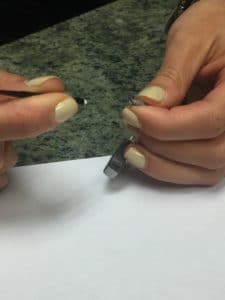

Now, turn the removal stick to the other side (that has the new white end on it) and insert the new white end into the sound outlet and remove. Make sure the wax guard is sitting flat against the stainless steel bushing of the sound outlet.
All that’s left to do is throw out your old wax guard and removal stick, which can’t be reused. And you’re done! Are you hearing better now?