
Every summer, Chicago holds hundreds of live concerts and music festivals, drawing thousands of people from all over the country.
But, if you’re one of the many audience members at Grant Park for Lollapalooza, Union Park for ARC Music festival, or the countless other festivals and free shows like the Millennium Park Summer Music Series, you might notice more and more people wearing earplugs.
Keep reading to find out why earplugs are a must-have for any concert-goer this summer.
Why Wear Earplugs?
The link between hearing loss and loud noise exposure is clear. According to one report, “nearly one in four (24.4%) U.S. adults aged 20-69 years show evidence of noise-induced hearing loss.”
Loud music in headphones and live events put nearly 1 billion teenagers and young adults at risk for hearing loss worldwide.
It’s been cited that “noise-induced hearing loss remains the second most common cause of sensorineural hearing loss after age-related loss, affecting approximately 5% of the world’s population.”
For perspective, the safe decibel level is 70 dB. That’s most conversations with your friends or noises around the house.
At 85 dB (city traffic, blenders), around 8 hours of prolonged exposure can cause hearing loss.
At 100 dB (chainsaws, sporting events), safe exposure is around 15 minutes.
Concerts and festivals often reach around 110 dB. At that volume, NIOSH recommends limiting exposure to about 2 minutes per day before the risk of permanent hearing damage increases.
Without hearing protection at a concert, you’re risking permanent hearing loss before the band even finishes its first song.
Who Should Wear Earplugs?
Everyone.
Whether you’re young, old, or in between, you should be wearing earplugs at every concert or festival you go to.
You obviously want to avoid bringing infants to loud environments as much as possible, but if you have to, they should wear earmuffs rather than earplugs to avoid damaging their ear canals.
Older children who can safely insert and remove earplugs on their own may be able to use musician-style earplugs designed for smaller ears. Parents should follow the manufacturer’s age recommendations or ask an audiologist for guidance.
And as you grow up, the need for earplugs continues, as hearing loss isn’t a young or old person’s problem; it’s everyone’s problem.
When Do You Need Earplugs?
Concerts, live music, festivals, and even sporting events all reach sound levels high enough that earplugs are recommended to avoid serious hearing problems.
Concerts and Live Music
Peer-reviewed research found that popular concerts ranged from 85 to 110 dB, and some shows push way past that.
Guinness World Records no longer tracks the loudest band in the world, but in 1994, one band proclaimed 129.5 dB as the loudest show ever recorded.
Nightclubs
Research found that the average continuous noise level in nightclubs hits around 91.2 dB, high enough to cause damage after a single night out.
Sporting Events
Noise levels recorded during a World Series game averaged 97 dB.
The Guinness World Record for stadium crowd noise was set at 142.2 decibels during a 2014 NFL game, breaking a previous record of 137.6 decibels set the year before.
Peer-reviewed sports-safety literature is direct about the consequence: hearing loss from these exposures is cumulative and irreversible, and children who regularly attend games with season-ticket-holding parents can sustain permanent hearing damage over time if not wearing protection.
Festivals
Measured research on outdoor music festivals has recorded sustained main-stage sound levels above 100 dB throughout full sets, and front-of-crowd areas at outdoor festivals commonly exceed 115 dB.
At those sound levels, recommended daily exposure limits can be reached in about 15 minutes, increasing the risk of permanent hearing damage.
How Do You Put In Earplugs?
The Noise Reduction Rating (NRR) printed on earplug packaging is a laboratory number, measured under ideal, expert-fitted conditions.
In the real world, a poorly fitted earplug delivers a fraction of that protection.
That’s exactly why NIOSH recommends derating a foam earplug’s labeled NRR by 25%, and OSHA’s own simplified formula — roughly (NRR − 7) ÷ 2 — cuts the rating by around half to account for real-world use.
An earplug rated for 30 dB of noise reduction might only provide 11–15 dB if it’s not fitted properly.
Earplugs fit differently depending on the type you purchase, so please follow the directions to ensure they’re as effective and protective as possible.
What Type of Earplugs Should I Use For Music Festivals?
There are multiple types of earplugs for purchase, and not all work as effectively.
Foam Earplugs
The cheapest and most widely available option is still effective (as long as they’re inserted correctly).
The problem is that foam earplugs work as a physical barrier and not a filter, which means everything sounds muffled rather than quieter.
Most disposable foam earplugs are designed for single use, making them less economical if you attend concerts frequently.
Noise-Reduction Earplugs
These use an acoustic filter rather than a solid plug.
Noise-reduction earplugs use filters that let in some frequencies but not others, reducing the overall decibel level reaching your ear while preserving the balance of the sound, unlike foam, which blocks all sound.
Custom Molded Earplugs
Usually fitted by an audiologist and molded to your ear, these earplugs offer the most reliable seal of any option.
Many musicians prefer custom-molded plugs over off-the-shelf options for exactly this reason.
Struggling With Your Hearing? Schedule Your Baseline Hearing Test Today!
Summer is here, which means that outdoor concert season is in full swing.
If you’ve noticed ringing in your ears after a concert, or just want to protect your ears before your next show, schedule an appointment with Hearing Health Center for a free baseline hearing exam.
Hearing ability is a precious gift that enriches us and helps us connect to the world. Unfortunately, due to hectic lifestyles and impractical choices, hearing loss has become increasingly common, affecting all ages.
But the good news is that many of these cases of hearing loss are preventable. By practicing healthy choices and taking proactive steps, you can safeguard your hearing health for ages to come.
What Is Hearing Loss?
Hearing loss refers to a reduced or diminished ability to pick up on sounds or even understand them. Its severity can range from minor to extreme, depending on the underlying reasons.
This includes ear infections, prolonged exposure to loud sounds, hereditary predisposition, head injury, side effects of a medicine, and aging.
The key to preventing or slowing hearing loss is to understand what is “loud” and to limit exposure. Understand that the louder the volume, the less time you can listen to it before it harms your hearing.
Why Is Hearing Loss Affecting People at Younger Ages?
There are myriad reasons why hearing loss appears to affect people now at earlier ages.
Loud environments and prolonged exposure to extreme volumes, such as recreational activities, concerts, and the constant use of personal audio devices at high volumes, are contributing significantly to hearing damage among young people.
With headphones becoming an everyday staple, constant exposure to loud music is slowly affecting people’s hearing. Add in how some occupations (construction sites, manufacturing facilities, aviation, transportation, and entertainment) regularly expose people to high levels of noise, and young people are more likely than ever to experience hearing loss.
Some medical conditions, such as genetic disorders, infections, and autoimmune diseases, can also lead to hearing loss, especially in younger individuals.
Genetic predisposition can make individuals more prone to hearing issues.
Thanks to cutting-edge diagnostic tools, more and more people are now aware of the importance of hearing health.
This includes improved identification and early detection of hearing loss. You can schedule a free comprehensive hearing exam at Hearing Health Center today.
What Are The Early Signs of Hearing Loss?
It is essential to note the early signs, although they vary by individual or specific type of hearing loss.
If you notice any of these signs or have concerns, connect with the Hearing Health Center team to avoid more serious, long-term damage.
Difficulty Deciphering Conversations
One of the early signs of hearing loss is trouble following conversations, especially in noisy environments.
You may find it challenging to understand what others are saying, leading to repeated questions or requests for clarification.
Increasing Volume
Turning the volume up or asking others to repeat themselves if you find it too loud or extremely loud indicates the onset of hearing loss.
Gradually increasing the volume is a major early sign that most people do not recognize.
Withdrawal from Social Events
Individuals with hearing loss often withdraw from social gatherings or group conversations.
This is the result of difficulties understanding conversations, which then leads to feeling frustrated, embarrassed, and even isolated.
Eventually, individuals will avoid situations that demand extensive communication.
Tinnitus
The perception of ringing, buzzing, or other ghost sounds in the ears is associated with hearing loss.
If you often experience tinnitus, especially with other symptoms such as difficulty hearing, it is advised to have your hearing checked.
6 Ways To Protect Yourself From Hearing Loss
1. Protect Your Ears Against Noise
Wear earplugs or muffs to reduce the impact of excessive sound at concerts or sporting events.
When at home, keep the volume at a normal level, especially when listening to music or watching TV, and use headphones.
2. Take Breaks from Noise
Taking regular breaks from noise is advised, especially in loud environments or when wearing headphones.
If you work at a loud site or in a noisy setting, take proper breaks in quieter areas to allow your ears to recover.
3. Be Cautious with Headphones
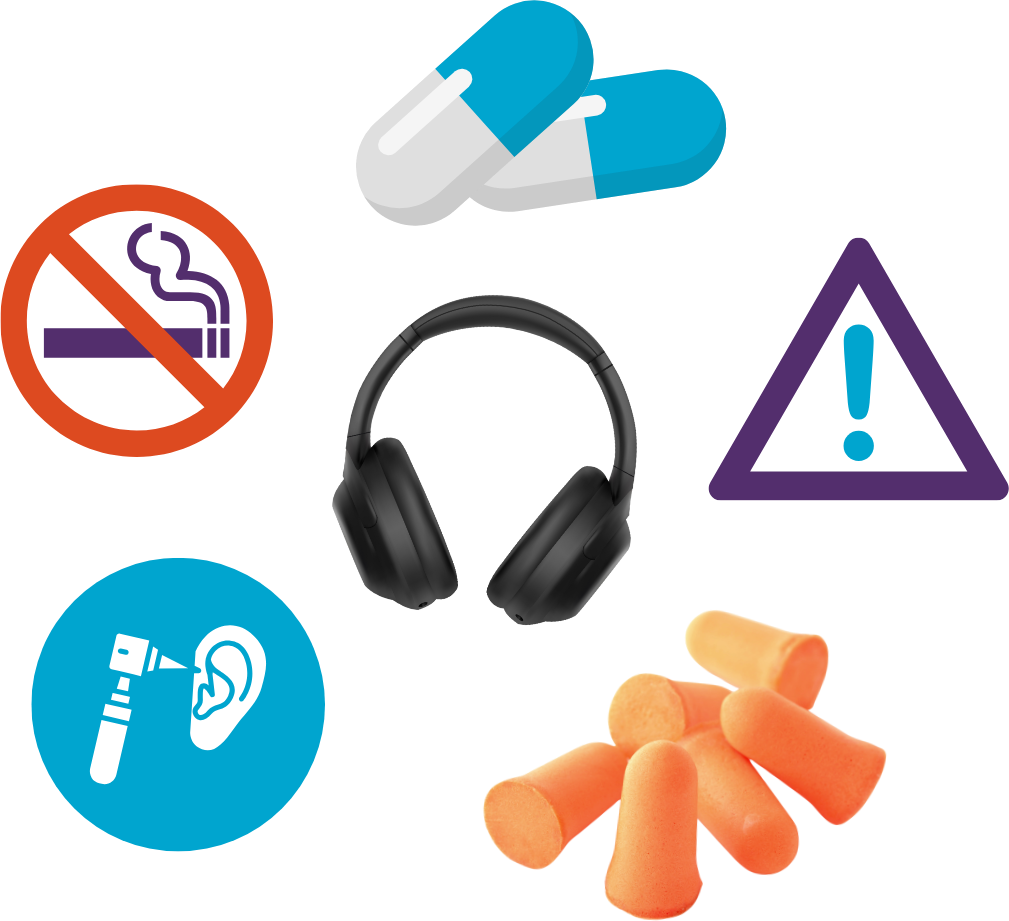
While earbuds and headphones entertain with convenience, don’t forget that they can be harmful, especially when misused.
Limit your use of headphones or earbuds, and when you do use them, keep the volume at a reasonable level.
Consider using noise-canceling headphones, which block external noise, so you can enjoy music without turning up the volume.
4. Follow a Healthy Lifestyle
Lifestyle factors influence your hearing health.
Avoid smoking; it can contribute to hearing loss. Manage chronic conditions like hypertension and diabetes – they affect your auditory system.
Stay physically active and practice a balanced diet to promote overall well-being, including your ears’ health.
5. Be Cautious with Medicines
Certain medications, also known as ototoxic drugs, damage your hearing.
This means if you are prescribed medication, consult your healthcare professionals about potential side effects on your hearing.
Be vigilant and report any effects or changes in your hearing during or post medication.
6. Schedule Regular Hearing Tests
Like any other routine medical check-up, regular hearing evaluations play a key role in detecting potential hearing loss early.
Schedule an appointment with a trusted audiologist or hearing healthcare expert to monitor your hearing health and address your concerns.
Ready To Protect Your Hearing? Schedule Your Free Hearing Exam Today.
Hearing loss can happen at any age and for many reasons, but fear not.
You can avoid noise-related hearing loss by getting annual hearing health testing, avoiding ear-damaging loud sounds, wearing ear protection muffs around loud noises, and practicing safe headphone usage.
Schedule your free hearing health exam at Hearing Health Center today.
Hearing loss costs a lot more than just your hearing. Every single day, patients walk into our practice not realizing how much they’ve lost financially, physically, and emotionally due to ignored hearing healthcare.
To help patients better understand what untreated hearing loss costs them, we put together this guide that explains how hearing loss impacts every single aspect of your life.
If you’ve ignored your hearing health, or want a check up, schedule a free comprehensive hearing exam with Hearing Health Center today.
How Common is Hearing Loss?
Hearing loss is remarkably common amongst adults. Approximately 15% of adults aged 18 and over in the United States report some hearing difficulty. That’s a little over 37 million people.
Age is the strongest predictor of hearing loss, with the highest percentage occurring between the ages of 60 and 69. Another key factor in hearing loss is exposure to loud workplace noise. 18% of adults have hearing loss at speech frequencies in both ears if they report loud workplace noise, while only 5% have hearing loss if they don’t.
Tinnitus is a concern as well. Around 10% of the adult population in the United States has experienced tinnitus, rising to 14% when worldwide totals are included.

One of the trickiest parts of dealing with hearing loss is that it’s often gradual. That means over time, you slowly lose your hearing until one day, poof, you recognize you can’t hear as well as you once did. Subconsciously, your brain might do more lip-reading, or strain so you don’t have as much of an idea how much you’re being affected until it’s too late.
Some physicians do not routinely perform hearing exams during physicals, which means gradual hearing loss could be occurring without you even realizing it.
The best and most effective way to gain a better understanding of your hearing health is to schedule an exam with a trained audiologist. At Hearing Health Center, our team performs a comprehensive hearing exam that gives you a clearer picture of your hearing health and the steps you can take to prevent hearing loss and reduce long-term costs.
The Monetary Costs of Hearing Loss
The 83% of people on Earth suffering from untreated hearing loss account for costs of nearly $980 billion per year. That total is around 6 % of GDP per capita.
According to a study led by researchers at the Johns Hopkins Bloomberg School of Public Health, “older adults with untreated hearing loss generated an average of 46 percent more in total health care costs over 10 years versus those who don’t have hearing loss.” In dollars, that’s a little over $22,000 over 10 years.
Broken down further, people with hearing loss incurred nearly 26 percent more total health care costs over two years than those treated.
But what is most costly is the hospital stay data. After 10 years, patients with untreated hearing loss were hospitalized 50% more often; 44% of those people were at higher risk of hospital readmission within 30 days, and had about 52 more outpatient visits than those without hearing loss.
Another study calculated the extent to which untreated hearing loss affected household income. They found that people with the highest level of hearing loss earned $12,000 less per year than those with minimal to no hearing loss.
Simply put, the data shows that untreated hearing loss means you’ll earn less and spend more on healthcare costs in the future.
Don’t let untreated hearing loss cost you your hard-earned money; schedule your hearing exam today.
The Health Costs of Hearing Loss
The most obvious cost of hearing loss is, of course, the inability to hear. But what most patients do not realize is that their hearing health affects the entire body, including brain function, balance, and overall well-being.
When someone loses their hearing, they become much more at risk of dementia. A 2020 report lists hearing loss as one of the significant contributors to dementia, as hearing loss requires your brain to work extra hard to understand and fill in missing gaps.
The more your brain works on these tasks, the more energy is taken away from thinking memory systems. Another possibility is that hearing loss causes an aging brain to shrink faster, thus leading to dementia.
As of today, hearing loss is attributed to around 8% of all new dementia cases, or around 800,000 every year.

Another danger of hearing loss is its effect on someone’s balance. The vestibular system in your ear helps detect the head’s positioning and the space around you. Hearing loss can negatively affect these neurons and sensors, thereby increasing the risk of falling.
There are two additional factors to consider.
The first is that auditory input is lowered with hearing loss, which then affects the brain’s ability to understand spatial information. Without being able to comprehend the area around you fully, you end up more likely to slip or fall.
Another aspect to consider is that, because your brain is working harder to understand sounds, it leaves less space to understand your surroundings. Your brain is focusing too much on one thing, leaving you more likely to ignore the space around you.
Your hearing health is more than just that: proactive action to protect yourself can help prevent serious, long-term issues.
The Social and Emotional Costs of Hearing Loss
Loss of hearing comes at a price for your mental health as well. Nearly 33% of adults 70 or older suffer from hearing loss that impacts their daily communication, which, as a result, leads to further isolation.
This isolation then leads to depression and an overall decrease in your well-being.

People who are hard of hearing become embarrassed by constantly asking others to repeat themselves, or frustrated when talking with family members, when they can’t understand them. Studies have shown that once these incidents occur frequently, people isolate themselves, leading to less-happy lives and even shorter lifespans.
There’s also the lesser-known effect of hearing loss: missing nuance in meetings and how that impacts work promotions.
Between isolation and the negative emotional impacts, it’s an easy solution to start focusing on your hearing health as soon as possible.
How Can Early Treatment of Hearing Loss Help You?
Early interventions for hearing loss limit many of the short- and long-term negative health and financial effects that cost people thousands of dollars each year.
Financially, you are not only more likely to make money with early hearing loss interventions, but you’re also less likely to spend money on hospital visits due to injuries sustained as a result.
There’s also the financial savings that come with being less likely to fall and injure yourself, and lowering the risk of dementia or other brain-related diseases.
Hearing aids are statistically more likely to lessen the likelihood of social isolation, thus reducing the chances of dementia. While treatment has not been proven to to prevent dementia, early research is promising.
Early interventions and treatment give people back the life they deserve, so don’t wait any longer and get your hearing checked today.
Need a Hearing Test? Contact Hearing Health Center Today!
Struggling with your hearing lately? Want to get checked early before something goes wrong?
Call Hearing Health Center today and schedule a free comprehensive hearing exam to get you started on your hearing health journey.
Don’t let hearing loss cost you your life, schedule your appointment today.
Don’t let ear pain or hearing loss bring you down this summer. Concerts, yard equipment, and swimming all have the potential for life-changing hearing loss if you don’t take the proper precautions ahead of time.
That’s why we believe that enjoying the sounds of summer shouldn’t come at the cost of your long-term hearing well-being. That’s why we’ve put together this guide on five essential ways to protect your sense of hearing throughout the sunny months.
5 Ways to Protect Your Hearing Health This Summer

If you plan to enjoy your summer thoroughly, consider these tips when protecting your hearing health.
1. Be Smart about Loud Noises at Summer Events
Summer is synonymous with outdoor concerts, festivals, and fireworks displays.
While enjoyable, these events often involve prolonged exposure to high decibel levels.
According to the National Institute on Deafness and Other Communication Disorders (NIDCD), prolonged exposure to noise above 85 decibels can cause permanent hearing loss.
To put this into perspective, concerts can reach 100-110 decibels, with fireworks peaking at nearly 150 decibels.
How to Protect Your Hearing:
Earplugs are the best protection against hearing loss in the summer. While not trendy, they do wonders for protecting the long-term health of your hearing.
Opt for high-fidelity earplugs designed for music, which reduce the volume evenly across frequencies, preserving the sound quality while lowering the intensity.
You can get away with foam earplugs, but they might muffle sounds more.
Also, keep a safe distance from loud noises. That means avoiding being right in front of the speakers or the fireworks’ launch area.
You might even want to take listening breaks. Find a quieter area to allow your ears to recover from the loud noises.
2. Guard Your Ears During Water Activities
While swimming and boating are quintessential summer pastimes, they can also lead to hearing damage if not taken seriously.
Water introduces moisture and other irritants into your ear canals, leading to swimmers’ ear. Symptoms of swimmer’s ear include pain, hearing loss, and more.
How to Protect Your Hearing:
Did you know they make swimming earplugs?
Custom-molded or over-the-counter swim earplugs can create a watertight seal, preventing water from entering the ear canal.
Get a pair if you’re prone to ear infections or spend much time in the water during the summer. Your hearing health will be much happier for it.
When you’re done in the water, dry your ears.
After swimming, gently tilt your head to each side to allow water to drain out.
You can also use a soft towel to pat your outer ear dry. Avoid inserting cotton swabs deep into the ear canal, as this can push debris further in and potentially damage the eardrum.
3. Protect Your Ears from Extreme Heat and Sun
Extreme heat does not directly cause hearing loss; other heat-related illnesses could lead to hearing loss.
For example, sun exposure causes dehydration, affecting the inner ear’s fluids. Heatstroke may also decrease blood circulation to the ears.
These conditions might not directly relate to hearing loss, but protecting yourself limits the chances of something unfortunate.
How to Protect Your Hearing:
This advice is just helpful in general: stay hydrated. The last thing you want ruining your summer is a case of dehydration or heatstroke.
Proper hydration supports all bodily functions, including those of the inner ear.
4. Be Mindful of Loud Yard Work and Power Tools
Yard work can be loud, especially if you’re mowing the lawn, using leaf blowers, and operating power tools.
Lawn mowers, for example, can produce noise levels between 90 and 105 decibels, while leaf blowers can reach up to 110 decibels.
Even just a few minutes exposed to this high-level noise could cause hearing health damage in the short and long term.
How to Protect Your Hearing:
We suggest investing in a good pair of earmuffs or industrial-grade earplugs designed to reduce noise from power tools.
You want a snug fit while providing substantial noise reduction.
It also doesn’t hurt to break up your yard work into shorter sessions to reduce the overall duration of noise exposure.
5. Pay Attention to Ear Discomfort or Changes in Hearing
This summer, don’t ignore minor ear discomfort or temporary changes in hearing.
Many exciting events might come your way this summer, but ignoring persistent pain, pressure, drainage, or a sudden change in your hearing could lead to more serious issues if left untreated.
Call Hearing Health Center immediately to schedule an appointment if your hearing or pain changes.
What to Do:
If you experience persistent ear pain, drainage, sudden hearing loss, or tinnitus that doesn’t subside, consult a hearing healthcare professional immediately. Early diagnosis and treatment often prevent long-term complications.
Also, don’t try to self-diagnose or treat ear problems with over-the-counter remedies without consulting a professional, especially if symptoms are severe or persistent.
Struggling with Ear Pain? Having Trouble Hearing?
At Hearing Health Center, our team is ready to help you with any ear problems you might be experiencing. Our team of expert audiologists can help you with temporary hearing loss, hearing aid fittings, and so much more.
Call us today or book an appointment online to get your hearing health where it needs to be this summer.
Dr. Ronna Fisher and HHC featured on an NBC Chicago segment discussing the dangers of earbuds. Aired 5/2/06
5 Summer Activities That Can Permanently Cause Damage and Alter Your Life
Fireworks
From Memorial Day to Labor Day, elaborate firework displays reign supreme. Most fireworks have sound upwards of 125 dB, (think diesel engines or the level of sound which actually causes pain), easily causing permanent hearing damage.
Outdoor Concerts
Summer festivals, outdoor concerts and music festivals are great summer activities for the entire family. However, since outdoor venues cause the sound to disperse, bands turn the music up even louder. In addition to permanent hearing damage, oftentimes, the results of listening for too long and too loud, is tinnitus (ringing in the ears). Sometimes it goes away…and sometimes it doesn’t. Always try to sit away from the speakers.
Parades
Marching bands, sirens, motorcycles, and revving engines are loud…louder than you think. Loud enough to cause hearing damage in just a few minutes.
Yard Work
Any noise measuring in excess of 80 dB (decibels)has the potential to be harmful to hearing. Heavy traffic, window air conditioner, noisy restaurants fall into this category. Most equipment used for yard work measures in excess of 95dB.
Air & Water Shows
The sights and sounds and aerial stunts of air and water shows are exciting and breathtaking. But the noise of the jet engines can be ear-splitting, especially when pilots venture close to the ground. A jet engine at takeoff is 140 decibels. At that level, and depending on how close you are, damage can happen within minutes.
PROTECT YOUR EARS AND YOUR HEARING
Wear ear plugs. Custom-made (made from an impression of your ears for an exact fit) are best. But over-the-counter, foam plugs will do the job. Children are especially prone to hearing damage from loud noise. Their ear canals are smaller, and it takes less noise to cause irreversible damage. Protect yourself and your kids by wearing earplugs. Baby Banz makes lightweight foam-filled ear cups for youngsters.
Over 100,000 people will descend on Chicago’s Grant Park for Lollapalooza this year. The annual festival is already wreaking havoc on traffic, and is sure to kill millions of tiny hair cells in the ears that respond to sound. Many attendees will go home with permanent hearing damage.
In previous years, the level of the music was measured anywhere from 115 to 135 decibels. “At that level,” said Dr.
Ronna Fisher, AuD audiologist, “permanent damage can occur in two minutes.”
“Once it’s gone…it’s gone,” says Fisher. “You will never hear the music, or anything else, clearly again.”
Do not be a martyr…or stupid.
The music is too loud if:
- You experience any buzzing/ringing/noises (tinnitus) in your ears
- Sounds, voices, hearing, is muffled when you leave
- If you have to yell to be heard, it is too loud.
Tips to Protect Whatever Hearing You Have Left
- Try to position yourself away from the speakers (where the sound is loudest)
- Wear earplugs. Almost any kind will protect your ears if you get them in correctly. For frequent concertgoers, get custom, high fidelity earplugs (available at any Audiology office). They will fit your ears perfectly and let you hear the music and the singer while decreasing harmful sounds.
- Take a break. Ears that get a break have time to recover and do not suffer as much damage.
- Drinking and smoking make you less sensitive to sound (ever get into your car in the morning and the radio is blasting from the night before?). Pay attention.
If you still have ringing/buzzing,etc, and voices still sound muffled and unclear, after 48 hours, you need professional help. Now. Call your local Doctor of Audiology, Primary Physician, or ENT specialist.
Protecting your hearing doesn’t mean skipping activities you love; learn how to get the most out of your concert experience.
Let’s face it: today’s world has become increasingly loud, yet people do not think about their ears when attending concerts. They may say, “I’m paying to hear the music, why would I plug my ears?” Well, there is plenty of research to suggest that loud noises damage your hearing, the most alarming is the fact that the average live concert clocks in at 100 decibels at the back of the venue. If you move closer to the stage, you not only are closer to the speakers but also the fans screaming all around you.
Your hearing health is integral to your overall well-being. While you could get away with using disposable foam earplugs that you buy in mass quantities of neon colors, there are earplugs that have been specifically engineered for music-goers. Rather than suffocate all noise reaching your ear, these earplugs use filters with a nearly flat frequency which dials back the volume rather than muting the audio. As you can expect, these plugs cost more than your bargain plugs you get at the drug store, but they are well worth the cost of hearing music without sacrificing your long term hearing health.
National Public Radio’s (NPR) Tiny Desk is an intimate concert series where artists play for an audience in a small, office-sized studio. The trick to these performances is that no musician plays louder than the singer can project their voice without amplification, ensuring a clear and balanced sound. Sound engineers are able to create this because the studio is a small space. However, when sound engineers need to balance a venue bigger than a typical office that balance goes out the window. As we know, the louder the sound is, distortion also increases. If you prefer to be close to the performance, being closer to the speakers inevitably can lead to hearing loss.
Hearing loss is an extremely common condition, especially as we age. The National Institute on Deafness and Other Communication Disorders states that prolonged exposure to sounds can damage the cells in the inner ear and cause noise-induced hearing loss (NIHL) and tinnitus. Any extended contact with noise of 85 decibels (sounds of heavy city traffic) can and will damage your hearing. Makes sense right?
If you or a loved one have experienced hearing loss, schedule a completely free appointment today.
To read full story, click here.
 University of Wisconsin conducted a study and found that men aged 48 to 92 who hunted regularly were more likely to experience high-frequency hearing loss, a risk that increased seven percent for every five years a man had been hunting. People who regularly participate in target shooting or have done so in the past year are more at risk for hearing loss.
Did you know the kind of gun you use changes your risk of hearing loss?
THE ONLY SHOOTING THAT DOES NOT HURT YOUR HEARING IS FROM A BB OR PELLET GUN!
Even bystanders are at risk! If you shoot a bow but are around others using guns, you need to have hearing protection on as well!
Tips for Shooters to Reduce Hearing Loss Risks
- Keep disposable hearing protective devices on hand.
- Double-protect when using large-caliber guns or when many shots will be fired.
- Consider smaller calibers (for example, a 7mm-08 rifle instead of a .30-.06, or a 20-gauge shotgun rather than 12-gauge).
- Choose a single-shot or bolt-action over a semi-automatic weapon.
- Avoid shooting in groups, especially at indoor or enclosed firing ranges.
- Choose firearms with longer barrels (farther from the ear).
- Consider using low-recoil (low-noise) ammo.
- When hunting in a blind, make sure the muzzle is outside the blind before pulling the trigger.
- Use nonlinear or appropriate electronic ear protection for hunting.
If you plan to be in any sort of loud environment, contact Hearing Health Center to discuss your hearing protection options!
Written by: Ali Marquess, Audiology Technician
Citations
Flamme, G. A., Wong, A., Liebe, K., & Lynd, J. (2009). Estimates of the auditory risk from outdoor impulse noise II: Civilian firearms. Noise Health, 11, 231–242.
Nondahl, D. M. “Recreational Firearm Use and Hearing Loss.” Archives of Family Medicine, vol. 9, no. 4, Jan. 2000, pp. 352–357., doi:10.1001/archfami.9.4.352.
Stewart, PhD Michael. “Bigger Caliber, Bigger Boom.” The ASHA Leader, American Speech-Language-Hearing Association, 1 Feb. 2013, leader.pubs.asha.org/article.aspx?articleid=1784775.
Feb 2013, ASHA Leader, Vol 18, 48-53.
Dr. Ronna Fisher and HHC featured on an NBC Chicago segment discussing the dangers of earbuds.
Aired 5/2/06